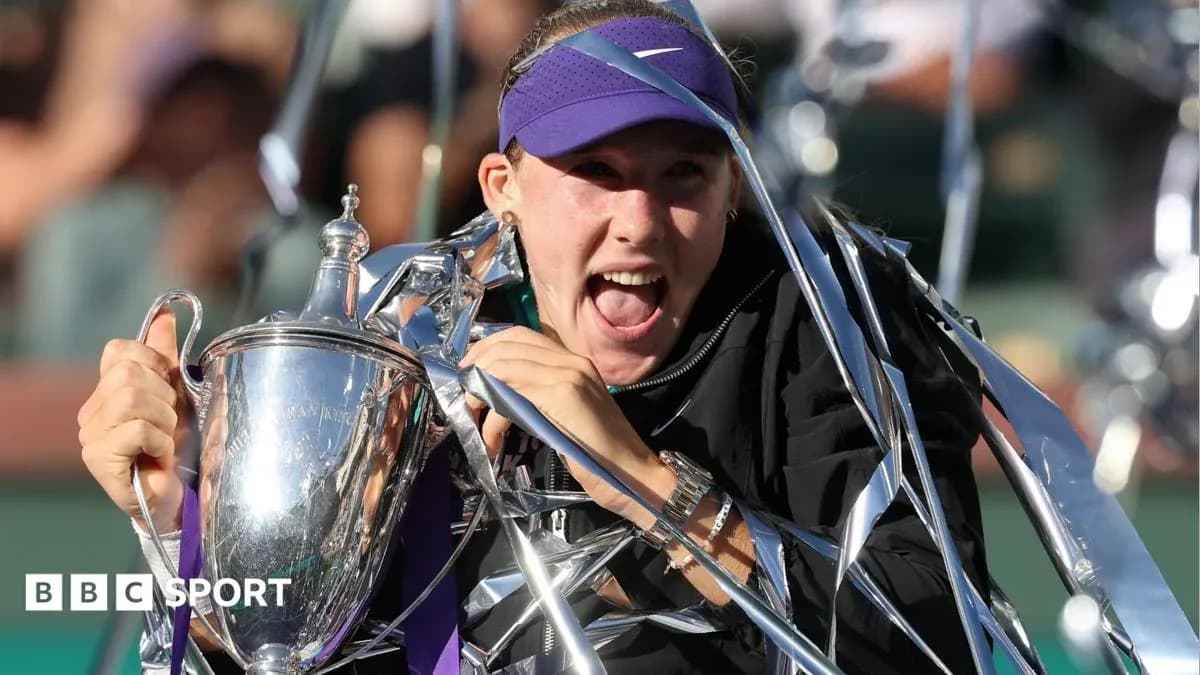
Mirra Andreeva Wins WTA Finals: A Teenager's Remarkable Journey
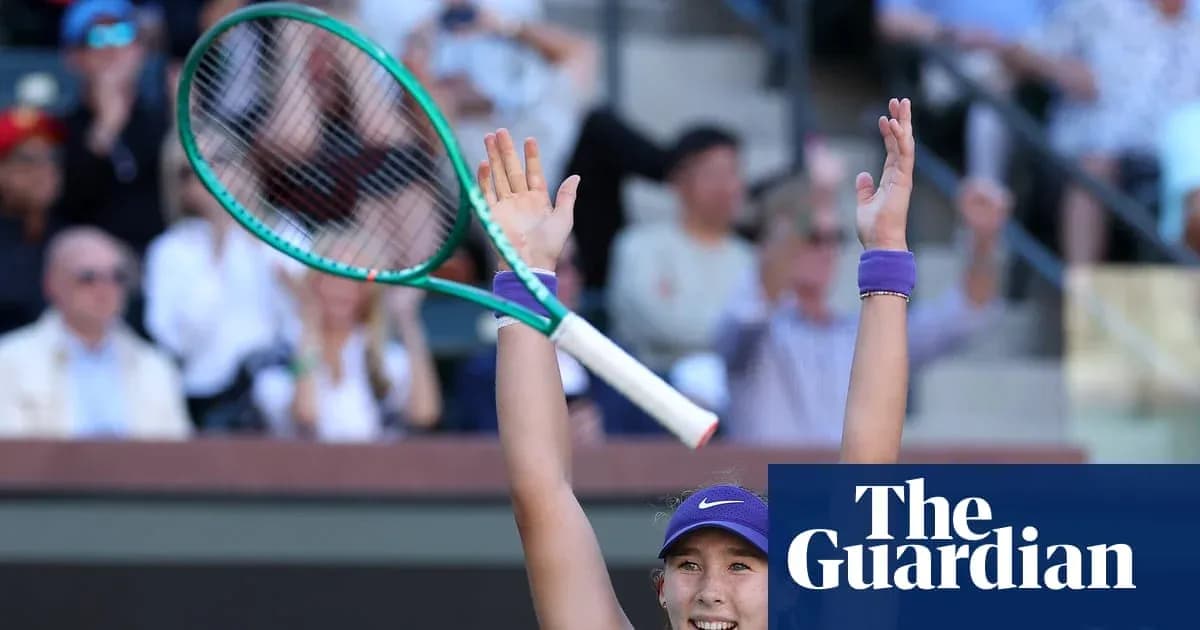
Mirra Andreeva stood on the baseline, serving for the set at 5-4, and the old script threatened to return.
Double fault. Double fault. Wild forehand. Backhand long.
Game gone. Set seemingly slipping. The kind of spiral that has swallowed her before.
This time, it didn’t.
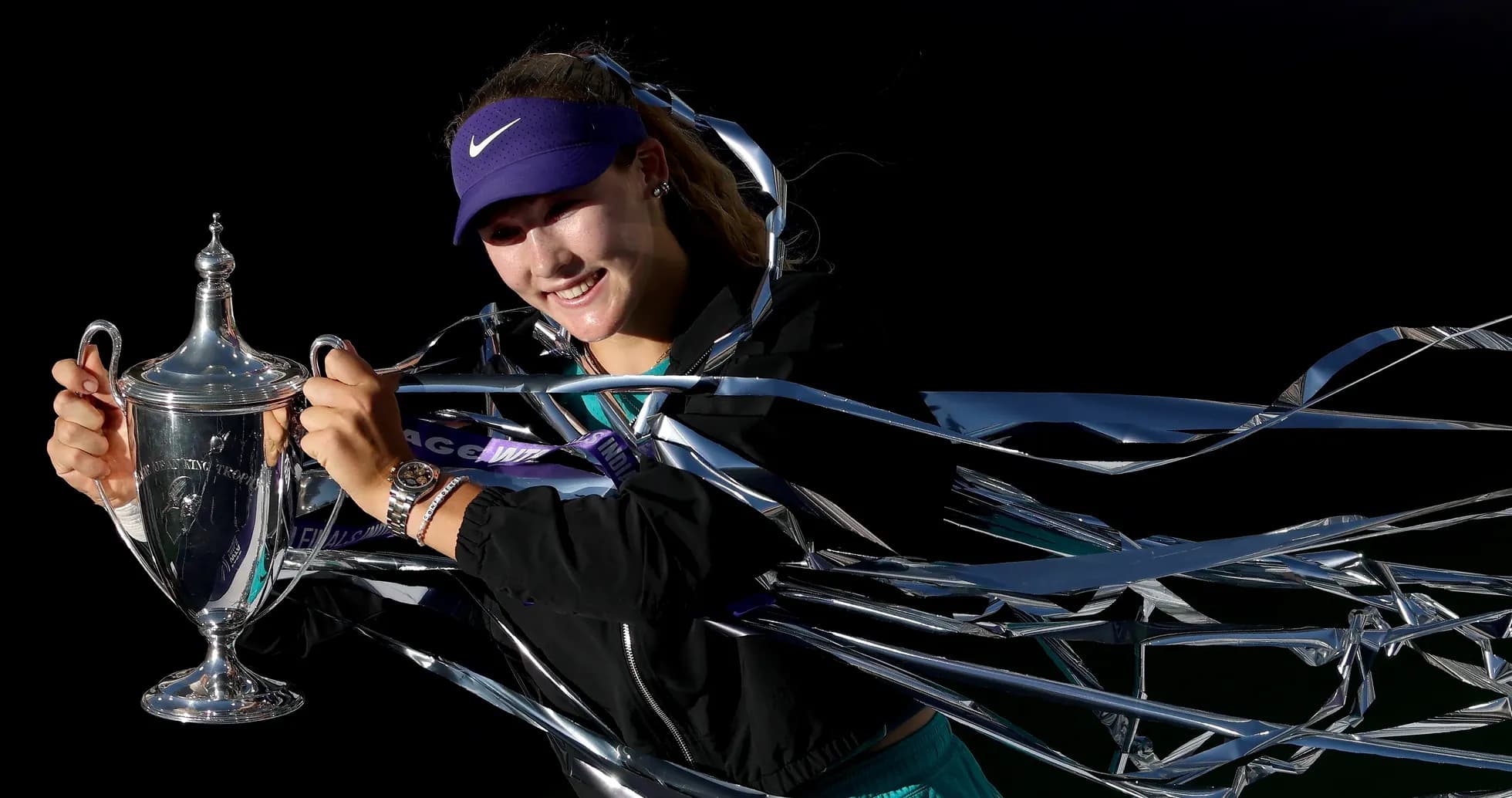
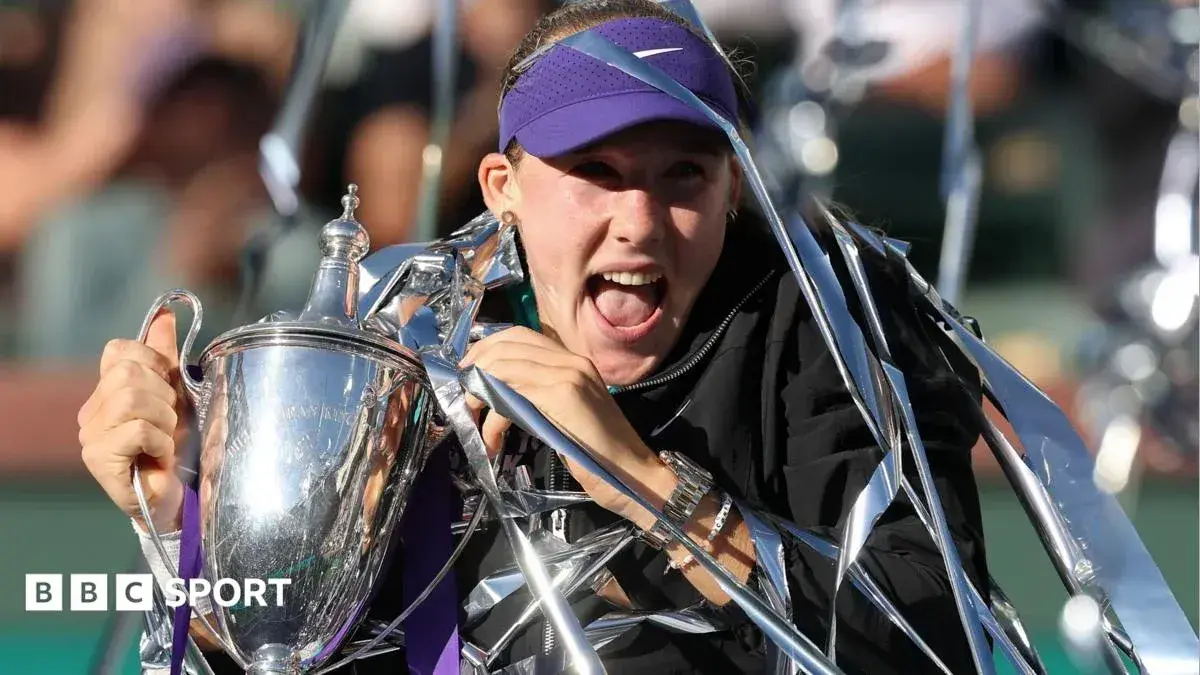
The 19-year-old reset in an instant, broke straight back and never loosened her grip again, beating Elina Svitolina 7-5, 6-3 to win the WTA Finals at Indian Wells without dropping a set all week. On one of the biggest nights of her young career, the most striking thing was not the variety of her game, but the calm with which she held it together.
A teenager in elite company
Andreeva’s victory caps a year that has moved her from prodigy to standard-bearer. She arrived in 2026 as a Roland Garros champion; she leaves Indian Wells as the season-ending champion too, and as the clear threat to the very top of the rankings.
Her new mark of No 2 is a career high. The gap to world No 1 Elena Rybakina now stands at just 293 points, a margin slim enough to turn the opening weeks of 2027 into an outright chase as Rybakina attempts to defend her Australian Open title.
The scale of Andreeva’s week in the desert runs deeper than numbers. She becomes only the third player ever to win the WTA Finals without losing a set, joining Serena Williams and Iga Swiatek. She is also only the third teenager to win the title on debut, after Chris Evert and Maria Sharapova. Those are not just names; they are career templates.
“It feels amazing to be part of this amazing group of people. I’m super privileged to put my name in that group,” Andreeva said on court, thanking her team “for helping me work every day, for pushing me to my limits, for forcing me to do stuff when I don’t want to do anything.”
From meltdown to mastery
The transformation in less than a year is stark.
Eight months ago, on these same courts, Andreeva walked off in tears, having crashed out in the second round of the WTA 1000 event to Katerina Siniakova. The match ended with a full-blown meltdown, the Russian screaming “fuck you all” at the crowd as the frustration of another emotional unraveling burst to the surface.
Nobody doubted her talent then. Her all-court instincts, her feel for angles, the way she mixes spins and pace – all of it already belonged at the top of the game. What did not was her temperament.
The difference now is visible in moments like that shaky service game at 5-4. Where once a stumble became an avalanche, here it was a bump in the road. She showed nothing, said nothing, took a breath, and went straight back to work. She broke Svitolina immediately, closed out the set, and tightened the screws.
By the second set, Andreeva had full command of the baseline exchanges, dragging Svitolina into longer rallies, changing height and direction, forcing the Ukrainian to hit from uncomfortable positions. The 7-5, 6-3 scoreline reflected not just shot-making, but a new emotional discipline under the lights.
A final with political shadows
This was not a routine trophy ceremony either. A Russian teenager against the most prominent Ukrainian player in the sport carries a weight that stretches far beyond the tramlines.
As she has done since Russia’s invasion of Ukraine in 2022, Svitolina chose not to shake hands with her Russian opponent or pose for joint trophy photos. After her runner-up speech, she left the podium and sat by the side of the court while Andreeva addressed the crowd.
There was, though, a small, telling moment. When Andreeva publicly congratulated Svitolina on her tournament and season, Svitolina gave a brief nod in acknowledgment. No more than that, no less.
A title, a car, and a new target
The rewards for Andreeva’s week were not only ranking points and a trophy. She also left with a brand new Mercedes, a prize that raised an obvious question from Billie Jean King, who presented the silverware: could she even drive it?
Andreeva admitted she still does not have a licence. “This is an amazing motivation for me to get my drivers licence as fast as I can,” she said, laughing that she still wanted to “just try it, even give it a little spin, at least a couple of metres.” If not, she added, she had “one, two, three, four, five people in my team who will drive and I can be a passenger princess for life.”
The joke underlined a broader truth: Andreeva is still a teenager, still learning to navigate both the sport and everything that comes with it. Yet her results now belong to the game’s hardened veterans.
This was her second meeting with Svitolina in a matter of days. On Monday, in the opening round-robin match, Andreeva had dismantled the Ukrainian 6-4, 6-0, a statement that set the tone for the rest of her week. She closed the tournament with a fifth straight commanding performance, her level barely dipping as the stakes rose.
The meltdown of eight months ago feels distant now, but its echoes are what make this run resonate. The same courts, the same player, a completely different response under pressure.
The No 1 ranking is no longer a distant idea for Mirra Andreeva. It is a target she can reach with a strong start to 2027, as Elena Rybakina tries to protect what she has built. One player defending, the other charging.
The chase is on.
Zverev and Shelton start strongly in Turin
On the men’s side, world No 1 Alexander Zverev opened his ATP Finals campaign in Turin with a controlled 6-4, 6-4 win over Rafael Jódar, laying down an early marker in the group stage.
Ben Shelton, seeded third, followed him on court and survived a bruising battle with close friend Arthur Fils. Shelton’s power and aggression carried him through 6-2, 3-6, 6-3, extending the American’s strong form into the season’s final week.