Alexander Zverev Wins US Open: A New Champion Emerges
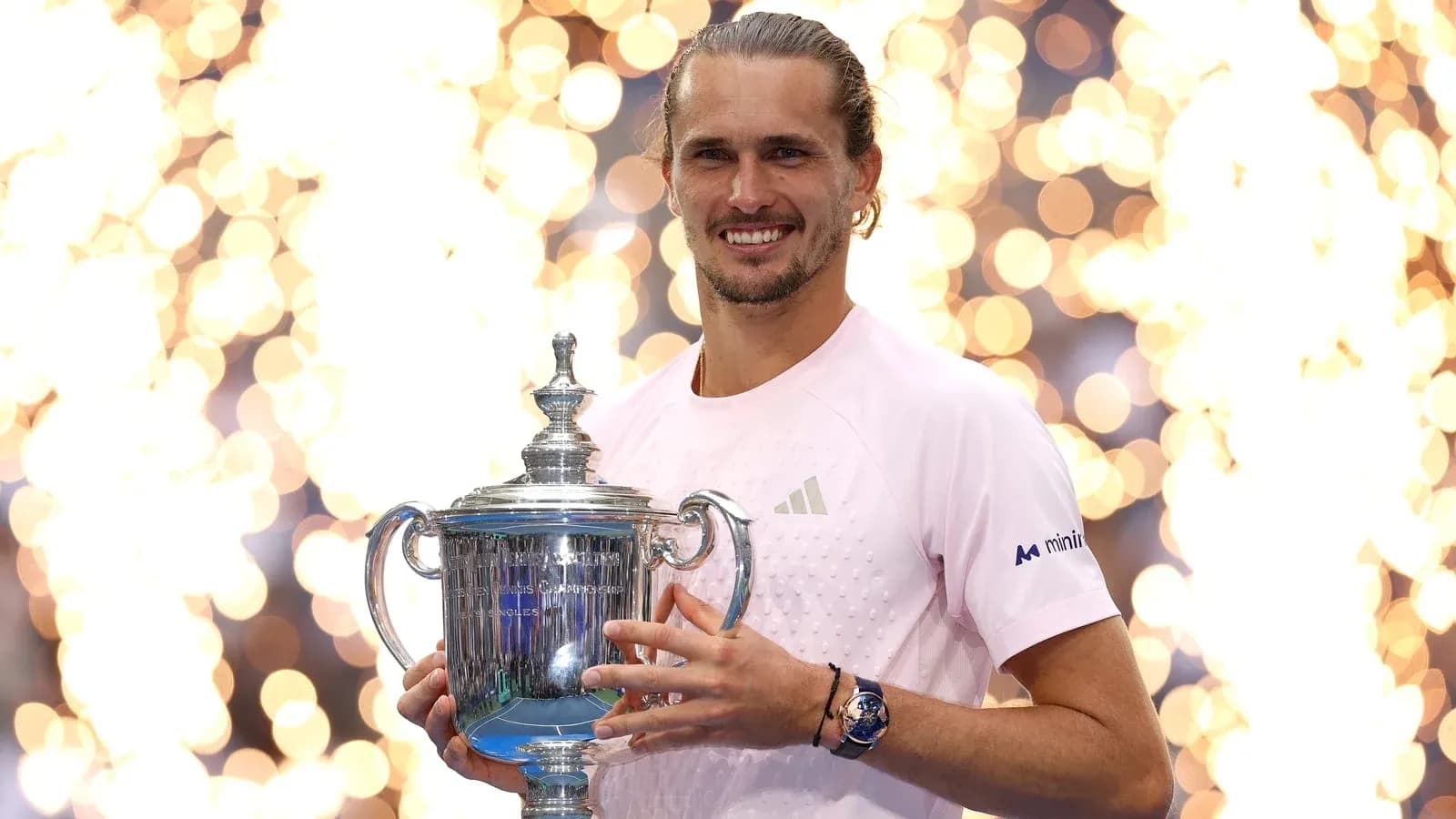
Alexander Zverev walked to the net thinking about his next service game. The stadium screen told him he had just won the US Open.
One last Shelton return drifted long on match point. Zverev, deep in his own tunnel, simply scooped up the ball and fired it back down the court, ready to serve again. Only when he glanced up and saw the score did the reality hit: 6-3 7-6 (2) 5-7 6-2. Grand slam title number two of the year. His first in New York. The “best player never to win a major” tag now buried under another hard-earned trophy.
“I thought it was 5-1,” he admitted on court. “I knew I'd broke him twice but I thought he’d only won one so I thought ‘I’m going to have a nice service game and then get tight.’ Teachers used to tell you to forget about the score, so I did.”
On a steamy night at Flushing Meadows, with 23,000 partisan fans roaring for the local hope, Zverev walked into the heart of the American dream and ripped it up.
Nerves, noise and a brutal start
Ben Shelton’s entrance felt like a coronation. The 23-year-old strode into the arena that bears Arthur Ashe’s name to a rapturous ovation, a New York crowd desperate to see the end of a 21-year wait for a homegrown men’s champion. Andy Roddick in 2003 remains the last American man to win a major. Shelton had the look, the swagger, the serve. The script was written.
Then the first game started.
Shelton double-faulted to hand Zverev an immediate break. The noise dropped a notch. When he repeated the error on set point, gifting the German the opener, the mood inside Ashe shifted from carnival to concern. The top seed had come out like a man who knew exactly what he wanted to take.
From the baseline, Zverev hit through the court with authority. On serve, he was savage. The eighth seed could not muster a single break point in the first two sets, repeatedly bullied back by a barrage of first serves that he could barely lay a racquet on. Zverev “hit the living daylights” out of his delivery, and Shelton, for long spells, could only watch it whistle past.
This was Zverev’s sixth major final. Shelton’s first. In the early stages, the gap in experience looked enormous.
A Bond cameo and a brewing fightback
Even the cameras joined in the theatre. At 0:07 on the match clock, a mischievous director cut to Pierce Brosnan in the stands, the Irish James Bond star raising a smile as the number flashed beneath him. Shelton, though, was the one shaken and stirred.
Yet he did not fold.
Shelton arrived in New York having never beaten Zverev in five attempts. He had also never solved Stefanos Tsitsipas or, more ominously, Carlos Alcaraz. Over the past fortnight, he ticked off both. Each win added to the sense that this might be his breakout major, the one that pushed him from prodigy to champion-in-waiting.
Zverev, however, is a different proposition now. The French Open title in June removed the heaviest weight from his shoulders. No longer the nearly man, no longer the cautionary tale. With that burden gone, he swung freely, especially in the second-set tie-break, where he took control and crushed Shelton 7-2 with clinical, first-strike tennis.
Two sets up, serving with authority, Zverev looked as if he might run away with it. The American dream, again, on the brink of being delayed.
Then his level dipped, just for a moment.
Shelton’s surge, New York’s roar
Shelton sensed it instantly. The Zverev serve, rock solid all night, suddenly wobbled. For the first time in the match, the American carved out break points – three of them, bundled together with raw aggression and a crowd desperate for any crack in the German’s armour.
He converted the second. Ashe erupted.
Shelton’s forehand began to fire with the abandon that had carried him through the draw. He took the third set 7-5, the noise inside the stadium rising to the kind of fever pitch only New York can produce. The belief, on and off the court, came flooding back. The American, who called this “my happy place”, had the night right where he wanted it: loud, chaotic, emotional.
But Zverev did not flinch.
German steel in the fourth
The fourth set began with the kind of ruthlessness that wins majors. Zverev broke early, stamping out any hint of a full-scale comeback. The rallies lengthened, but the German dictated, dragging Shelton into uncomfortable corners, leaning on his backhand, squeezing errors from a player still learning how to navigate the biggest stage when the tide turns against him.
Shelton kept swinging, kept chasing, kept trying to ignite one more surge. It never came. Once Zverev secured that early break, the contest, as a genuine fight, was gone.
There was still one more subplot.
Zverev’s serving routine – the incessant bouncing of the ball, over and over again – has become a quirk and a talking point. Across more than 23 hours on court this fortnight, the numbers said he had spent around three of them just bouncing the ball between serves. In the final, the ritual finally drew the ire of the umpire. A time violation arrived, almost inevitably.
It did nothing to derail him.
A champion with a different fight
Zverev closed out the match in three hours and 33 minutes, sealing a second grand slam of the season and a first in New York. Only then, after that strange pause of confusion at match point, did he allow himself to celebrate.
Behind the trophies sits a different battle. Diagnosed with Type 1 Diabetes as a child, the 29-year-old has spent his entire career managing a condition that demands constant attention. During the fourth set, he reached for his insulin pen and injected his leg, a stark reminder that his fight runs deeper than the scoreboard.
On court, he spoke about what that diagnosis meant to his family. “When your four-year-old son gets diagnosed with diabetes and doctors tell you that life and sports will be very limited, it takes a very strong mother to say ‘my son will be whatever wants to be’.”
On Sunday night in New York, he was exactly that: what he wanted to be. A multiple major champion.
Shelton’s promise, America’s wait
Shelton, disappointed but defiant, addressed the crowd that had carried him through late-night epics and emotional swings.
“This is my happy place and I wish this tournament never ended,” he said. “To the city of New York, to the fans who showed up today, to the fans at home, to the people who stayed until 4 in the morning, you guys brought me to the position I’m in. I’m just getting started and I’ll be back again.”
America’s wait for a male grand slam champion goes on. The drought stretches past two decades, the weight of history now passing from one generation to the next.
Shelton left Ashe without the trophy, but with something else: proof that he belongs on this stage, under this glare, against this calibre of champion.
Zverev left with the title, the scoreboard finally catching up with the player he has long threatened to become. The question now is not whether he can win majors.
It’s how many nights like this he has left in him.