Zverev Claims Second Grand Slam Title Over Shelton at US Open
Ben Shelton had one hand on the exit door when he finally swung free.
Down two sets and serving at 5-6 in the third, he had been bullied for almost three hours, his biggest weapons blunted, his body language sagging. Then something snapped. He charged into the return game, uncorked the forehand that had barely shown up all afternoon, and ripped his way into a fourth set. Fist pump. Hand to the ear. Arthur Ashe Stadium, half-stunned, half-hopeful, roared back at him.
For a few minutes, it felt like the match might tilt.
It didn’t.
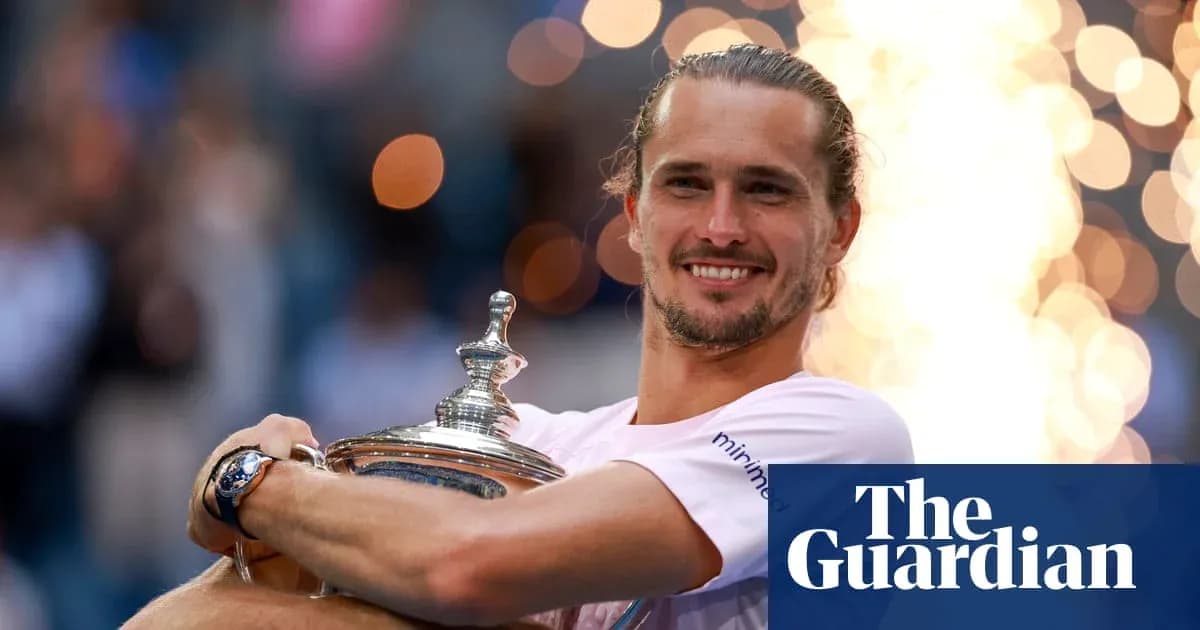
Shelton opened the fourth set with a nervy, scratchy game and dropped his serve straight away. The brief surge evaporated. Alexander Zverev, who had been the better player from the first point, simply reset, tightened the screws again and closed out a 6-3, 7-6 (2), 5-7, 6-2 win to claim his second grand slam title of the year.
Zverev’s season of firsts
At the start of the year, Zverev was still the nearly man of men’s tennis, the player who kept brushing against history and recoiling at the last moment. Now he stands in rare company. He becomes only the fourth man in the Open era – after Jimmy Connors, Guillermo Vilas and Jannik Sinner – to win his first two grand slam titles in the same season.
Shelton’s defeat also carried its own historical weight. The 23-year-old was trying to become the first Black American man since Arthur Ashe in 1968, and the first American man since Andy Roddick in 2003, to win the US Open. That storyline never really caught fire on court. Zverev smothered it before it could breathe.
The most telling statistic between these two is brutally simple: 6-0. That is now Zverev’s head-to-head lead over Shelton, and it looked every bit as lopsided as the number suggests. The German served with authority, played cleaner, more measured tennis from the back of the court, and once again used his world-class two-handed backhand to neutralise Shelton’s lefty forehand, the shot that usually does the damage.
A serving duel that never quite was
On paper, this was a showdown between two of the biggest servers on tour. In reality, only one of them handled the responsibility.
Shelton walked on court visibly tight and never quite shook it off on serve in the crucial passages. In the very first game of the match, he double-faulted on break point. When he had a chance to at least force Zverev to serve out the opening set, he double-faulted again on set point to surrender a second break. Those are the moments that define grand slam finals; Shelton flinched.
From the baseline, the gap widened. Shelton’s forehand, so often a thunderbolt, misfired wildly. He sprayed errors, rushed his swings and rarely dictated rallies. Zverev, by contrast, delivered the kind of serving performance that wins majors: 69% of first serves in, and a commanding 85% of points won behind that first delivery. Under that kind of pressure, Shelton’s return – already a known weakness – never truly threatened.
The American did eventually find a rhythm on serve in the second set. He held more comfortably, leaned on his power, and dragged Zverev into a tie-break. If there was a hinge point in this final, this was it.
Zverev slammed it shut.
He grabbed the first mini-break with a crisp forehand passing shot after a tentative approach from Shelton, then carved out the second with a vicious forehand down the line at the end of another tense exchange. Two unreturned bombs later, he led 5-0 in the breaker. The set, and realistically the match, felt decided right there.
Shelton kept grinding, kept sprinting, kept swinging. He earned that fourth set with sheer stubbornness. But the sense of inevitability had been there since the opening game, and Zverev, once he nosed ahead early in the fourth, never loosened his grip.
A grand slam year that never caught fire
This final also closed a strangely muted grand slam season on the ATP tour. Carlos Alcaraz, the sport’s most electric force, spent long stretches injured and only returned from a significant layoff at this US Open. Jannik Sinner, the year’s early pace-setter, also battled physical issues. The absence or limitation of those two left a vacuum at the top of the game.
Plenty of players had a clear runway to chase major titles. Very few actually took off.
Zverev did. He kept turning up deep in tournaments, kept posting solid weeks, kept putting himself in the right parts of the draw. That consistency has finally been rewarded on the biggest stages. Each run has hardened him, each win adding another layer of belief that had been missing in his earlier, painful near-misses.
Success shadowed by serious allegations
For many fans, though, Zverev’s rise carries an uncomfortable edge that no trophy can smooth away.
Two former partners, Olya Sharypova and Brenda Patea, have accused him of physical abuse. During his run to the French Open final in June 2024, he settled an assault case in Germany relating to allegations that he pushed and strangled Patea, the mother of his daughter. The case ended without a verdict. A court spokesperson said: “The truth remains open.” Zverev has denied those charges and all other allegations against him.
The disquiet has followed him around the world. At the Australian Open last year, a fan interrupted his trophy ceremony speech, shouting: “Australia believes Olya and Brenda.” This season’s three grand slam finals passed without similar incident, and he remains a popular figure at the majors, but the tension between his on-court success and off-court accusations lingers in the background of every celebration.
Shelton’s leap, and the gap that remains
For Shelton, this defeat caps the best summer of his young career. He arrived on the North American hard courts trying to shake off the sting of a painful first-round loss at Wimbledon. He leaves with a second Masters 1000 title from the Canadian Open, a first grand slam final and a new career-high ranking of No 4.
That is a serious jump in a short space of time, and a clear marker of his rapid improvement at 23.
Yet Sunday in Arthur Ashe laid bare the work still ahead. His return of serve remains too blunt against elite servers. His ground game, particularly under scoreboard pressure, still frays. When Zverev dragged him into long, physical rallies, Shelton’s shot selection and consistency could not keep pace.
On a lonely afternoon in the biggest tennis stadium in the world, those flaws were exposed by a player who has learned, the hard way, how to close the door on opportunity.
The question now is whether this was a one-off lesson on the final Sunday of a slam, or the first chapter in a rivalry where Shelton eventually finds a way to rewrite that 0 in the head-to-head.