Zverev and Shelton Set for US Open Final Showdown
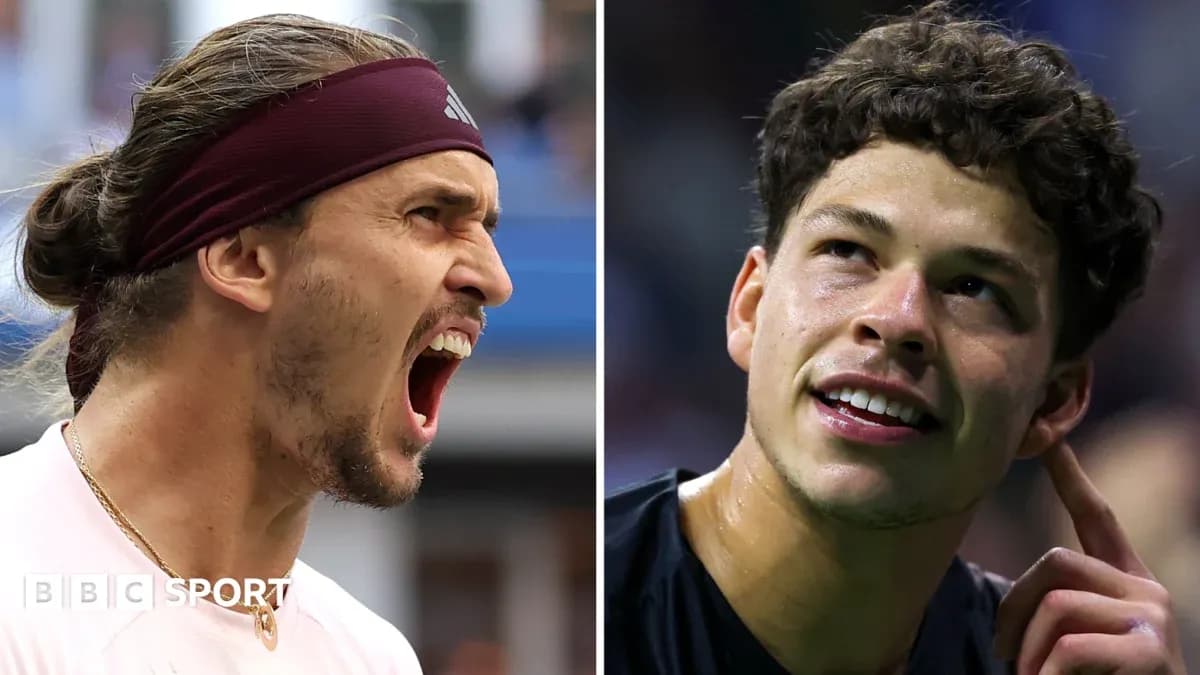
Alexander Zverev and Ben Shelton will walk into Arthur Ashe Stadium on Sunday knowing this: whatever happens in the US Open final, 2026 has already changed their careers.
For Zverev, it is the year the nearly man finally stopped being nearly. For Shelton, it is the year the raw talent became a genuine force at the top of the sport.
Zverev steps out of the shadows
For seasons, the conversation at the majors revolved around two names: Jannik Sinner and Carlos Alcaraz. They hoovered up all four Grand Slams in 2024 and 2025, earned the mash-up nickname “Sincaraz” and left players like Zverev cast as supporting actors.
Now the German is one win away from a second major title in the same year.
The French Open champion arrives in New York as the top seed and a narrow favourite. At the start of the season, the idea of Zverev holding two Slams in his hands by September would have looked optimistic at best. Three lost major finals, a brutal defeat from two sets up against Dominic Thiem in the 2020 US Open final, and the rise of Sinner and Alcaraz had many filing his Grand Slam dreams under “missed opportunity”.
Zverev never quite accepted that.
“I believed in it. I believed that it's possible. I think not many of you guys did,” he said when asked if he thought he could outstrip Sinner and Alcaraz in 2026. The question everyone else kept asking was whether Carlos and Jannik would simply keep dividing the four Slam finals between them.
Injuries finally cracked that script. Alcaraz missed Roland Garros and Wimbledon. Sinner has been ruled out of the US Open. The door did not swing wide open, but it opened just enough, and Zverev barged through.
Beating Flavio Cobolli in the Roland Garros final did more than put his name on a trophy. It cleared the fog that had hung over him in big matches. The Wimbledon final defeat to Sinner stung, yet here he is again, contesting a third straight Grand Slam final and a second in New York.
His path through this US Open has not dazzled. A below-par Zverev slogged through the early rounds in a series of late-night marathons, often finishing in the early hours. He has not faced a top-20 opponent across the fortnight. The tennis has been functional rather than spectacular, but it has hardened his resolve.
Shelton’s moment, and a nation watching
For Ben Shelton, this is all new ground. He has said it himself.
“For me, this whole tournament has been uncharted territory,” the American eighth seed admitted. “I'm in positions I've never been in before. I've beaten guys I've never beaten before.”
On Sunday, he will try to beat one more: Zverev, who leads their head-to-head 5-0. If Shelton can turn that around, he will become the first American man to win a Grand Slam singles title in 23 years, since Andy Roddick at this very tournament in 2003.
There is more history in play. At 23, Shelton is also bidding to become the first black American man to win a singles major since Arthur Ashe lifted the Wimbledon title in 1975. When a reporter pointed out the weight of that after his semi-final win over Frances Tiafoe, Shelton grinned and asked: “Is there?” The smile did not disguise the scale of what lies ahead.
Former world number four James Blake knows exactly how significant it would be.
“Having another black American in the final leaves you wondering how many kids and adults are watching that maybe wouldn't have been otherwise,” he told BBC Sport. “They are going to be inspired to hear Ben's story and see someone that looks like them out there playing and competing in a sport that has historically been dominated by the sense of a country club white sport.”
Shelton will not walk into Ashe alone. A partisan, 24,000-strong New York crowd will roar for him, sense every momentum shift and try to drag him over the line. Zverev has heard that sound before. He knows what it can do to an opponent’s legs, and to their nerve.
Power, polish and a breakthrough year
Shelton’s serve has always been the headline act. Over the past two weeks it has regularly blasted past 140mph, a lefty cannon that can blow open games in seconds. Earlier in his career, that firepower sometimes came with streaky patches and a backhand that opponents could bully.
This season tells a different story.
Shelton has added layers to his game, sharpening his defence and shoring up that weaker wing. He has learned to stay in rallies, not just end them. The results are written across four titles on four different surfaces: Dallas on indoor hard courts, Munich on clay, Stuttgart on grass and the Canadian Open on outdoor hard. That versatility is the calling card of a serious contender, not a one-surface specialist.
The defining moment of his summer came in New York. Shelton had never beaten a top-three opponent until he walked into a night session against Alcaraz, a seven-time Grand Slam champion returning to competition after almost five months out. Their quarter-final turned into an epic that ran until 3:34am, Shelton emerging with the biggest win of his life and the sense that the ceiling had just lifted.
“Ben has been trending in the right direction throughout this year. I think four titles on different surfaces is evidence of it,” said his father and coach, Bryan Shelton. “He's willing to suffer a little bit in the rallies, go deeper and really use his athleticism.”
That willingness to suffer will be tested against Zverev. The German’s heavy, flat groundstrokes and improved resilience from the baseline can drag opponents into long, bruising exchanges. Cobolli felt the weight of the occasion in Paris. Shelton, in his first US Open final, will have to make sure the moment fuels him rather than freezes him.
A final that could reshape the landscape
Strip away the storylines and the numbers still matter. Zverev is 29, a former world number three who has finally broken through at the majors. He owns the experience, the head-to-head dominance and the knowledge of what it feels like to stand on this stage and let it slip away.
Shelton is 23, still moulding his game, but already with a season that screams upward trajectory. He has the crowd, the serve, the momentum of a player who has just knocked off Alcaraz and believes there are no doors he cannot kick down.
One man is chasing confirmation that his time has truly arrived. The other is trying to start an era of his own.
On Sunday night in New York, only one of them will leave with a second Grand Slam title of the year, or a first of a lifetime, and the power to bend the next chapter of men’s tennis in his direction.