Zverev’s Serve Shines in US Open Final
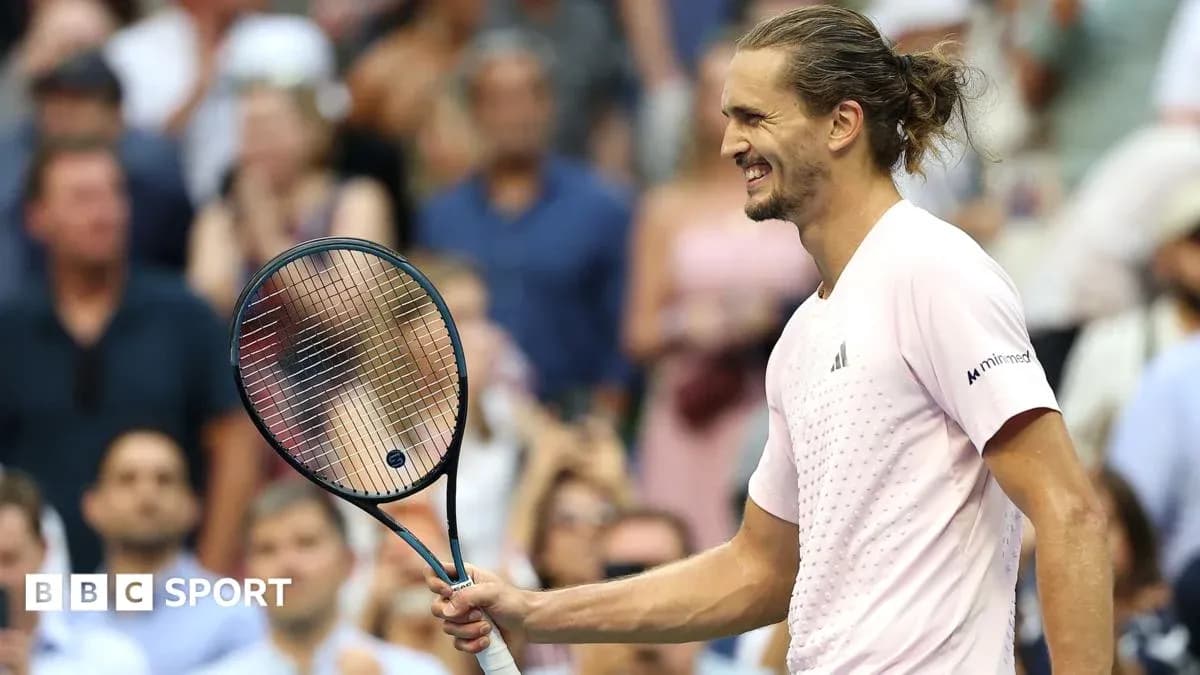
Under the lights at Flushing Meadows, Alexander Zverev walked the tightrope and never fell.
He beat Karen Khachanov 6-3, 7-6 (9-7), 7-6 (8-6), a straight-sets scoreline that barely hints at how close he came to being dragged into a long, bruising night. Twice Khachanov led in tie-breaks. Twice Zverev stared down the danger. Each time, his serve bailed him out.
Six double faults. Fifteen aces. That was the risk and reward in stark numbers.
Khachanov coughed up only three doubles, but his six aces and a much slower second serve left him with less margin for error. Zverev’s average second serve thundered in at 112mph, almost 20mph quicker than the Russian’s, and it showed in the biggest moments. When the rallies tightened, when the scoreboard squeezed, that serve dragged him clear.
Annabel Croft, watching for BBC Radio 5 Sports Extra, saw a player transformed as the tournament has gone on. Early wobbles have given way to a more ruthless version of Zverev, one who, as she put it, “stepped up to the plate and served spectacularly” whenever the questions came.
The match turned on the tie-breaks. Khachanov, bold and aggressive, repeatedly put himself in position to extend the contest. In the third set breaker he surged 5-2 ahead, playing with freedom, while Zverev looked tight and hesitant. The Russian had won 13 of 14 points at the net by that stage, picking his moments to come forward and finishing with authority. From the back of the court he was unloading, one huge forehand crashing into the corner and drawing a roar from the crowd as he celebrated with the cool air of a “nonchalant gladiator.”
But pressure has its own gravity.
At 2-5 in that third-set tie-break, Zverev looked like a man under siege. Then he produced a stunning cross-court winner, his 37th of the match, after being forced back by an attempted lob. Khachanov blinked, pushed a ball wide, and suddenly the gap shrank. The Russian still had two points on serve to force a fourth set, yet the momentum had shifted. Zverev’s 15th and final ace of the night exploded down at exactly the right time, prompting Croft to ask, almost in disbelief: “Where did that come from?”
That was the story of the night. When he needed something special, he found it.
Zverev’s path to this final has not been smooth. He admitted as much on court, recalling a 3am debrief with his team after the second round when they were “laughing at how bad” he was playing. That gallows humour, he said, helped him loosen up. The work on the practice court followed, the feel returned, and the level climbed. Now he stands in the US Open final, talking about how he has “improved a bit” and how he is “enjoying” these big occasions again after so many near misses at the majors.
He knows what awaits on Sunday: an American, and a wall of noise.
“I think it will be incredibly special,” he said of facing either Frances Tiafoe or Ben Shelton, both crowd favourites. He plans to enjoy watching their semi-final, but he also delivered a sharp line with a smile: “Hopefully I can not make their American dream come true.”
Khachanov leaves with regrets but also with his ranking on the rise again after a strong run to the last four. He was cheered warmly off court, pausing to sign autographs, fully aware that on another day this contest could have gone the distance. He had the chances. He just ran into a man whose serve, at the crucial points, refused to crack.
While Zverev prepares for a partisan atmosphere in the men’s final, drama is unfolding elsewhere at Flushing Meadows.
On Court 11, Britain’s Alfie Hewett and Gordon Reid are being forced down the hard road again in the men’s wheelchair doubles final. Chasing a sixth US Open title together, the top seeds dropped the opening set 6-2 to Martin de la Puente of Spain and Ruben Spaargaren of the Netherlands, who rattled off six games in a row to seize control. Hewett and Reid, though, have already shown their resilience this week, coming from behind to beat defending champions Gustavo Fernandez and Tokito Oda in a huge semi-final.
This time, too, they refused to go quietly. Trailing by a set and a break, they hit back immediately to level the second set at 3-3, dragging the contest back into the balance and asking the question again: can they summon another comeback and force a decider?
The singles spotlight will soon swing to the women’s final, where top seed and reigning champion Aryna Sabalenka faces new world number one Elena Rybakina. Power against precision, champion against challenger to the throne.
Zverev has already booked his place on the last Sunday of the fortnight. Now the stage waits to see whether he can silence an American crowd and finally turn years of struggle at this level into the one thing still missing from his résumé.