Alexander Zverev Claims Second Grand Slam Title at US Open
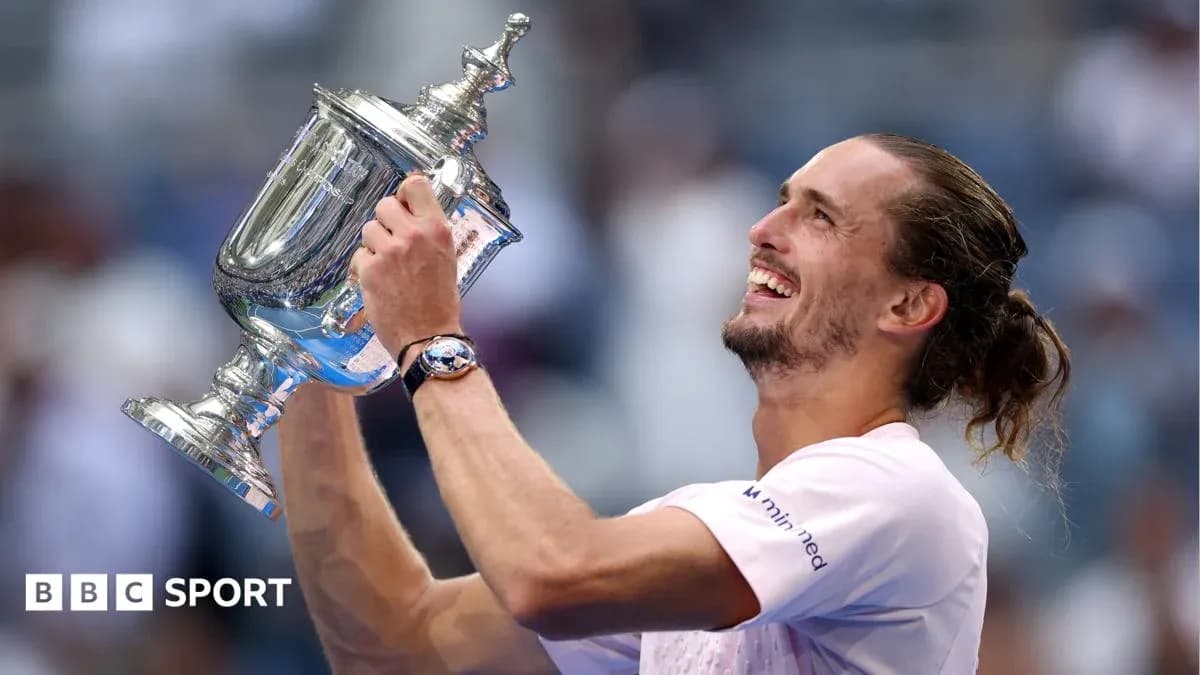
Alexander Zverev walked into Arthur Ashe Stadium with the weight of expectation and the roar of a hostile crowd in his ears. He walked out of it a two-time Grand Slam champion, having silenced 24,000 voices desperate to crown a new American hero.
The German top seed, already liberated by his breakthrough triumph at Roland Garros earlier this year, added the US Open title with a 6-3 7-6 (7-2) 5-7 6-2 win over Ben Shelton – a scoreline that only hints at the control he exerted over a night dripping with narrative.
The veteran against the coming storm
At the start of the season, Zverev was still the man who couldn’t quite get there. Three major finals, three defeats, a career that seemed destined to sit in the shadow of what it was supposed to be. The questions were not gentle ones: had his chance gone, swallowed up by the rise of Jannik Sinner and Carlos Alcaraz?
He has answered them with ruthless clarity.
With Alcaraz sidelined for the French Open and Wimbledon, and Sinner ruled out of the US Open, the landscape shifted. The two men who had carved up the majors in 2024 and 2025 disappeared from the draw, and Zverev stepped into the space they left behind. First in Paris. Now in New York.
Shelton, by contrast, represented the new wave and the old longing. A booming lefty serve, swagger, and the promise of an American men’s champion the country has craved since Andy Roddick in 2003. He arrived at his first Grand Slam final with momentum, noise and a stadium ready to push him over the line.
Instead, he opened the door and Zverev walked straight through it.
A nervous start, a ruthless response
Shelton’s double fault on break point in the very first game set the tone. The kind of early mistake you cannot afford against a player as methodical and unforgiving as Zverev. From there, the German locked into his patterns: heavy first serves, deep, flat backhands, and a relentless probing of Shelton’s weaker backhand wing.
The first set raced away from the American. Zverev rolled through it, 6-3, sealing it when Shelton threw in another double fault on set point. The crowd tried to lift their man, but every time the noise swelled, Zverev’s game tightened.
History was not on Shelton’s side either. Zverev had won all five of their previous meetings without dropping a set, and he carried that authority into the second. This time he wasn’t gifted a break, but he didn’t need one. He stayed rock-solid on serve, waited for his moment, and when the tie-break arrived, he turned it into a clinic.
The German’s reputation in breakers is no accident. He hit his spots, took the ball early, and refused to blink. A 7-2 tie-break, a two-set lead, and the memory of that 2020 US Open final — when he let a two-set advantage slip away — hanging in the air.
He didn’t flinch.
Shelton’s surge and the crowd’s roar
For two sets, Shelton had been chasing the match. In the third, he finally grabbed it by the throat.
The American began to unload on returns, taking bigger cuts, stepping inside the baseline. The pressure on Zverev’s serve increased with every game. Break points came and went, but Shelton stayed on the front foot, feeding off a crowd that sensed the match turning.
When he finally converted his third break opportunity, Arthur Ashe erupted. At last, the home hope had broken through, and the energy in the stadium shifted. Shelton rode that surge, held his nerve, and dragged the contest into a fourth set with a 7-5 scoreline that felt like a statement as much as a lifeline.
For a brief spell, it looked as if the night might become something wild.
Zverev refused to let it happen.
Champion’s composure
The German reset instantly at the start of the fourth set. No panic, no drama, just a tightening of screws. He went back to the patterns that had worked from the start: big first serves, disciplined aggression, and that relentless targeting of Shelton’s backhand.
An early break snuffed out the American revival. The crowd, so loud a set earlier, fell into a nervous murmur. Zverev’s authority returned, point by point, game by game. Shelton kept swinging, but the German now had his teeth back in the match and he did not let go.
At 5-2, championship point arrived. Shelton’s return sailed long. Zverev, locked so completely into the contest, didn’t initially realise what he’d done. He stared at the court, almost puzzled, until his team signalled from the box. Then the smile came — broad, slightly disbelieving, and utterly telling.
The burden that once seemed to define him is gone.
A career rewritten
This US Open run was not always smooth. Zverev scraped through the early rounds in a series of late-night marathons, his level patchy, his body tested. He did not face a top-20 opponent until the final, and questions lingered about how battle-hardened he truly was.
Shelton, with his power and home support, was supposed to provide the ultimate examination.
Instead, Zverev turned the final into a demonstration of experience and cold-blooded control. He managed the crowd, managed the scoreline, and managed his own history. The player once defined by what he had not won now stands as a multiple Grand Slam champion, his family’s long wait finally broken.
Addressing the team led by his father Alexander Sr and brother Mischa, he spoke of three decades without a major title and of the work, suffering and pain that preceded this surge. “We went 30 years without winning a Grand Slam title and now won two in the span of three months,” he said. For him, 2026 is not an isolated peak, but the product of every year that came before.
The men’s game has been shaped recently by Sinner and Alcaraz. They will be back. The question now is simple: with the door finally kicked open, how far can Alexander Zverev go before they walk through it again?