Alexander Zverev Dominates Khachanov in US Open Semi-Final
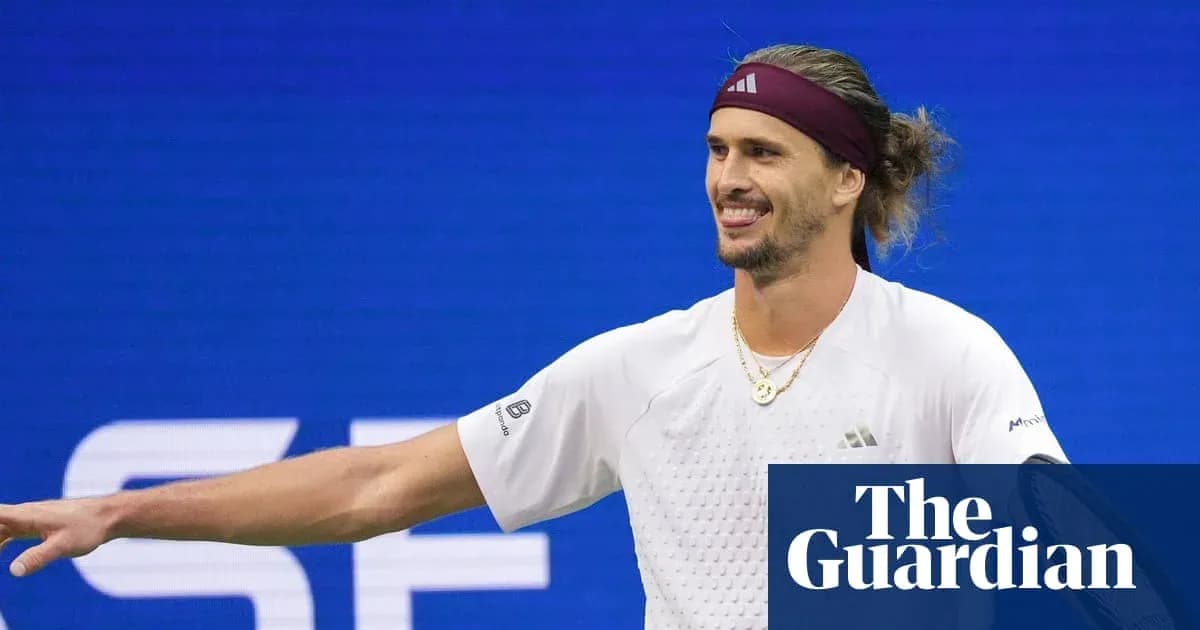
On a muted men’s semi-final day at Arthur Ashe Stadium, tension arrived late and briefly – about 107 minutes in, to be precise. Karen Khachanov, already a set and a break down and staring at a rout, finally dug his heels in. He clawed his way to a second-set tie-break, then, with the match hanging by a thread, uncorked two fearless winners that for a moment cut through the flat atmosphere.
At 5-6 on his serve, he ripped a forehand winner to erase Alexander Zverev’s first set point. At 6-7, he chased down a drive and lashed a screaming backhand pass, punctuating it with a roar that echoed around the half-interested stadium. For a few points, it looked like the old script might return – the one where Zverev blinks under pressure.
Not this version of Zverev.
The German reset, tightened his patterns and walked calmly back into control. He edged that second-set tie-break, then another in the third, closing out a 6-3, 7-6 (7), 7-6 (6) win to move within one match of a second grand slam title in his last three majors.
This is new territory even for a player long tipped to live here. Zverev has now reached three consecutive grand slam finals for the first time in his career. His breakthrough came on the clay of Roland Garros, where he finally lifted his maiden major trophy, and he followed it with a first Wimbledon final in the summer. Now he returns to the scene of his first grand slam final, the 2020 US Open, where he once led Dominic Thiem by two sets and served for the title before watching it slip away in an empty, Covid-era stadium.
Four years on, he walks back into another New York final, this time contesting his sixth major championship match, with a very different aura.
Khachanov, ranked No 50, arrived as the underdog on paper but not in pedigree. The 30-year-old owns a career-high ranking of No 8, a Paris Masters title from 2018 and an Olympic silver medal from Tokyo 2020, where he stood one step below Zverev on the podium. He also had more wins over Zverev than the other two semi-finalists combined, trailing only 6-3 in their head-to-head and having beaten him as recently as last year in Canada.
None of that survived Zverev’s serve.
From the start, the world No 2 imposed himself with a heavy first delivery and relentless depth from the baseline. Khachanov’s forehand, always the shakier wing, bled errors at the worst possible times. He leaked them when trying to protect his early service games, he leaked them in rallies he had controlled, and he leaked them most of all in the tight moments at the back end of the second and third sets, when any hint of doubt against a player serving this well was fatal.
The pattern felt familiar to those who watched Roland Garros earlier this year. Once Jannik Sinner crashed out in the second round, Carlos Alcaraz withdrew injured and Novak Djokovic’s late-career struggles intensified, the narrative in Paris revolved around a single question: who, if anyone, could stop Zverev? Nobody did.
The draw has opened up for him in similar fashion here. Working his way through the top half, Zverev’s highest-ranked opponents on the road to the final have been No 22 Luciano Darderi and No 28 Alejandro Tabilo. If he lifts the US Open trophy, he will have claimed his first two grand slam titles without facing a top-eight player. It is an odd quirk, but it doesn’t change the only truth that matters to a player in form: you can only beat whoever stands on the other side of the net.
He has done that ruthlessly this fortnight. After grinding through two tense five-set matches in the opening rounds, Zverev has not dropped a set since. The semi-final followed that same, efficient template: early break, scoreboard control, authority in the tie-breaks when the pressure spiked.
Waiting for him in the final will be either Ben Shelton or Frances Tiafoe, and Zverev will walk into that match carrying a towering head-to-head record. Against the two Americans combined, he stands at 15-1. His only defeat to Tiafoe came nine years ago, before either man had grown into the player he is now.
For all that pedigree, this semi-final barely caused a ripple beyond the lines of the court. Despite Zverev’s status as the second seed and Khachanov’s history as a former US Open semi-finalist, the match generated remarkably little buzz. One of the running controversies of this tournament has been the secondary ticket market, where prices for many sessions have soared to absurd levels. There was no such frenzy here: seats for this semi-final were going for as little as $21 (£15.50) on StubHub before the first ball was struck.
Those who did pay to come, though, saw something significant, even if it lacked theatre. They watched a player who once let this title slip from his grasp return to the same stage, older, harder, more sure of himself, serving with conviction and closing the door on danger when it appeared.
Now the question is simple, and it will not be answered by resale prices or outside noise. With New York offering him another shot at redemption, can anyone stop Alexander Zverev from finally owning Arthur Ashe the way he has long imagined?