Zverev Claims Second Grand Slam Title at US Open
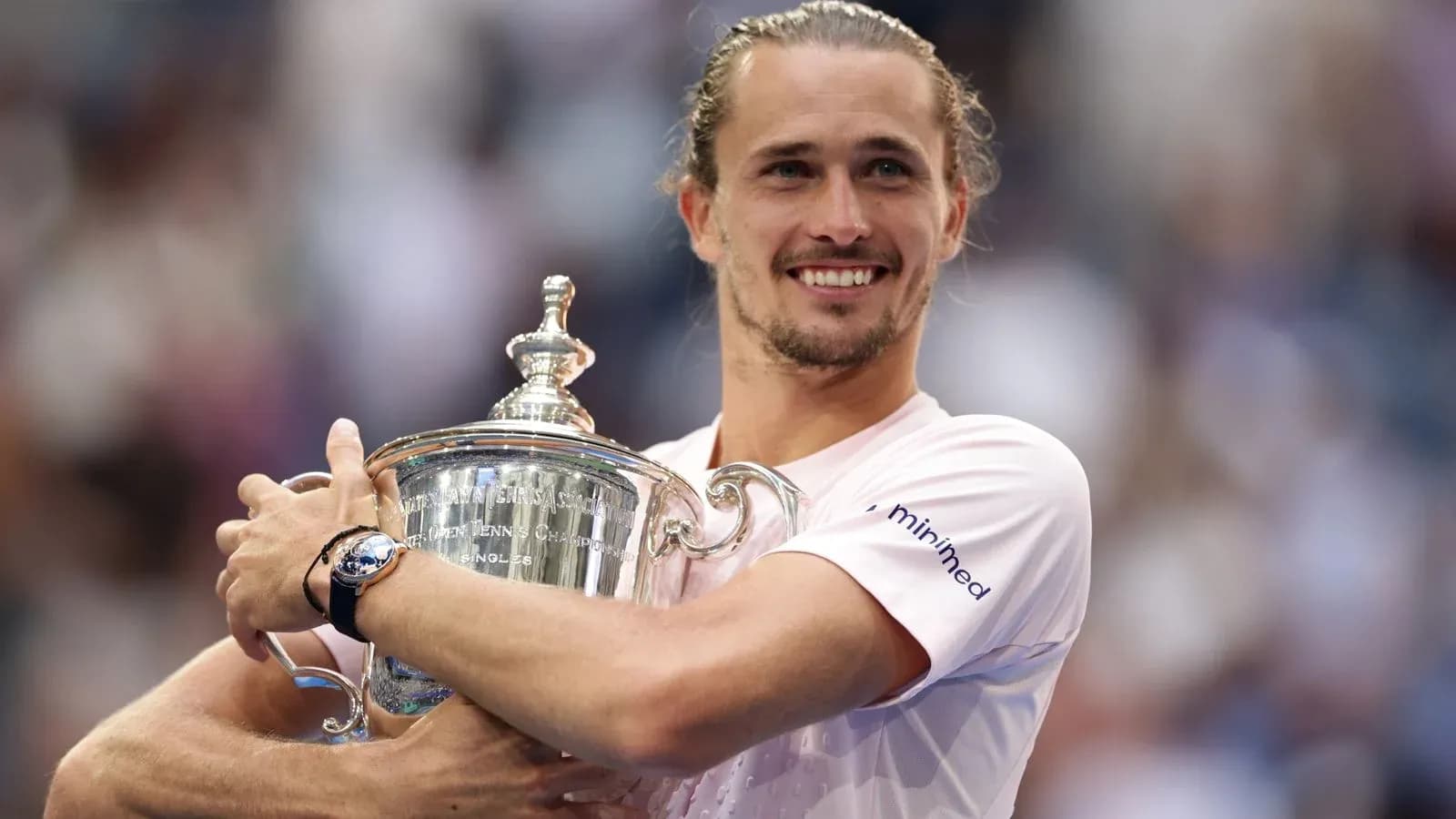
Alexander Zverev stood alone on Arthur Ashe Stadium, balls still in his hand, ready to serve again. The crowd roared, the big screen flashed, and only then did it hit him.
He was already the US Open champion.
The top seed had just finished a four-set arm wrestle with Ben Shelton, winning 6-3 7-6 (7-2) 5-7 6-2 to claim his first title in New York and a second Grand Slam of the year, after Roland Garros. Yet on championship point, when Shelton’s final return drifted long, Zverev didn’t celebrate. He calmly hit the ball back, walked to the baseline and prepared for what he thought was the next game.
“I thought the score was 5-1,” he admitted later, laughing. “I knew that I had broken him twice, but I thought he only held once. I was thinking: ‘Okay, I'm going to have a relaxed service game here and then I'll get tight on the next one.’ It was lucky for me.”
On Ashe, it felt like something more than luck. It felt like a player finally at ease with the biggest stages he once seemed destined to haunt rather than own.
Zverev’s long road, Shelton’s long odds
This was billed as the night American men’s tennis might finally wake from its Grand Slam slumber. Not since Andy Roddick in 2003 had a home player lifted a major singles trophy. Shelton, just 21 and playing his first Slam final, walked into the stadium that bears Arthur Ashe’s name with history pressing on his shoulders and 23,000 fans at his back.
He was also chasing something even rarer: to become only the second black man, after Ashe in 1975, to win a Grand Slam singles title.
He got the full Broadway treatment. A partisan crowd. A wall of noise. Hollywood royalty in the stands: Brad Pitt, Rami Malek, Pierce Brosnan catching a cheeky camera shot at 0:07 on the match clock. The stage was set for an American story.
Zverev ripped up the script in the first game.
Shelton won the toss, chose to serve, and within minutes had handed over a break with a missed routine shot and a double fault. Nerves, inexperience, the weight of the moment – call it what you like. Zverev didn’t care. He pounced, then broke again on set point to take the opener 6-3 and silence a crowd that had arrived expecting a coronation, not a lesson.
This was a player who had already spent 19 hours and 38 minutes on court just to reach the final – the fourth-longest route to a major final since 1991. Yet it was Shelton who looked heavy-legged early, while Zverev, the No 1 seed at a Grand Slam for the first time, played like a man finally comfortable with being the favourite.
Shelton couldn’t even muster a break point in the first two sets. Zverev’s serve, that long-time barometer of his confidence, thundered through the night and kept the American at arm’s length.
The tie-break, the fightback, the crack in the door
Shelton arrived in New York with a nasty head-to-head against Zverev: five matches, five defeats. But he also arrived with fresh scars he had turned into belief. He had never beaten Stefanos Tsitsipas or Carlos Alcaraz before this fortnight. In New York, he took down both.
That run gave him reason to believe that this time, against Zverev, the story could change.
For two sets, it didn’t. Zverev dominated the second-set tie-break, 7-2, hitting through the court with a freedom that has defined his season since he finally shed the label of “best player never to win a major” in Paris. The German moved within a set of the title, and Shelton stood on the brink.
The American refused to fold.
In the third set, Zverev’s serve – so secure for two hours – suddenly wobbled. Shelton, feeding off the crowd, carved out three break points that were also set points. When he converted the second, Ashe erupted. The deficit was halved, the match alive again.
For a few minutes, it felt like the whole thing might turn.
Zverev didn’t let it.
Experience bites in the fourth
Shelton’s surge ended almost as quickly as it had begun. Zverev broke early in the fourth set, snatching back control just as the home favourite and his crowd were starting to dream.
From there, the contest slipped away from Shelton. Zverev, who has quietly taken advantage of the injury issues and absences of Carlos Alcaraz and Jannik Sinner at various points this season, tightened his grip. The German’s notorious ball-bouncing – so excessive that stats showed he’d spent roughly three of his 23-plus hours on court this fortnight just bouncing between serves – finally earned him a time violation.
It didn’t rattle him. If anything, it underlined how locked in he was.
Shelton, by contrast, kept feeling the cost of his inexperience. Marion Bartoli, watching for Sky Sports Tennis, pointed straight at the first game as the tone-setter.
“The difference in their experience was absolutely massive,” the former Wimbledon champion said. “Ben Shelton won the toss, elected to serve, fell to 30-30, missed an easy shot and then double faulted to give away the first break straight away. Zverev made only one unforced error in the first set, and it just made Shelton's life so difficult.”
Tim Henman, another Sky Sports analyst, saw a player transformed over the last year.
“The perseverance and the way Zverev's game has improved over the last 12 months,” he said. “I was looking back at his Grand Slam results, and his game was going backwards. But he has transformed himself to be more aggressive. Shelton did a great job getting that third set, but losing his serve first game of the fourth settled Zverev down and gave him more energy. He coasted to the line from there.”
Zverev crossed that line after three hours and 33 minutes, 6-2 in the fourth, this time fully aware the match was over.
A family fight, a mother’s decision
When the trophy ceremony began, the story shifted from tactics and tie-breaks to something deeper.
Zverev, now a two-time major champion in the space of a single summer, spoke not about redemption or rankings, but about his mother Irina and a moment that could have changed his life before it even began.
“When your four-year-old son is diagnosed with diabetes and doctors in the office tell you that life and sports will be very limited for that child, it takes a very strong mother to say ‘my son will be whatever he wants to be’,” he said.
“If he wants to be a tennis player, he'll be a tennis player. If he wants to do something else, he'll do something else but this illness will not define us.”
He paused, then added: “My mother is the most important and strongest person I know because it takes an unbelievably strong woman to do what she did.”
A family once told to limit its ambitions now has two Grand Slam titles in three months. Zverev joked that, after “so much suffering for the Zverev family at Grand Slam level”, perhaps 2026 should be the year they simply enjoy it all. He knows better than anyone how long and painful the road has been.
“Three months ago if I was told you are going to win one Grand Slam in your career and nothing else, I would have signed the paper straight away and never questioned it,” he said. “Now standing here with two Grand Slam trophies in the space of the months is incredible.”
Shelton’s promise
Shelton, born in 2002, was not even a year old when Roddick lifted the US Open trophy. On Sunday night, he came up short, but he did not sound like a player cowed by the stage.
“Sascha, congrats on these two weeks, your second Grand Slam title and two in one year,” he told Zverev. “What you're doing is incredible, the way you are serving and moving in play. You work harder than anyone I know, and do more hours on court than anyone else. You and your team do things the right way and I'm sincerely happy for you guys to hold this title.
“To New York, you guys drove me here today. I'm just getting started and I'll be back here again.”
Zverev, for his part, had no doubt about that.
“Ben, you're an incredible player and an incredible person,” he said. “This was your first Grand Slam final but I already told you you're going to be back here many more times and if I would have to bet all my money on it, I would bet that you would lift this trophy one day.”
On this night, the trophy belonged to Zverev, the man who once kept falling short of the sport’s biggest prizes and now can’t stop collecting them. Shelton left with only words, experience and a sting that may yet fuel him.
The American wait for a men’s Grand Slam singles champion goes on. The question now is simple: when this stage rolls around again, will it still belong to Zverev – or will Shelton be ready to tear the script from his hands?