Zheng Qinwen's Dramatic Comeback at the US Open
Zheng Qinwen was still catching her breath when she called it “a very dramatic match.” That barely scratched the surface of what had just unfolded on Arthur Ashe.
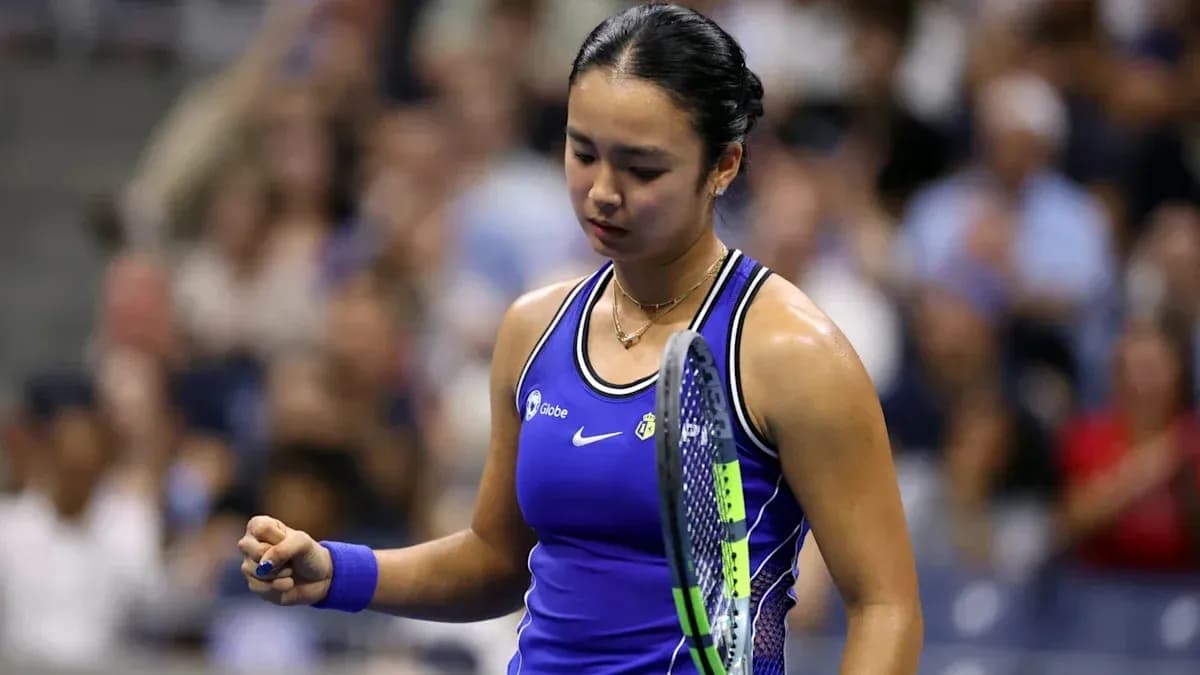
The Olympic champion, forced to come through qualifying just to reach the main draw, stood one point from defeat in the third set against Madison Keys. Not just behind. Buried. Down 5-0, facing match point, against the 22nd seed and home favourite who had the New York crowd roaring her every winner.
Then the match turned into something else entirely.
From 0-5, Zheng refused to blink. She clawed back game after game, line after line, until the scoreboard told a story that seemed impossible 20 minutes earlier: seven games in a row, a 1-6 7-6 (7-3) 7-5 victory, and a place in the US Open fourth round.
Keys had started like a player intent on getting off court in time for dinner. The 2025 Australian Open champion ripped through the opening set in just 23 minutes, her first strike tennis landing with brutal efficiency. Zheng, still searching for rhythm and timing, barely had time to process the occasion before the set had vanished.
The American looked in complete control, dictating rallies, punishing short balls, and feeding off the crowd. The match seemed to be following a familiar script: established Grand Slam winner dispatches a qualifier whose story was charming, but short-lived.
Zheng tore up that script in the second set.
She steadied on serve, found depth on the backhand, and began dragging Keys into longer exchanges. The errors that had flowed from her racket in the first set dried up. Keys still swung freely, still threatened to break away, but Zheng held on, game by game, until the set crept to a tie-break.
There, the qualifier played like the top-four player she used to be. Zheng took control of the breaker 7-3, sealing it with the kind of composure that had once carried her to an Australian Open final and Olympic gold. The stadium, which had largely ridden with Keys, sensed the contest had shifted.
Then came the third set and a brutal twist.
Keys regrouped and surged again, racing to a 5-0 lead. Zheng’s resistance seemed broken. The American stood on the brink, holding match point and the chance to close out what had, for long stretches, looked like a commanding win.
The pressure finally told – but not on the player everyone expected.
Zheng saved match point, held serve, and gave herself the smallest foothold. Then she broke. Then she held again. Keys tightened, the forehand that had blazed through the first set now flashing just long, just wide. The crowd’s roar turned into a murmur of disbelief as Zheng kept coming.
Each game she won added weight to Keys’ shoulders. At 5-4, the American served for a place in the last 16 for what felt like the second time. Zheng broke again. The comeback was no longer a fantasy; it was a looming reality.
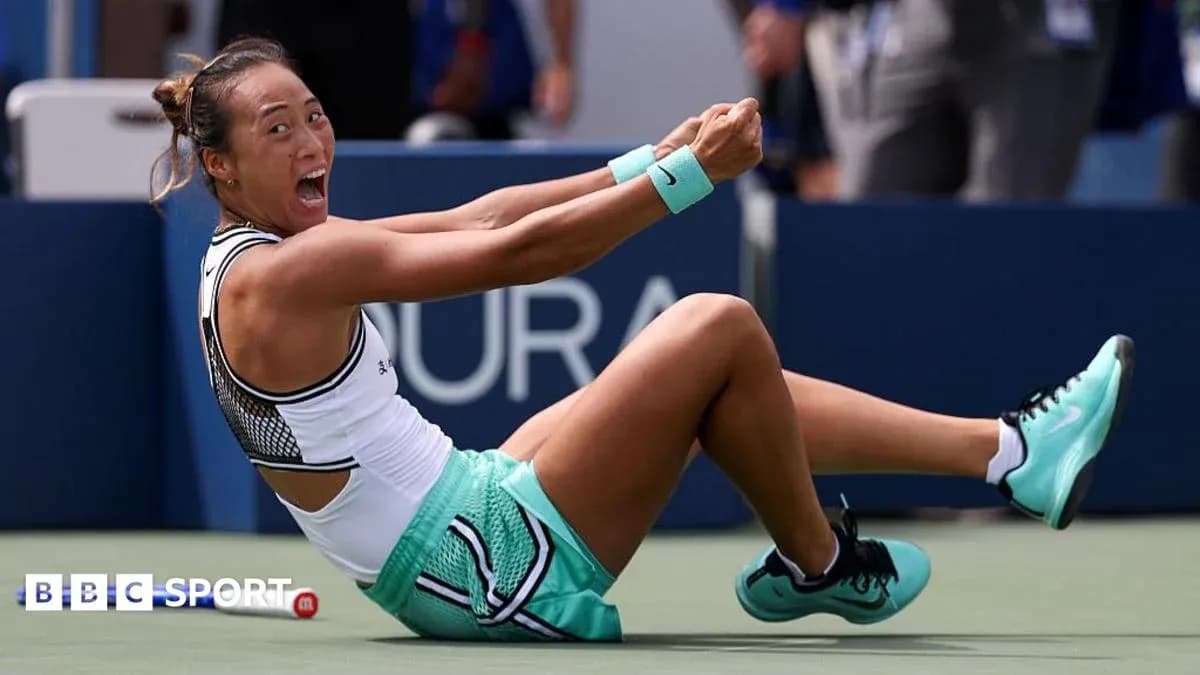
By 6-5, the qualifier had all the momentum. Serving for the match, she did not flinch. When the final point was done, Zheng crashed to the court, lying on her back in a mixture of shock and relief, the last 12 months pouring out of her in one long exhale.
“Finally, a bit of luck is on my side,” the 23-year-old said afterwards, the understatement matching her earlier description of the match. She talked about the internal battle as much as the one across the net. “I am just telling myself ever give up. Somehow, little by little, it's just happened. Tennis sometimes feels like rollercoaster. You see many times people have a match point, but at the end we made a comeback.”
This was not just a wild night in New York. It was a hard pivot in a career that had stalled and then been forced to restart.
Zheng is the first qualifier to reach the women’s fourth round at the US Open since Emma Raducanu in 2021, when the Briton famously went on to win the title. The echo is impossible to ignore: a young player, coming through qualifying, suddenly riding a wave of belief on these courts.
Three months ago, there were no such echoes. There were tears.
At Roland Garros, in her first Grand Slam since elbow surgery in July 2025, Zheng lost in the first round to eventual runner-up Maja Chwalinska. Nine months out, a chronic injury caused by small pieces of bone floating in the elbow finally corrected, and yet the result cut deep. Her ranking had plummeted, her confidence with it.
“After coming back from injury I felt I lost the energy and I forgot how to compete,” she admitted.
It was a jarring contrast to the player who had lit up the previous 18 months. In 2024, Zheng had surged into the elite: an Australian Open final, Olympic gold, a US Open quarter-final. Early 2025 only strengthened the sense she belonged at the very top. She reached the last eight at Roland Garros and climbed to a career-high of No. 4 in the world.
Then the elbow gave way, and with it the momentum. The layoff dragged on. The ranking slipped as low as 160. For the first time in four years, she found herself back in the anonymity of Grand Slam qualifying, grinding for a place in the main draw rather than eyeing the second week as a given.
That is what made this night feel bigger than a single result. Zheng did not just outlast Keys. She rediscovered something she feared she had misplaced: the edge, the stubbornness, the refusal to accept the scoreboard as a verdict.
From 5-0 down and match point against her, she turned a likely straight-sets defeat into one of the most astonishing comebacks of this year’s tournament. The qualifier who once doubted whether she still knew how to compete walked off court as a fourth-round contender.
New York has a habit of reviving careers and rewriting expectations. Zheng Qinwen just added her name to that long, unruly list. The question now is not whether she belongs here again – it’s how far this reborn run can carry her.