Williams Sisters Fall Short in Epic US Open Doubles Match
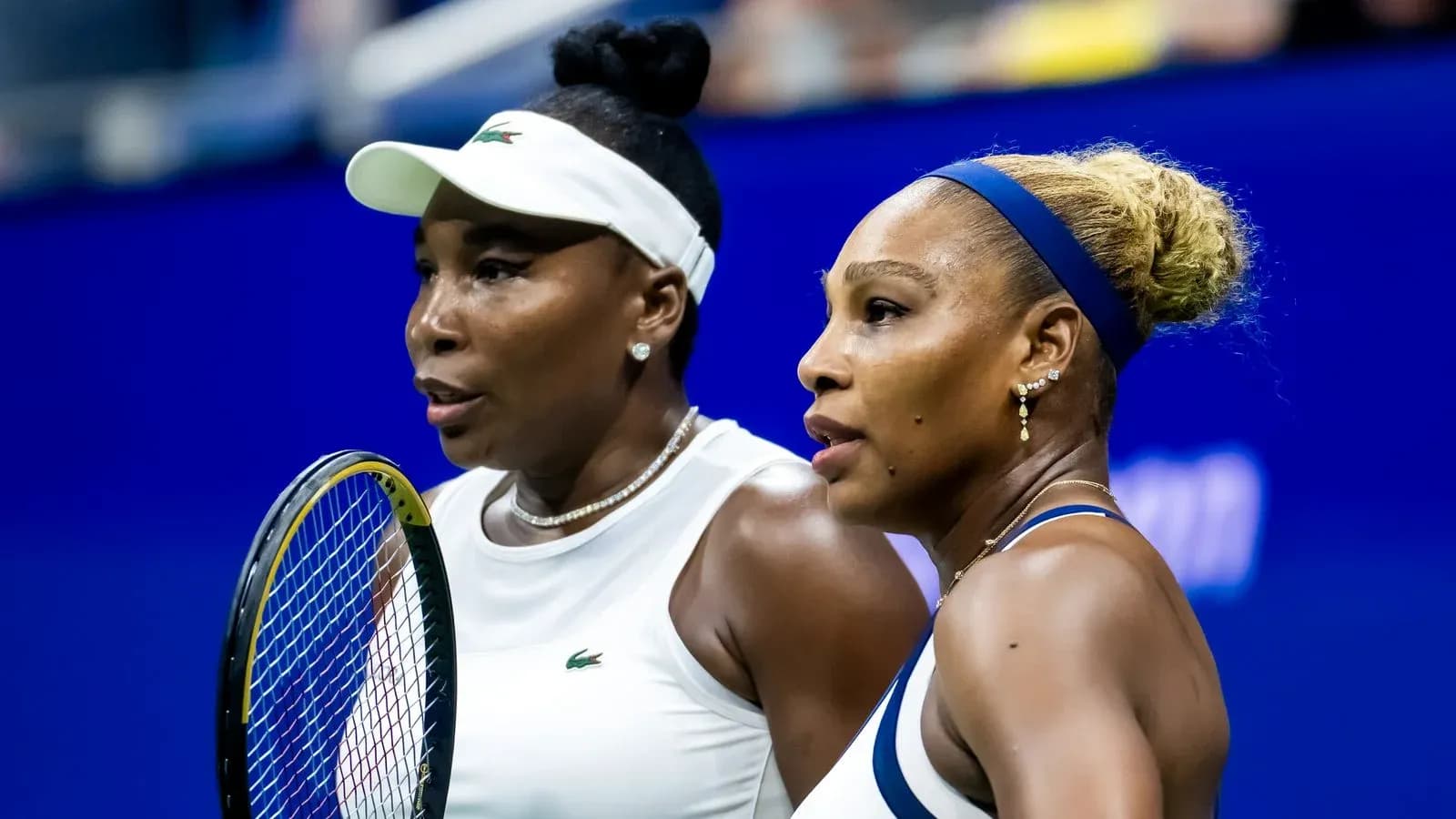
Serena and Venus Williams walked back into Arthur Ashe Stadium as if time had folded in on itself. Same stage. Same roars. Same sense that anything was possible.
For three hours and two minutes, it almost was.
Twenty-seven years after they first lifted the US Open women’s doubles trophy, the Williams sisters dragged a packed Ashe crowd through a first-round epic before finally bowing out to Maya Joint and Chan Hao-Ching, 6-3 6-7 (8-6) 7-6 (10-7).
They had led 5-0 in the deciding match tie-break.
The comeback story had felt almost scripted. Serena, 44, and Venus, 46, reunited at a major for the first time since the 2022 US Open, stepping back into the arena with a combined haul that barely seems real: 14 Grand Slam doubles titles together, two US Open doubles crowns, three Olympic golds, and another 30 Grand Slam singles titles between them. The return, Serena has said, came at the suggestion of her daughter. The weight of history came from everywhere else.
The USTA granted them wild cards; the crowd did the rest. Every clean strike from Serena, every knifed volley from Venus, every flash of their old telepathy drew a roar that rattled around the upper deck. At times, it felt less like a first-round match and more like a festival in their honour.
The tennis, though, was no exhibition.
Joint, a 20-year-old Australian, has made this summer her own personal Williams tour. She stunned Serena on Centre Court at Wimbledon in singles, then walked into Ashe on Friday night to face her again, this time with 23,000 people very clearly invested in the other side of the net. Chan, vastly experienced in doubles, provided the ballast and the touch.
“Being able to play against such legends of the game is super special,” Joint said on court afterwards. She admitted she was “lost for words” and called both sisters her idols, recalling how she grew up in Michigan watching them dominate the sport. Twice in one summer, she has stood across the net from them. Twice, she has held her nerve.
Early on, the upset looked entirely plausible. Serena’s serve, sharp at Wimbledon and in her recent mixed doubles outing with Carlos Alcaraz, wobbled at key moments. Two dropped service games from the 23-time major singles champion opened the door, and Joint and Chan marched through to take the first set 6-3.
The sisters answered with defiance. They tightened the screws at the net, Venus cutting off angles with that long, loping stride, Serena unloading on returns. The second set surged into a tie-break, the tension thick, the noise climbing with every point. They burned through four set points, each one slipping away, before finally converting the fifth when Joint’s overhead drifted long.
Ashe erupted. For a few minutes, it felt like 2000 again.
The decider became a grind, the kind of long, nervy third set they had not contested past 5-5 since 2001. Rallies stretched. Service games creaked. The match tipped into a deciding tie-break, and that was when the old aura truly returned.
They raced to 5-0. The stadium shook. Fans stood, phones in the air, sensing a story that would be replayed for years.
Then the match turned.
Joint and Chan refused to go away, chipping into the lead point by point. The errors crept in for the sisters, the margins narrowing cruelly. At 7-7 in the match tie-break, the belief on the other side of the net had hardened into something more dangerous. Finally, a crisp Chan volley cut through the din and ended the comeback, the upset complete, the scoreboard locked at 6-3 6-7 (8-6) 7-6 (10-7).
The USTA confirmed the sisters would not be available for comment. The noise as they left the court said enough.
This may not be the last chapter. ESPN commentator Caroline Wozniacki revealed on air that she believes Serena wants to return to singles next year, a tantalising prospect given how fiercely she still strikes the ball and how naturally she slipped back into the rhythm of competition this fortnight. If this doubles run was a test balloon, it floated high.
On Friday night, though, the story belonged to two generations at once: the icons who built the stage, and the young opponents who dared to share it.
Tsitsipas Breaks New Ground, Tiafoe Cruises
Earlier in the day, Stefanos Tsitsipas quietly ticked off a milestone of his own. The Greek star, long established at the sharp end of other majors, had never been beyond the third round in New York. That changed with a 2-6 6-1 7-6 (7-3) 6-1 win over 18th seed Jiri Lehecka.
The match swung sharply after a ragged opening set from Tsitsipas. Once he found his range, he dominated behind his forehand and serve, shrugging off that early stumble to control the next three sets. The pivotal moment came in the third-set tie-break, where he tightened up his game, took charge of the rallies, and shut the door on Lehecka’s resistance.
For the first time in his career, Tsitsipas is into the US Open fourth round. A small step in the context of his résumé, but in New York, a significant one.
American 11th seed Frances Tiafoe delivered a far more straightforward performance. Under less glare than in previous years but still very much a home hope, he dismantled Valentin Vacherot of Monaco 6-4 6-2 6-4, controlling the match with his serve and first-strike aggression.
On a night when legends flirted with another miracle and a 20-year-old seized her moment, Tsitsipas and Tiafoe quietly moved their own stories forward. The question now is whose run will still be alive when Ashe is once again full and demanding another classic.