Venus Williams Returns to US Open: A Wildcard Debate
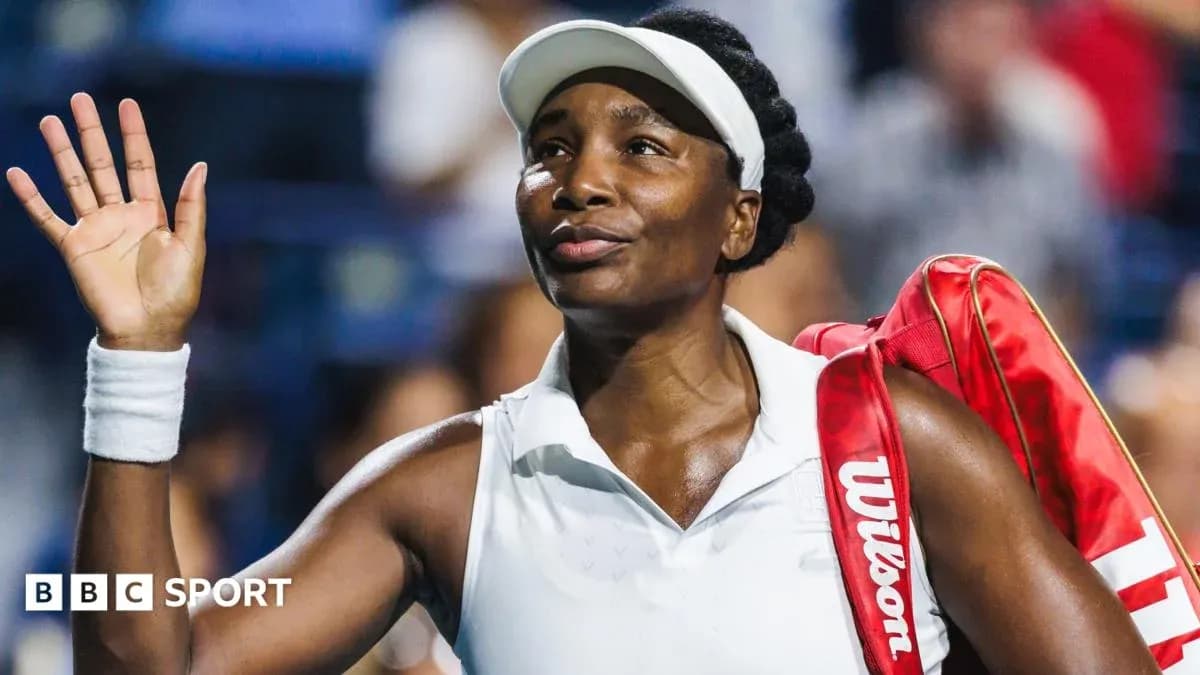
Venus Williams walks back into Flushing Meadows as both living history and live debate.
At 46, with five Wimbledon singles titles, two US Open crowns and three decades on tour behind her, she has been handed another US Open wildcard – her 12th of the season – to face fellow Grand Slam champion Sofia Kenin in the first round. On paper, it is a gift to a legend. In practice, it lands right in the middle of an argument tennis can’t quite resolve.
Because the numbers are brutal. Williams has lost her last 14 singles matches. She has just one win in her past 19. Her ranking has fallen to 611 in the world, leaving her entirely reliant on the goodwill of tournament directors to enter the sport’s biggest stages.
And still, those doors keep opening.
A legend on borrowed invitations
Eight of the 128 places in a Grand Slam singles draw are reserved for wildcards. At WTA and ATP events, there are usually between four and eight, depending on the size of the field. They are coveted spots, often lifelines for promising youngsters or home players trying to break through.
Venus keeps getting one.
This year alone, she has been invited to tournaments in New Zealand, Australia, Spain, Germany, Canada and across the United States. Her latest nod comes from the USTA, who know exactly what they are doing by putting her name on the marquee in New York.
There is no formal cap on how many wildcards a Grand Slam champion can receive. No equivalent of golf’s Open Championship, which quietly closed the door on its oldest winners by cutting the age limit for past champions from 65 to 55. Tennis has chosen a different path. If a legend wants to keep going, and a tournament wants them, the rules will not stand in the way.
Tournament director Karl Hale, who gave Williams a wildcard into this month’s WTA 1000 in Toronto, doesn’t hesitate when asked why.
“I think it's good for tennis to have these generational icons,” he told BBC Sport. “That they are still allocating wildcards for them says something to their intrinsic value to the tournaments.”
For Hale, this isn’t nostalgia. It’s business, and it’s profile.
Commercial pull vs competitive edge
Williams has not qualified for a Grand Slam by ranking since Wimbledon 2021 – the same tournament where she last won a singles match at a major. Since then, the results have been sparse but not entirely lifeless.
She pushed 11th seed Karolina Muchova to three sets at last year’s US Open. She stretched Olga Danilovic to three sets at the Australian Open in January. She reached the doubles quarter-finals in New York last year. Her lone singles win in the past 19 matches came against Peyton Stearns in Washington last July.
But the defeats keep stacking up. Her loss to qualifier Emiliana Arango in Cincinnati this month was her 18th in those 19 outings. In Toronto, she fell 6-4 6-1 to Kamilla Rakhimova. Hale, who watched closely, clings to the first set as evidence that she still belongs.
“Venus lost 6-4 6-1 to Kamilla Rakhimova, and the first set was really competitive,” he said. “She's still competitive, but just not winning these matches.”
That word – competitive – is the crux of the matter.
On one side of the argument, there is the view that 11 wildcards in a single season, without a steady flow of wins, is simply too many. That every invitation extended to a fading great is one not given to a younger player trying to climb, earn points, and build a career the hard way.
On the other side stands the reality of modern tennis as an entertainment product. Tournaments need names that move tickets, spike TV interest and give sponsors a story to attach to. A Williams sister still does all of that.
Hale makes no secret of it.
“The way we looked at Venus is that her legacy is phenomenal,” he said. “She's done so much for the sport and is really popular here in Toronto and our markets specifically – so we thought it was really good to announce it early that we have a Williams sister coming.”
The impact was immediate. Media interest surged. Opening day crowds got a headline act.
“The wildcards always play first-round matches, and with the bigger draw size now, it adds more notable names and stars for the beginning of the tournament,” Hale added. “Venus played opening day. She kicked off our tournament, so it added a lot of value.”
The quiet economy of wildcards
Behind the romance and the rhetoric lies a practical, sometimes transactional system.
Most events ringfence wildcards for national players. A German in Stuttgart, a Spaniard in Madrid, an American in New York – those choices are easy to sell locally. But there is also a marketplace, formal and informal, that moves these invitations around.
Hale talks about “trades” with other federations and agencies such as IMG, which manages players and until recently owned major events in Miami and Madrid. The most visible example is the reciprocal agreement between the USTA, Tennis Australia and the French Tennis Federation. Each offers a men’s and women’s wildcard to the others’ majors, guaranteeing their own players the same favour when the tour swings to their home Slam.
Within that ecosystem, a wildcard for Venus Williams is not simply a sentimental gesture. It is an asset. A guaranteed storyline. A proven draw.
When is enough, enough?
Still, the question lingers: where is the line?
“You never want to put a player out there that you are unsure about,” Hale said, stressing his belief that Williams can still win matches.
So should there be a formal limit? A rule that says, at some point, the wildcards must go to players with more ranking points and fewer memories?
Hale doesn’t think so. He believes the decision will come from Williams herself.
“When the time comes that Venus is not competitive in sets, then I think she will make that call,” he said. “Venus and Serena have done so much for women's tennis and the sport that they should be able to play as long as they want.
“I'm very happy they are continuing and they make their decision when they are ready, or each tournament makes their decision when they are ready.”
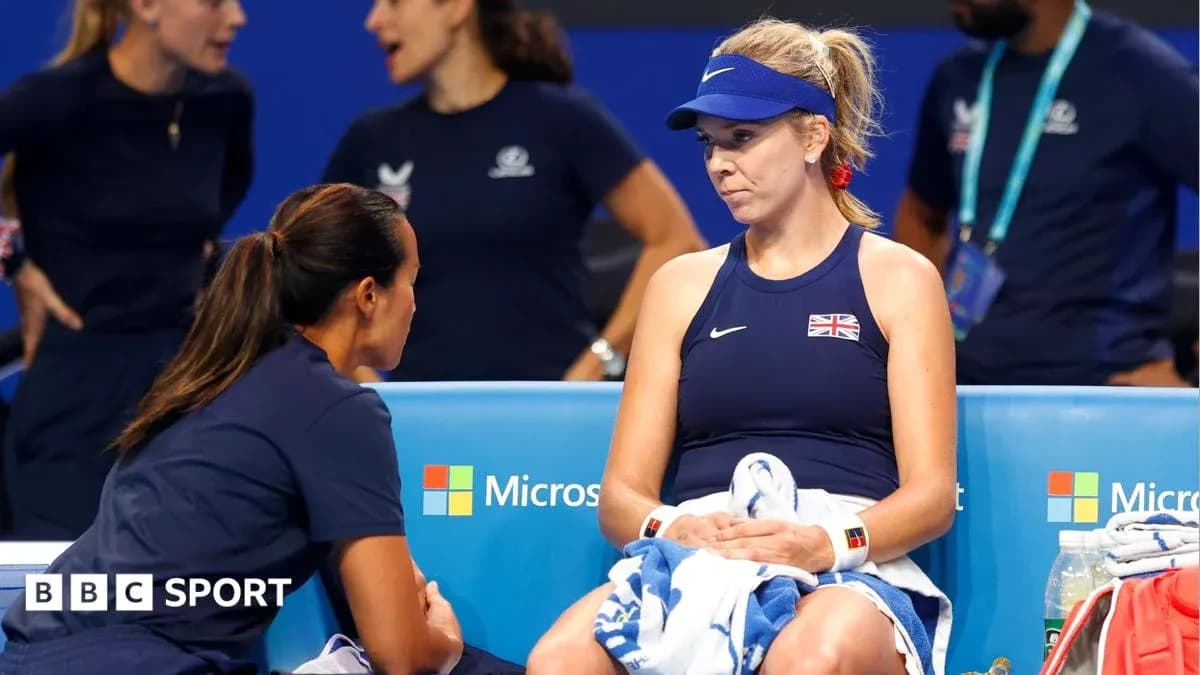
Among her peers, the sentiment is similar. British number one Katie Boulter, who partnered Williams in doubles in Madrid this April, called her an “absolute icon” and framed the wildcard debate in simple terms.
“Venus has given so much to our sport that she deserves to get what she needs back,” Boulter said. “We have to be grateful that she is still out there, doing the best she can.”
So Venus Williams walks into another Slam on another wildcard, still chasing wins, still drawing crowds, still stirring arguments about what the sport owes its greatest champions – and what it owes the next ones.