US Open Women’s Semi-Finals: Gauff, Sabalenka, Rybakina, and Pegula Clash
Coco Gauff needed only two words when the scale of it hit her.
“Oh, wow.”
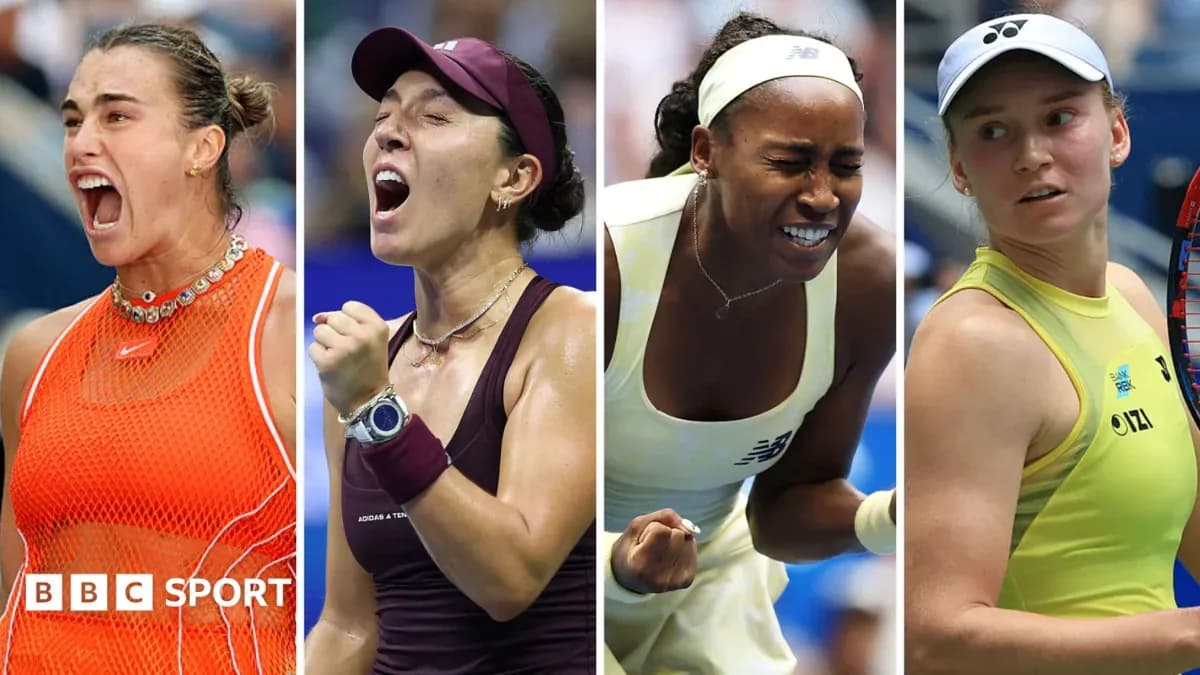
On a muggy New York night, that felt about right. For the first time since 1975, the US Open women’s semi-finals will feature the top four seeds. No surprises. No outsiders. Just heavyweight after heavyweight: Aryna Sabalenka, Elena Rybakina, Jessica Pegula and Gauff, all dragged through three-set dogfights to set up a last four that feels like a statement as much as a schedule.
Annabel Croft summed up the mood as the draw crystallised.
“How amazing – it doesn’t get much better than that does it?” the former British number one told BBC Radio 5 Live. “It has felt fantastic the whole tournament… I’ve been more enthused about looking forward to the match-ups this Grand Slam than any I can remember.”
She’s not alone. For years, the women’s game has been defined by volatility. Since the start of 2020, 13 different women have lifted major singles trophies, compared with just seven on the men’s side. Shock runs, one-off champions, revolving doors at the top.
Not this fortnight. Not so far.
Croft sees something shifting. “I just feel like there’s lots of really big names now, big personalities going up against each other and it’s really exciting. We’ve been blessed with the amount of intriguing matches we’ve had. You’re seeing these warriors out on court.”
She’s right. And now the warriors have to turn on each other.
Sabalenka vs Pegula: A rivalry with history and a three-peat on the line
The first semi-final on Thursday night (00:00 BST, Friday) is a meeting between two players who know every contour of each other’s games. Top seed Aryna Sabalenka, the two-time defending champion, stands two wins from becoming the first woman since Serena Williams in 2014 to win three straight US Open titles. Across the net will be Jessica Pegula, the only semi-finalist still chasing a first Grand Slam crown.
They are not strangers. Far from it.
Sabalenka and Pegula have already met 13 times, including at the business end of the last two US Opens. Twelve months ago, Sabalenka clawed back from the brink to win their semi-final. This time last year, she did it again in the 2024 final, denying Pegula a maiden major and tightening her grip on the trophy.
Pegula doesn’t run from that history. She leans into it.
“It’s fun to look at it like a rivalry. I think that’s what motivates me,” she said. “I know that she’s definitely pushed me to become a better player, so I always respect and appreciate that aspect of our rivalry.”
She has beaten Sabalenka four times on the WTA Tour. That number matters. But not as much as the zero next to her name in Grand Slam wins over the Belarusian. Pegula called that gap a “hurdle” she has to clear. She knows exactly where the wall is. Now she has to break it.
Sabalenka, for her part, sounds almost energised by the challenge.
She described herself as “super excited” to face Pegula again, fully aware that the American arrived in New York with momentum after reaching the finals in Washington and Cincinnati.
“I’m loving playing against her because it’s a battle, because it’s a fight, and I love being under pressure and going through tough challenges,” Sabalenka said. She has not reached a semi-final anywhere since losing to Pegula at the Berlin Open in June. The familiar opponent, the familiar stage, the familiar tension – it all suits her.
Pegula, though, knows Sabalenka’s aura is not the only story. “I know she hasn’t maybe had the best results this summer, but I know that she has a lot of confidence playing here at this tournament, and she’s going for a three-peat,” she said.
One woman is hunting history. The other is hunting a breakthrough. Their rivalry already has scars and storylines. This chapter could define both careers.
Rybakina’s new summit, Gauff’s home court
If the first semi-final is about a rivalry, the second is about timing.
By simply reaching the last four, Elena Rybakina has guaranteed herself the world number one ranking on Monday. She will end Sabalenka’s 99-week stay at the top. That is an enormous number in a sport that rarely stands still.
Rybakina, though, wants no part of a coronation tour.
For her, the ranking is “just a number”. The real prize is a third Grand Slam title, the chance to match the status on paper with a trophy in her hands.
As BBC Radio 5 Live’s tennis correspondent Russell Fuller put it: “It’s never quite the same if you become world number one having lost a Grand Slam final or semi-final just beforehand, so she will be trying to cap off an absolutely perfect couple of weeks by winning the title.”
Standing between her and that “perfect” fortnight is Coco Gauff, with Arthur Ashe Stadium at full voice behind her.
Gauff is only 22, but New York has already given her both extremes. She won the title in 2023. Then came back-to-back fourth-round exits in the two years that followed. This time, she insists, the mindset is different.
“Sometimes you’re just so focused on the now, now, now, because you want it now, and obviously you want to take advantage of your opportunities,” she said. That urgency hasn’t vanished, but it has been tempered.
“In the grand scheme of things, [I’m] definitely sitting here in a different mindset and perspective than I was last year. It inspires me a little bit more to keep working, as I see how much I have improved in a year.”
The numbers back that up, but so does the matchup. Gauff leads Rybakina 2-1 in their head-to-head. The most recent chapter, though, belongs to the Kazakh: Rybakina came from a set down to beat Gauff in last month’s Canadian Open semi-finals, a reminder of the damage she can do once the serve starts landing and the forehand begins to flow.
Gauff knows what’s coming.
“I’m going to have some aces hit on me and some winners hit on me, but I’m going to keep fighting and give it my all. That’s all I can do,” she said.
On one side of the net, the soon-to-be world number one, trying to turn a ranking into a reign. On the other, the defending US Open champion, older in experience if not in years, trying to prove that last year was not a one-off but the start of something bigger.
For once, the women’s draw has delivered exactly what the seedings promised: four giants, no gatecrashers. Sabalenka, Rybakina, Pegula, Gauff. Titles already won, reputations still being written, and a sport that suddenly feels like it has a core of stars ready to collide again and again.
The semi-finals will decide who plays for this US Open. They might also tell us something more important: whether this is just a glorious alignment, or the beginning of a new, enduring order at the top of the women’s game.