U.S. Open's Influencer Dilemma: The Clash of Tennis and Social Media
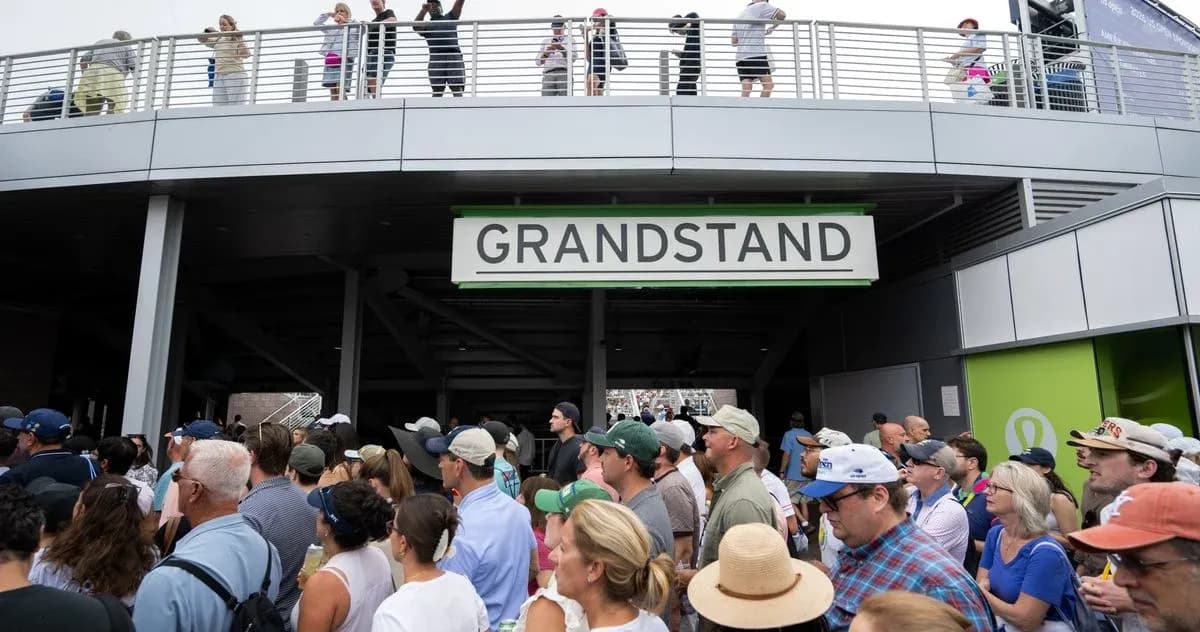
The Arthur Ashe court has seen its share of drama. Tie-breaks, walkovers, rain delays. On Monday night, Naomi Osaka’s match against Anastasia Zakharova paused for something far more 2024: a suite full of influencers filming content under a blazing light while a Grand Slam champion tried to serve.
The chair umpire repeatedly turned toward a noisy box of about a dozen people, asking them to quiet down as they recorded what looked like a TikTok dance. The light cut through the dark like a studio rig. The tennis, for a few moments, became the background.
A video of the scene, posted by Katherine, a lifelong tennis fan in the stands, rocketed around social media. More than 1,500 comments poured in, many from fans who’ve grown increasingly exasperated with what they see as a creeping takeover of the U.S. Open by influencers and brand activations.
What had been a low simmer over the past few years — the Honey Deuce era, the rise of tennis WAGs as Instagram fixtures, the Open as a lifestyle backdrop — boiled over in the comments.
“All around the stadium, there were people — in the middle of serves and in the middle of points — getting up, walking through the crowd down to the closest they could get to the court in their section, and taking pictures, taking videos, using ring lights,” Katherine said.
In tennis, the etiquette is simple: you move at the change of ends or, at the very least, between points. But the U.S. Open relaxed its rules on walking during play in 2024, and the culture shifted with it.
On Monday, that shift felt stark. Katherine described the umpire fixing his gaze on one particularly unruly suite and asking for quiet several times. The group, she said, barely looked up. An usher held a bright, cell-phone-sized light as they filmed. “It didn’t seem like they were aware that the umpire was talking to them because they weren’t really watching the match,” she said. “I’ve never seen that in the middle of a point. The flash was the craziest thing.”
The clip captured more than just that suite. In the background, another moment: influencer Mriganka Chawla taking a selfie while Osaka played. Chawla later told The Cut she regrets it.
She was at the Open for the first time, with her fiancé’s tennis-obsessed family, she said — not on an official influencer assignment. She wasn’t in the suite that drew the umpire’s ire. She had simply left her seat for an ice-cream sandwich, found a sparsely populated section, and asked an usher to take her picture “because my man can’t take a photo to save his life.”
From her perspective, she was out of the way. “I was seriously so far away,” she said. “I’m really sorry if I disrupted any playing.”
Once she identified herself in the comments under Katherine’s video and pushed back on the idea that her flash had bothered anyone, the internet did what it does. She said she received a bizarre mix of “death threats” and DMs asking which selfie light she used — it’s the same one associated with Alix Earle.
“This is such an influencer thing, and I understand that now, but everybody has really cute photos [from the Open]. I just wanted one cute photo,” she said. “I wish somebody had told me, ‘You can’t do that.’ This is also on me. I should have researched it. I wish there were some guidelines or something.”
The collision was probably coming. The United States Tennis Association has spent years reshaping the U.S. Open into what its CEO recently called “tennis Disneyland” — a sprawling entertainment campus with family events, sponsor activations, photo ops, and plenty of Instagram-ready backdrops wrapped around the actual tennis. Influencers sit at the heart of that push.
Sportico reported that this year the USTA handed out media credentials to 100 influencers and podcasters, double last year’s 50. That doesn’t include the creators invited by corporate sponsors to their suites, where the priority often appears to be content first, forehands second.
Traditional fans feel the shift in their wallets and in their seats. Ticket prices climb. The grounds get more crowded. The mix of newcomers grows, some fully engaged in the tennis, others seemingly there for the cocktails and the camera roll. For a sport built on concentration — silence for the serve, a collective inhale on break point — the ring lights and mid-point strolls grate.
Mercer Edition, a culture magazine, recently labeled it the U.S. Open’s “influencer problem,” writing that tennis “is built around a level of concentration that can’t be understood until fully observed, and as such, brands should take that into consideration when offering to open the doors for vanity metrics and corporate satisfaction.”
Katherine feels that fatigue setting in. The Open has always been the loud Slam, the one where New York energy seeps into the rallies. But this, she said, is different. “Once it’s impacting the play of the game, that’s a breaking point.”
For all the noise, there’s an irony at the center of this story. After all the commotion, all the backlash, all the DMs and death threats and debates about etiquette, Chawla said the photo that sparked her part in the controversy wasn’t even worth posting.
“It looks like I’m mid-sneeze,” she said, laughing. “Hey, everyone knows I went to the U.S. Open now, so I guess I don’t have to post anything.”
The shot didn’t land. The questions will. How much “Disneyland” can tennis absorb before the sport itself slips out of frame?