US Open 2023: A Tournament of Decay and Triumph
By the time the last few stragglers shuffled out of Flushing Meadows and the sun was thinking about rising, the US Open looked less like a grand slam and more like a construction site that had lost an argument with a storm.
Inside one of the tournament shops, a small crew of workers huddled under a jagged hole in the ceiling, wrestling with a burst pipe that sent water cascading towards racks of merchandise. They dragged plastic sheeting into place, shifted boxes, tried to outrun gravity. It felt less like the end of a night session and more like the aftermath of a flood.
Step into Arthur Ashe Stadium this year and the warnings were already there. “Pardon our appearance while we write the next chapter of Arthur Ashe Stadium,” the signs read. The reality was less romantic. Corridors stripped bare. Ceilings scarred and patched. One of the grandest stages in sport looked as if it had been taken apart faster than it could be put back together.
Inside, the sense of decay was everywhere. In the media centre, new leaks seemed to appear with the regularity of changeovers. Plastic sheets dangled from the ceiling, funnelling water into scattered buckets that filled with a steady, mocking drip. In the workers’ restaurant, a dramatic burst from above forced a full-day closure. Colleagues joked — only half joking — that no sensible person would willingly sit under those ceilings for two weeks straight.
Even the photographers, usually tucked away and forgotten, felt it. Some reported feeling ill after breathing in rancid fumes rising from the drains in the photo pit. At times, the world’s richest tennis federation looked like it was running a major championship out of a half-finished shopping mall.
And that was only one strand of a tournament that, in many ways, will go down as the worst grand slam in recent memory.
The Year of the Influencers
If the infrastructure creaked, the atmosphere on Ashe often snapped. This will be remembered as the year the influencers took over — and made the tennis feel like a backdrop to their own feeds.
Ring lights glowed in the stands. TikTok videos were filmed mid-rally. Fans repeatedly stood up during points to take selfies, oblivious to the players, the score, or anyone behind them. The idea that everyone must “grow the game” at all costs has seeped into every corner of tennis. In New York, that mantra tipped into farce.
At times, the hum of conversation around Ashe grew so loud that even Aryna Sabalenka’s trademark screams were swallowed up. The biggest stadium in tennis became a talk show set with a match running somewhere in the background.
And yet, on court, the sport kept fighting back.
Sixteen Hours of Chaos
From 11.30am on Tuesday to 3.33am on Wednesday, Ashe hosted 16 hours of tennis that reminded everyone why this event still matters. Four matches. Four final sets. A quarter-final day as gripping as any in recent memory.
It also underlined a glaring truth: the sport still refuses to fix its obsession with marathon night sessions. Players staggered off court in the small hours. Fans missed climaxes because the subway or their stamina gave out. Organisers spoke about “spectacle” while ignoring the obvious — that finishing elite matches at 3am is a failure of scheduling, not a badge of honour.
Yet in the middle of the chaos, the women’s game delivered a statement week.
Women’s Tennis Takes Centre Stage
The entire top six reached the quarter-finals. For the first time in 51 years, the top four players in the world locked out the semi-finals. No interlopers. No shock semi-finalist riding a lucky draw. Just the sport’s elite, doing exactly what the rankings say they should.
Sabalenka’s run told one story. Her comeback win over Linda Noskova, the 21-year-old Wimbledon champion, was one of the matches of the year: raw, physical, nerve-shredding. Sabalenka arrived in New York off a miserable summer, struggling with form and confidence. To claw her way through that match, then keep going all the way to the final, said plenty about her resilience.
The title, though, belonged to Elena Rybakina. She walked into New York carrying the weight of the No 1 ranking, an achilles injury and one of the nastiest draws imaginable. She walked out with the trophy.
Rybakina’s level on hard courts over the past 12 months has been relentless. Her game is clean, heavy, unflustered. Her personality is the opposite of Sabalenka’s crackling intensity — quiet, reserved, almost understated. That contrast only sharpened the edge of their rivalry and gave the women’s event a compelling centre of gravity.
Behind them, others carved out their own chapters. Zheng Qinwen produced back-to-back escapes that bordered on the surreal: from 0-5 down to 7-5 in the third set against Madison Keys in round three, then from 0-5 to 7-5 again in the first set against Iga Swiatek in round four. Two impossible scorelines, turned into two wins. Her return to the sport’s biggest stages felt not just dramatic, but earned.
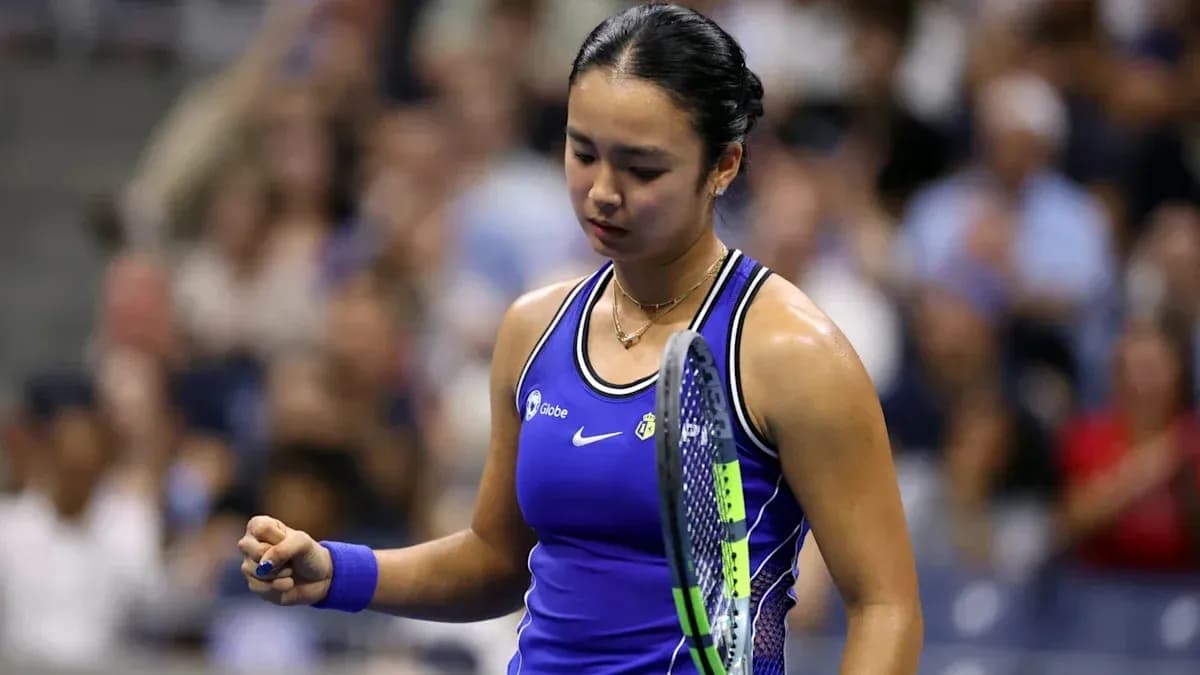
Iva Jovic and Alexandra Eala pushed each other deep into the night, proof that fierce competitiveness can live comfortably alongside genuine friendship. A year after Coco Gauff stood on this same court in tears, broken by a serve that had deserted her, she came back with a rebuilt delivery and a semi-final run that underlined how far she has travelled in 12 months.
For the women, New York was messy, noisy, flawed — and still a triumph.
A Brutal Year for the Men
The men’s game could not say the same.
Injuries have ripped through the younger generation, turning 2026 into a grim roll call. Carlos Alcaraz and Jannik Sinner have drawn the most attention, but they are only the headline names. Jack Draper, Holger Rune, Lorenzo Musetti, Arthur Fils, João Fonseca — all have missed significant chunks of the season.
Even those who made it to New York did so with the scars of those absences still visible in their movement, their match toughness, their confidence. The sense of momentum that once surrounded the men’s tour has stalled, replaced by a nervous question: how many of these bodies can hold up?
Yet even in a damaged draw, the US Open found a moment that will live long beyond the leaks and late nights.
Alcaraz’s Defeat, and His Smile
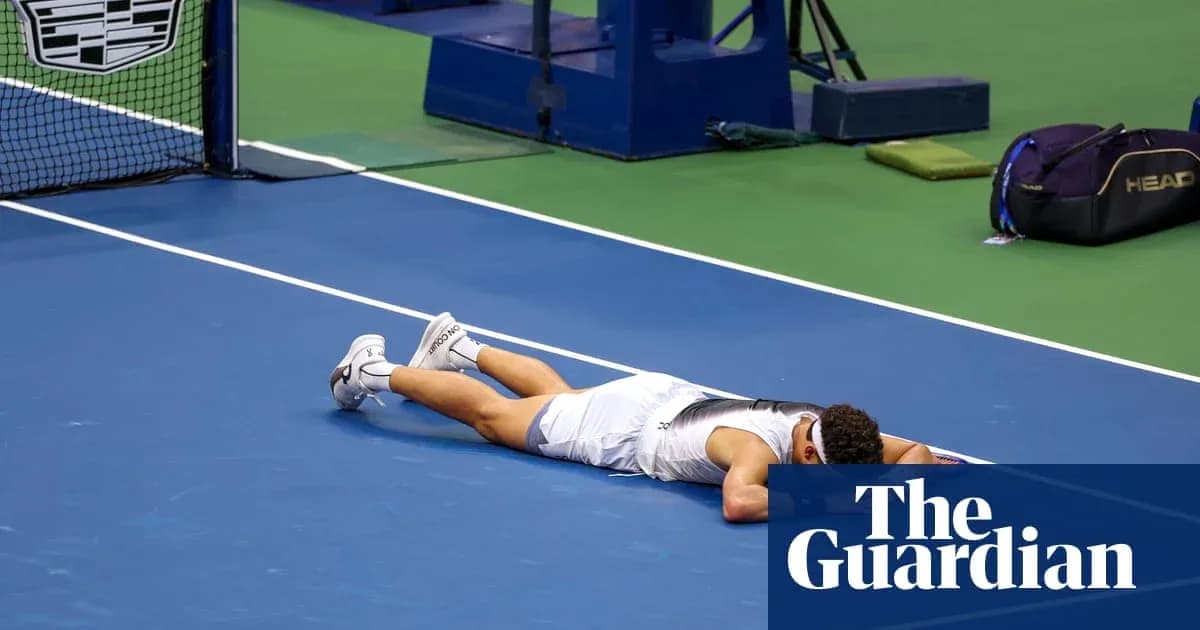
At 3.40am on Wednesday, after 4 hours and 28 minutes of punishing, breathless tennis, Ben Shelton walked off Arthur Ashe with the biggest win of his career. He had outlasted Alcaraz in a fifth-set tie-break, in a match that left the Spaniard vomiting repeatedly, forcing his body to keep answering questions it didn’t seem ready to face.
Alcaraz lost by inches. He left the court with nothing to show on the scoreboard.
Yet for him, this night was something else entirely. He had been away for four and a half months with a wrist injury, unsure how it would respond under real stress, under real pressure. In New York, he finally got his answer: he could still go the distance, still dig into the reserves that made him a champion, still feel like himself.
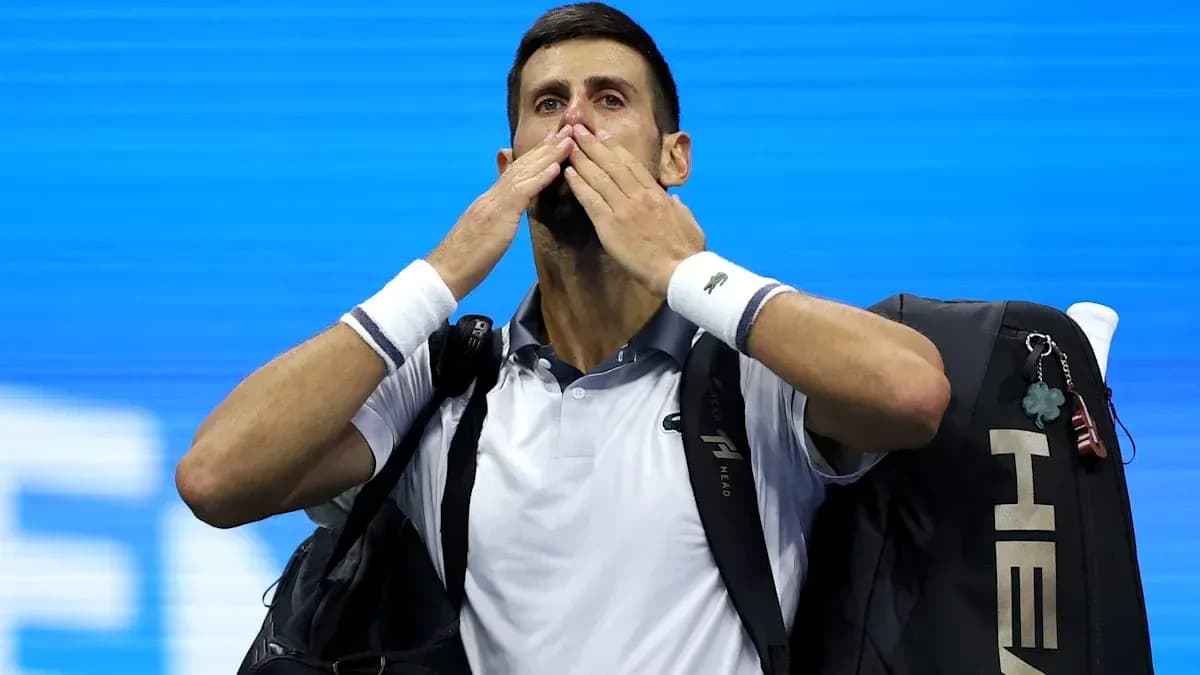
As he walked through the tunnel towards the locker room — a place that has seen so many broken rackets and broken hearts — his face cracked into a wide, unguarded smile.
The stadium might be crumbling. The pipes might burst. The influencers might keep waving their ring lights through match point.
But if Alcaraz can walk out of a 3.40am defeat smiling like that, the fight for what this tournament should be is far from over.