Tennis Etiquette Meets Influencers at the US Open
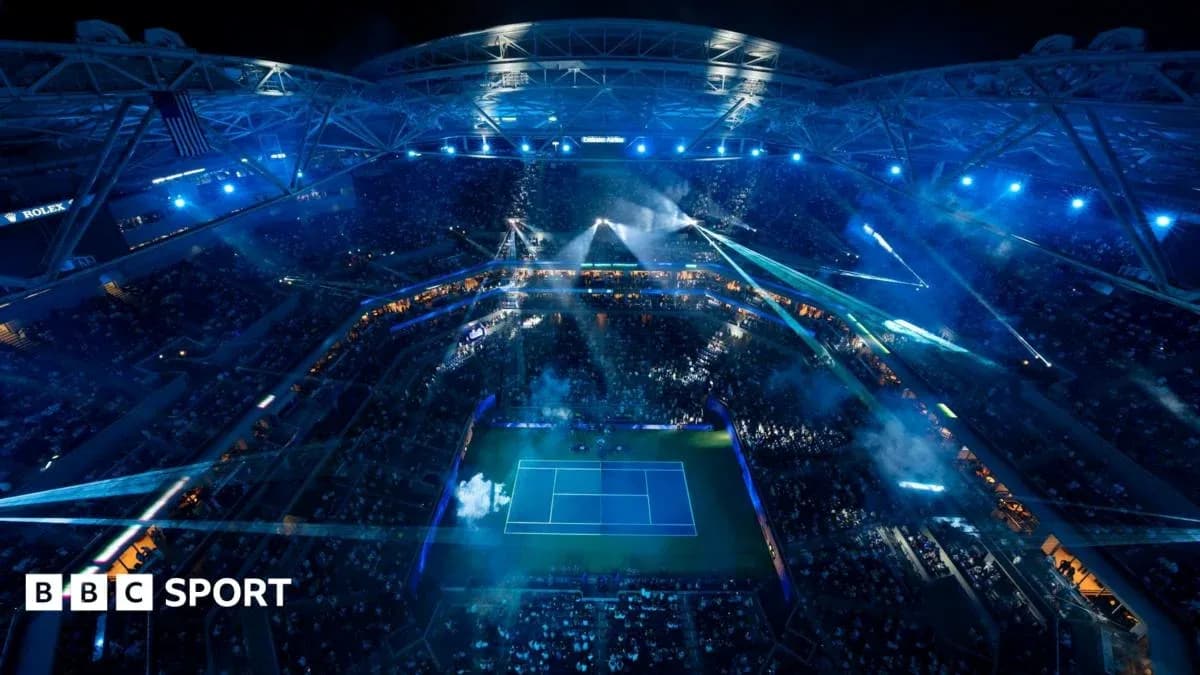
Lights. Camera. Quiet, please.
At the US Open in New York, tennis’ oldest courtesies are colliding head‑on with its newest guests: the influencers.
Around 100 content creators have been granted accreditation for this year’s tournament, roughly double last year’s number. They roam Arthur Ashe Stadium with cameras, ring lights and vlogs, selling the sport to audiences who might never have watched a rally in full.
They’re also testing the limits of tennis etiquette.
Old codes, new crowd
Tennis has always lived by a set of unwritten rules. You apologise for a net cord winner. You’re honest on line calls and double bounces. You shake hands, win or lose. And if you’re in the stands, you stay quiet while the ball is in play.
That last one is under strain.
World number four Coco Gauff welcomes the idea of a fresh audience, but she wants them to understand they’re entering a different kind of arena.
"I definitely think it's cool to have a new demographic and I definitely think it helps grow the sport," she said. "But if you're being invited to a red carpet, you wouldn't show up in jeans.
"I think it's just follow the etiquette of the sport. That's all."
The message is simple: come dressed however you like, digitally speaking, but respect the dress code of behaviour.
Ring lights on Arthur Ashe
The flashpoint came during two-time champion Naomi Osaka’s first-round match on Arthur Ashe Stadium.
While Osaka was serving, a group in a hospitality suite launched into a photo shoot, ring light blazing. The portable light cut through the stadium gloom, enough for the chair umpire to step in and issue a reprimand.
The noise and movement didn’t stop with the light. In one viral video from that match, a group can be seen talking loudly and filming themselves as points unfold below, prompting the umpire to call for them to stop.
When Osaka returned to Ashe on Thursday, the volume hadn’t exactly faded.
"Today the umpire told everyone to be quiet more than I've ever heard an umpire tell a crowd to be quiet," she said.
"I tell people I normally just focus on the match and the court, but there was a moment where there was people shouting and you could hear it quite clearly.
"I think it bothered my opponent, too."
Osaka isn’t railing against the concept of creators. She’s asking for a baseline of respect.
"I think obviously if you come to a sporting event, you have to respect the sport," she said. "I feel like it's common courtesy to read up on the sport, especially the etiquette.
"It could be a good thing for people to make the sport of tennis popular to their specific audience, but I think it has to be managed a lot better, especially in the situation like my first-round match.
"Overall, I think there are huge positives. You want people to continue to grow the sport.
"I just think it has to be in a way that everyone knows the rules and the etiquette."
A stadium that never sleeps
Arthur Ashe is the biggest tennis stadium on the planet. It rarely goes quiet. Conversations hum in the upper decks, drinks clink in the suites, and the soundtrack of New York seeps into every service game.
Some players feed off that energy. Some feel suffocated by it.
Men’s seventh seed Daniil Medvedev, who has had his share of tense nights with the New York crowd, leans firmly toward the upside of this new era.
"I think the more we try to raise awareness about tennis, the better it is, the more popular the sport is," the Russian said. "The more the sport grows, the better it is. I trust USTA with what they are doing.
"I think [there is] a lot more upside than downside, so go for it."
American 11th seed Frances Tiafoe, a player who thrives in chaos and colour, sees the stands as a reflection of the city.
"I think the Open is great because you get all types of people that want to come and watch tennis," he said. "All different walks of life, different types of people, different type of occupations. Personally, I love that.
"I have no problem with anybody doing anything, coming to watch the tennis."
The message from Medvedev and Tiafoe is clear: fill the seats, mix the cultures, let the sport breathe.
When content crosses the line
Not everyone is as relaxed.
American world number three Jessica Pegula has watched the same clips as everyone else: selfies with flashlights, ring lights flickering, creators filming through points.
"I can appreciate the influencers coming and showcasing the US Open experience," she said. "But I do think that it's tough when you see videos when they're taking pictures and using the selfie lights.
"People are down there trying to perform. It's their career and their job. It seems a bit disrespectful.
"I think it's become a little too much this year.
"I can appreciate one side of it, but I think when you have the other side literally interrupting matches, it gets a little tough."
That’s the line the tournament is now trying to draw: celebrate the spectacle, protect the competition.
‘The tennis Disneyland’
The shift didn’t happen overnight. The US Open has spent the past few years loosening its own boundaries.
In 2024, organisers introduced a policy of free fan movement, scrapping the old rule that fans had to wait for changeovers to take their seats. A year later, the event stretched to 15 days. The week before the main singles draw is now sold as ‘Fan Week’, with a revamped mixed doubles competition and exhibition matches featuring stars past and present.
Tournament chief executive Craig Tiley has a phrase for what he wants this to become: "the tennis Disneyland".
Part of that vision is the formal creation of a “creator credential”, a badge that opens the gates to influencers and content makers.
"We need to find ways of reaching new audiences, reaching people in a way that they connect with media today," Tiley said before the tournament.
"The creation of the creator credential has been a key part of that because it's enabled us to talk to people in a way that they're listening. That's been a big focus."
The strategy is obvious: if traditional coverage can’t reach every screen, enlist the people who already do.
A balancing act in real time
Since the Osaka incident, the US Open has moved to tighten the screws without dimming the lights completely.
Screens around the grounds now carry stronger messages, asking fans to "refrain from any activity that could disrupt the game, including noise levels, flash photography and ring lights".
In a statement, the USTA underlined its twin priorities.
It said it "is always striving to grow tennis in this country and bring new audiences into the sport".
"We want all of our fans and guests to have an incredible time when they attend, but we also need to ensure they do not interfere with the action and competition on the court," the statement added.
"We are continually looking for ways to ensure fans in the stands know what is permitted and what is prohibited."
So the experiment continues. The world’s biggest tennis stadium is now a live set, a social feed, a sporting cathedral and a theme park rolled into one.
The question hanging over this New York fortnight is no longer whether tennis can attract a new generation. It’s whether the sport can keep its soul while the cameras keep rolling.