Taylor Fritz's US Open Heartbreak Against Francisco Cerundolo
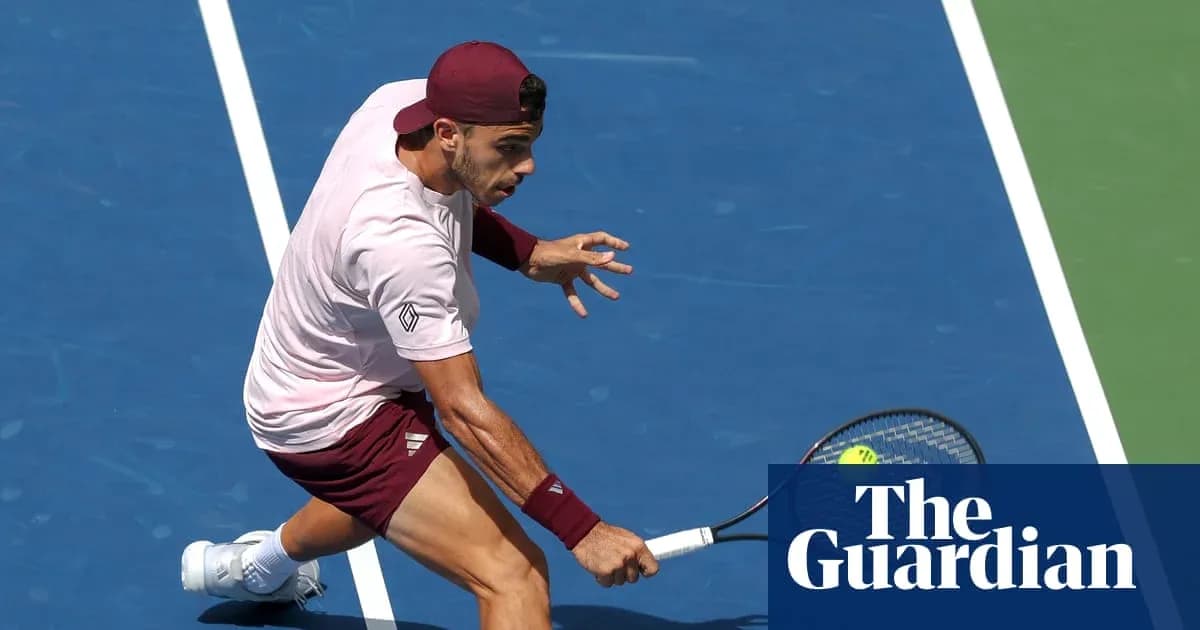
Taylor Fritz stood alone on Arthur Ashe, hands over his face, staring at the hardcourt he had just let swallow him whole.
His last, wild backhand had flown long by a distance that told its own story. A two-set lead gone. A break up in the third squandered. Three break points late in the fifth wasted. A US Open that had opened wide for him slammed shut with a 3-6, 4-6, 6-3, 6-4, 6-4 defeat to a fearless Francisco Cerundolo.
For two sets, Fritz looked like the man ready to walk through the door this strange men’s draw has left ajar. He was sharp, decisive, bullying the baseline and dictating with his forehand. When he broke in the first game of the third set, the match felt like a formality. Then came one loose service game. One lapse. The match flipped, and Fritz never truly got it back.
From there, he chased. For more than two hours, he tried to claw back the rhythm he had owned. Cerundolo, emboldened by the opening, played with increasing courage, growing into the space Fritz had abandoned. By the time the American’s final shot drifted beyond the baseline, the damage was complete and the opportunity, in this of all years, felt colossal.
This one will sting more than most. Fritz is not just another seeded American losing early at home. At 28, a former world No 4 and the standard-bearer for his generation of US men, he arrived in New York with a résumé that has steadily hardened over the past three seasons. US Open finalist in 2024, quarter-finalist in 2023 and 2025, he has spent the prime of his career running into tennis royalty at the business end of majors and leaving with credit but no trophies.
This time, the usual giants were gone or diminished.
- Jannik Sinner, the world No 1 and four-time major champion, is not in the draw, sidelined by injury.
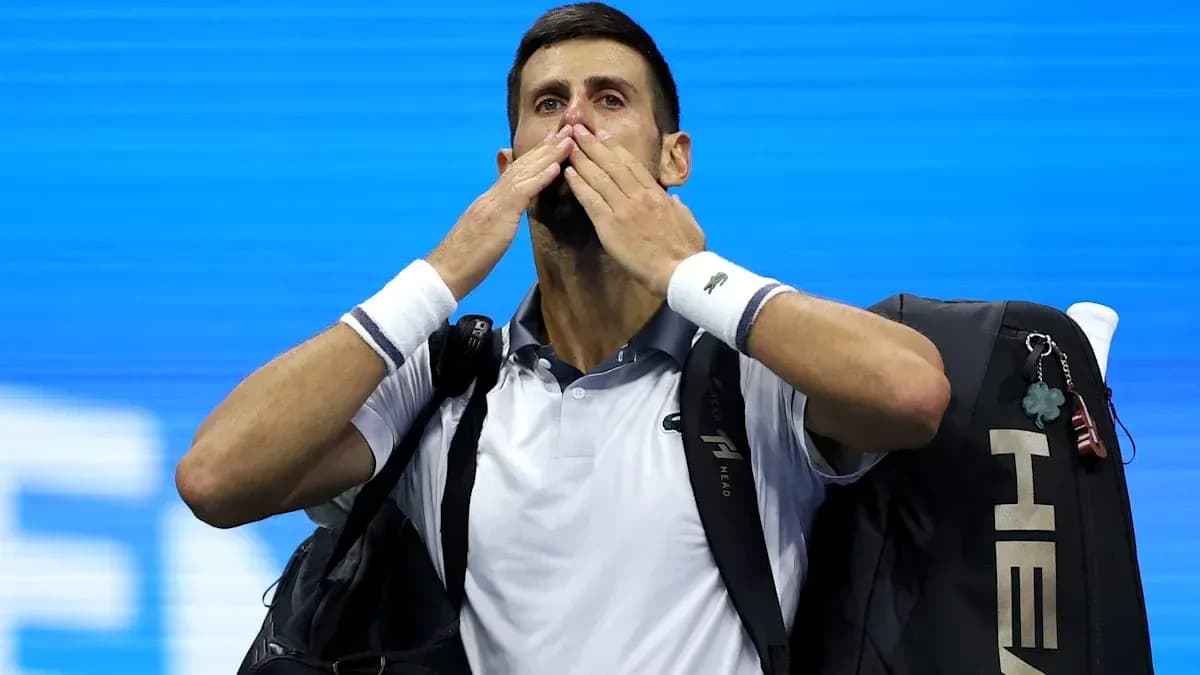
- Novak Djokovic, now 39, went out in the first round in a shock that rattled the tournament.
- Carlos Alcaraz, a seven-time grand slam champion and the defending US Open winner, is feeling his way through his first event after four months out.
No obvious juggernaut. No man in irresistible, title-winning form. For players like Fritz, this fortnight was the kind of opening that can define a career. That is what made his collapse so brutal. In the fifth set, he carved out three break points for a 5-3 lead and the chance to serve for the match. He couldn’t take any of them.
“I don’t even know what to say,” he admitted afterwards, visibly shaken. “I don’t really want to talk to anybody, see anybody. I kind of just need to get out for a couple days and then just get back to work. I don’t know how I let that happen today.”
His confusion matched the mood of a country that had started the day with seven men still in the singles draw: Ben Shelton, Fritz, Frances Tiafoe, Learner Tien, Tommy Paul, Alex Michelsen and Michael Zheng. In the bottom half, every fourth-round match on Friday’s schedule featured an American. The path, at least on paper, has not looked this inviting for US men since Andy Roddick’s era.
Yet Fritz’s defeat felt like a flashing warning sign to the rest of the home contingent. When the favourites thin out, the burden doesn’t disappear. It shifts. More opportunity means more weight on every point, every decision. Over the next week, the tournament will expose not just forehands and backhands, but nerve.
The Americans’ troubles did not end with Fritz.
Madison Keys, who two days earlier had pulled off one of the comebacks of her career by saving five match points against Anna Bondar, suffered a collapse that will live with her for a long time. She led Zheng Qinwen 5-0 in the final set of their third-round match. The crowd was already leaning toward the exits.
Then the match turned on its head.
Zheng started to hit through the court. Keys tightened, then unravelled. The scoreboard, which had been a procession, suddenly became a verdict: 1-6, 7-6 (3), 7-5 to the Chinese player. What had looked like a routine closeout became one of Keys’s most painful defeats.
“I think she started playing better; I started playing poorly,” Keys said. “Then I felt like I couldn’t play tennis any more, and it just was – it just felt like it was a much bigger deal than just playing a tennis match all of a sudden.”
Keys, the 2025 Australian Open champion, did not try to dress it up. She spoke like someone who has seen this coming.
“I just feel like I’ve been struggling for a while now and I feel like I was able to kind of play through it for a bit,” she said. “I’m sure everyone could kind of see that I was struggling a little bit, but inside it felt probably even bigger than that. Some weeks are easier than others, and this week is obviously one of the harder ones just because you care so much. Yeah, I’m going to have to make some changes.”
For Zheng, the comeback carried a very different meaning. Olympic gold in 2024 and a rise into the top 10 had marked her as one of the sport’s emerging forces, but elbow surgery stalled that rise and sent her tumbling down the rankings. She had to come through qualifying just to reach the main draw in New York.
This win, from 0-5 down in the decider against a grand slam champion on one of the sport’s biggest stages, felt like a statement that she is ready to climb again.
“Tennis sometimes feels like a rollercoaster,” Zheng said. “You see many times that people have a match point, but at the end [their opponent] makes a comeback. Like today was just happening. So this also gives me a lesson that in a tennis match you always have to be there. It doesn’t matter if you are winning or losing, you have a match point or you don’t have a match point – you just need to be concentrated for every single point as long as you can.”
On a day when American hopes frayed, Amanda Anisimova’s slide added another bleak note. The 2025 summer that had seemed to announce her as a permanent member of the elite – runner-up at both Wimbledon and the US Open, up to No 3 in the world – now feels a long way off. Her 6-2, 7-5 defeat to 24th seed Anastasia Potapova was as flat as the scoreline suggests, and it will push her out of the top 10.
At the very top of the women’s game, though, the standard held.
Iga Swiatek found herself under serious pressure against Marie Bouzkova, facing three set points in the second set. Each time, she dug in, found a way, and slowly bent the match back to her will. Two tiebreaks, both won 7-6 (3), told the story of a champion who refuses to blink when the margins tighten.
Her reward is a fourth-round meeting with Zheng on Sunday – the resurgent qualifier against the world’s most relentless frontrunner.
For Fritz, Keys and Anisimova, this US Open has already turned into a post-mortem. For Zheng and Swiatek, and for the Americans still standing, the draw remains wide open. The question now is simple: who will be brave enough to walk through it?