Serena Williams Addresses Maternal Health Crisis at Forbes Summit
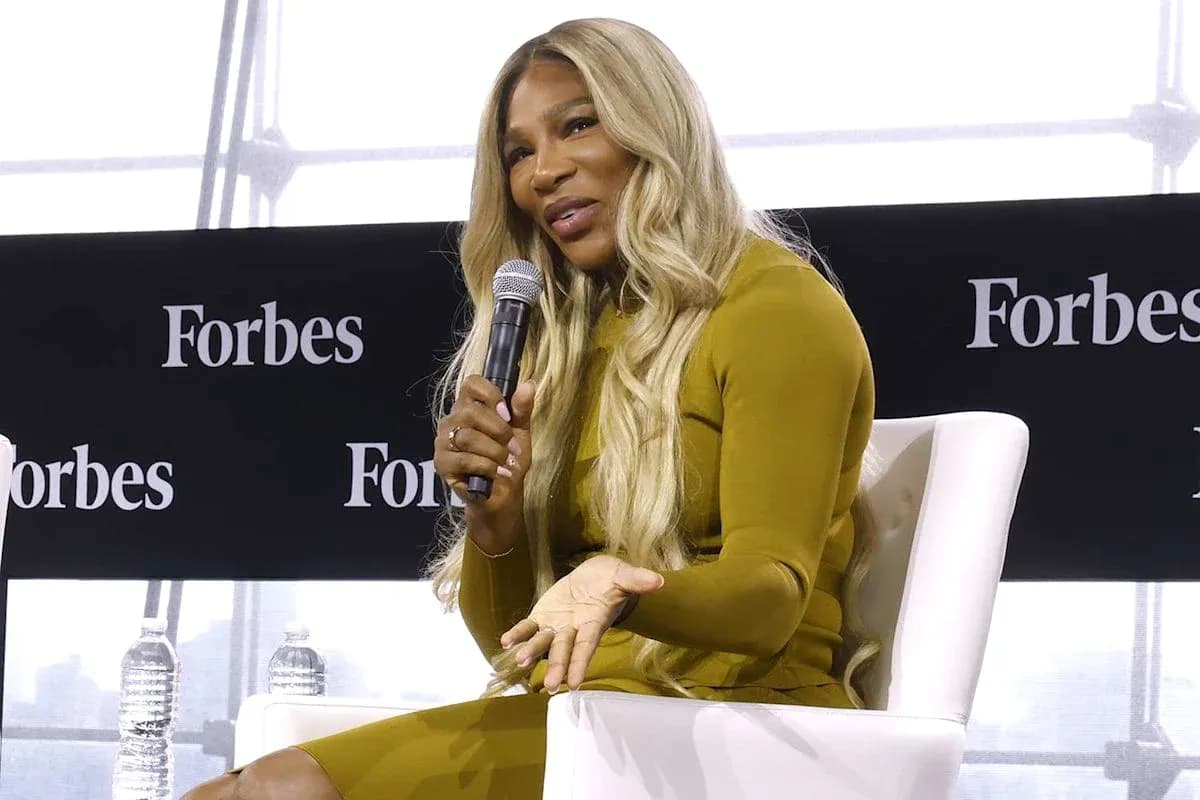
Serena Williams has spent a career forcing people to pay attention. On Thursday in New York, she did it again — this time without a racket in her hand.
Speaking at the Forbes Power Women's Summit 2026, the 23-time Grand Slam singles champion revisited the most harrowing chapter of her life: the birth of her first daughter and the life-threatening complications that followed. The story is familiar to many by now, but the way it continues to resonate still surprises her.
"You know, when I told my story, I didn't realize how many people could relate," Williams said on stage, reflecting on what happened after she delivered Alexis Olympia via emergency C-section in 2017. At first, she admitted, she saw it through one lens. "And then at first I thought it was just a minority problem, but then I realized it's a women's problem."
That realization hit hard. It hasn’t left her since.
From personal crisis to a wider alarm
Williams’ delivery spiraled quickly. Doctors rushed her into an emergency C-section. Afterward, a coughing fit caused her wound to reopen. That led to the discovery of a large hematoma in her abdomen — a dangerous swelling of clotted blood.
Then came the real fight.
She endured a six-day battle with a pulmonary embolism, a condition in which one or more arteries in the lungs become blocked by a blood clot. It required multiple surgeries and constant vigilance. Williams has said before that she had to insist something was wrong and push to be heard.
On Thursday, she underlined just how crucial that was.
"I knew something was wrong with me and it was super important that I was heard," she told the audience. "Thankfully, my doctor listened to me. The nurses did, but I was so fortunate enough to have a doctor that did and literally saved my life."
Her survival, she knows, is not a given for many women. That’s where her story stops being just Serena’s and becomes something far bigger.
“A women’s problem”
As she began sharing her experience publicly, Williams found herself inundated with similar accounts.
"So many women from every single background had a nightmare's tale of their birth, you know?" she said. The pattern was impossible to ignore. It cut across race, wealth, geography.
The more she heard, the more she sharpened her message. Maternal health, she argued, is not a niche issue. It is a fundamental test of how societies value women’s lives.
And she did it with the same blend of gravity and bite that marked her playing days.
At one point on the panel, Williams offered a wry, pointed aside: "And so— and then it boiled down to I thought, 'Well, gosh, if men were giving birth, they would have sweets [and] like all kinds of medicines.' So it wouldn't be the same problem at all."
The line drew laughs. The underlying point did not.
Turning advocacy into action
Williams’ ordeal did more than change her perspective. It reshaped her post-tennis mission.
After giving birth to Olympia, she stepped into a new role as the first entrepreneur-in-residence for the Reckitt Catalyst program, a global social impact and innovation initiative backing female and underrepresented entrepreneurs working on health, hygiene, water, and sanitation solutions.
"What these women are doing is they're really letting us know that women's healthcare is so important, and healthcare in general, because also we're talking about women who take care of the kids, you know, I take care of my kids mostly," she explained.
This is where Williams’ competitive instincts show up in a different arena. For years, she chased titles. Now, she talks about opening doors.
"With the program, we're able to actually solve a lot of issues, make, like I said, make those connections that are really vital, that are really important to open so many doors," she said. "Because every time we open a door, we're solving another problem that's closer to helping us all in this room and helping our kids."
Her advocacy has been consistent. In a 2018 opinion piece for CNN, Williams laid out simple, concrete steps that can save lives: access to midwives, functional health facilities, breastfeeding support, skin-to-skin contact, clean water, basic drugs, good nutrition.
"We know simple solutions exist," she wrote then, before delivering a blunt verdict. "Yet we are not doing our part. We are not rising to the challenge to help the women of the world."
On Thursday, the theme remained the same: urgency, shared responsibility, and the belief that change is not optional.
"Together, we can make this change," she wrote in that op-ed. "Together, we can be the change."
A champion’s second act
Williams’ life has moved on since that traumatic first birth. In August 2023, she and her husband Alexis Ohanian welcomed their second daughter, Adira River Ohanian. Ohanian announced the news with a family photo and a message of gratitude, calling Serena the "GMOAT" — the greatest mother of all time.
The nickname is playful, but it speaks to the dual role Williams now embraces: global icon and hands-on mother who openly says she shoulders most of the childcare.
She has long been the standard in tennis. Now she is using that same platform to confront a different kind of scoreboard — one that tracks mortality rates, access to care, and whose pain gets believed.
The titles are in the record books. The trophies are locked in glass. The question she’s pressing now is far starker: if someone with her resources almost didn’t make it, what chance do millions of women without that safety net really have?