Serena and Venus Williams Shine in Epic Doubles Match at US Open
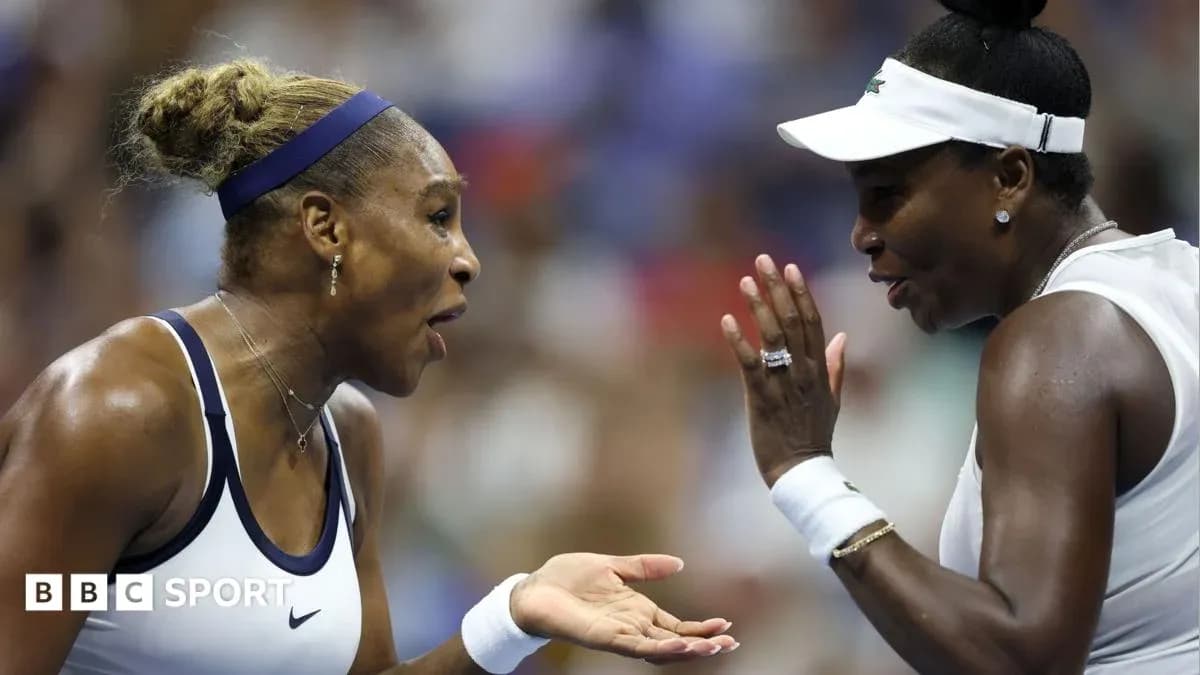
On a late-summer New York night, a women’s doubles first-round match carried the marquee billing on Arthur Ashe Stadium. Only one pairing could do that. Serena and Venus Williams walked back into the glare together, and for a few hours Flushing Meadows felt like it had been rewound and turned up to full volume.
They brought a combined age of 90 to the court. The star power? Untouched. The competitive edge? Still razor sharp.
They lost, yes. But nothing about a 6-3 6-7 (6-8) 7-6 (10-7) defeat to 14th seeds Hao-Ching Chan and Maya Joint felt routine. It was a narrow, wild, sometimes chaotic contest that kept 20,000 people pinned to their seats, then on their feet.
“It was unbelievable how competitive that was,” said Chanda Rubin, the former American pro turned commentator who knows this stage and this pairing all too well, having lost to the sisters in the 1999 US Open doubles final. “After the first set you wondered if Serena and Venus would be able to find their mojo – but, boy, they did.”
A roar, then a hush, then a roar again
Four years after their last appearance together on Ashe, the Williams sisters emerged to a reception that felt less like a welcome and more like a tribute. This is their court. Between them, they own eight singles titles here and two doubles crowns as a team. The crowd greeted them as if they were stepping into a shared living room.
The first set didn’t match the noise. The decibel levels spiked at the walk-on, then sagged as Chan and Joint settled quicker, found their patterns, and claimed the opener 6-3 with relative ease. The Americans looked rusty, the timing off, the instincts a half-step behind.
But Serena and Venus have built careers on refusing to let early scripts decide the story.
The second set changed the temperature. The sisters began to hold serve with more authority, to read the returns, to close the net with that familiar, suffocating aggression. They had to fend off four break points in the fifth and seventh games, and each escape drew the crowd back into the match. Every hold felt like a small act of defiance.
Once Serena’s level rose to meet Venus’s steady baseline work, the dynamic flipped. Rallies lengthened. Angles opened. The points turned from functional to spectacular. The tiebreak became a test of nerve and memory, and the Williamses passed it, 8-6, with the stadium finally sounding like Ashe in full voice.
The brink, the surge, the sting
The decider began with a jolt. Chan and Joint surged to a 4-1 lead, and suddenly the night felt like it might just slip away. The atmosphere dipped, almost respectfully quiet, as if the crowd sensed the possibility that this could be the last time they saw the sisters together here.
That silence never lasts long around Serena and Venus.
They clawed back, point by point, the way they’ve done for three decades. The movement sharpened. The returns bit harder. The net play grew bolder. What looked like a slow fade turned into another charge, dragging the match into a first-to-10 match tiebreak.
Then came the kind of start that usually ends in a handshake and a roar. The Williams sisters sprinted to a 5-0 lead in the breaker. They were five points from the second round and from stretching this comeback story a little further.
The pressure, this time, turned the other way.
Chan and Joint refused to fold, even as 20,000 voices leaned against them. The 20-year-old Joint, who beat Serena in singles at Wimbledon earlier this summer, and her experienced partner Chan stayed calm, stayed brave, and crucially, stayed on serve. The Williamses blinked first. Each sister threw in a double fault. The 5-0 cushion shrank, then vanished.
Chan and Joint completed the turnaround to take the breaker 10-7. It was ruthless, composed tennis in a cauldron that wasn’t built for them.
“The atmosphere was surreal,” Joint said afterwards. “It was something we’ve never experienced before, and to play against such legends of the game was super special.”
Legends in motion, questions in the air
For once, Arthur Ashe Stadium – usually restless, chatty, always moving – fell almost reverentially quiet during points. The sight of Serena and Venus back on this court together, possibly for the last time at the US Open, demanded that kind of respect.
They changed the face of the sport when they arrived as teenagers in the 1990s, and the numbers still stagger: 30 Grand Slam singles titles between them, 14 major doubles trophies as a team. Three decades later, they still captivate an entire arena with a simple walk to the baseline.
Serena’s return from retirement this summer lit a fuse. Fans who watched her prime and those who only knew the highlights suddenly had a chance to see her again, live, with a racquet in hand and a match on the line. Venus never “evolved away” from the game, as her younger sister once put it; she stayed, grinding through injuries and form dips, leaning on wildcards that sparked debate in some corners but never drowned out the respect she commands.
There were no real arguments when the US Open invited them back into the doubles draw. Their planned reunion at Wimbledon disappeared when Serena injured her knee in a singles loss to Joint. They finally shared the court again in Cincinnati, losing a match tiebreak to Marta Kostyuk and Peyton Stearns. New York delivered the same cruel ending: a tight, high-level scrap decided in the narrowest margins.
Their previous doubles outing on Ashe, four years ago, ended in a straight-sets loss to Lucie Hradecka and Linda Noskova. This felt very different. This was no meek exit. This was a credible, often stirring performance from two veterans who still hit heavy, still move sharply enough, and still carry a refusal to yield that unsettled their opponents all night.
Chan and Joint deserved every ounce of credit. They held their nerve in a hostile, partisan arena that roared for every Williams winner and groaned at every missed chance. They stayed present, stuck to their patterns, and when the opportunity opened in the match tiebreak, they walked through it.
No answers, only possibilities
The questions about what comes next floated over Ashe long before the final point. Serena had hinted earlier in the week, in an interview with Good Morning America, that she wanted to play singles again. Venus, after her singles defeat on Monday, bristled at the idea of mapping out a future beyond this doubles run, saying she shouldn’t “have to” think that far ahead.
On Friday night, there were no declarations. No farewell speeches. No definitive lines in the sand.
Tournament organisers said the sisters were “not available” to speak to the media after the match. The crowd offered its own verdict instead: a long, affectionate ovation that cut through the initial disappointment and landed somewhere between gratitude and hope.
Serena and Venus left the court with the same mystery they brought into the night. The result is clear. The legacy has been clear for years.
The only uncertainty now is whether Arthur Ashe has seen the last of them together – or if this was just one more chapter in a story that has never followed anyone else’s script.