Sabalenka Dominates While Alcaraz Recovers at US Open
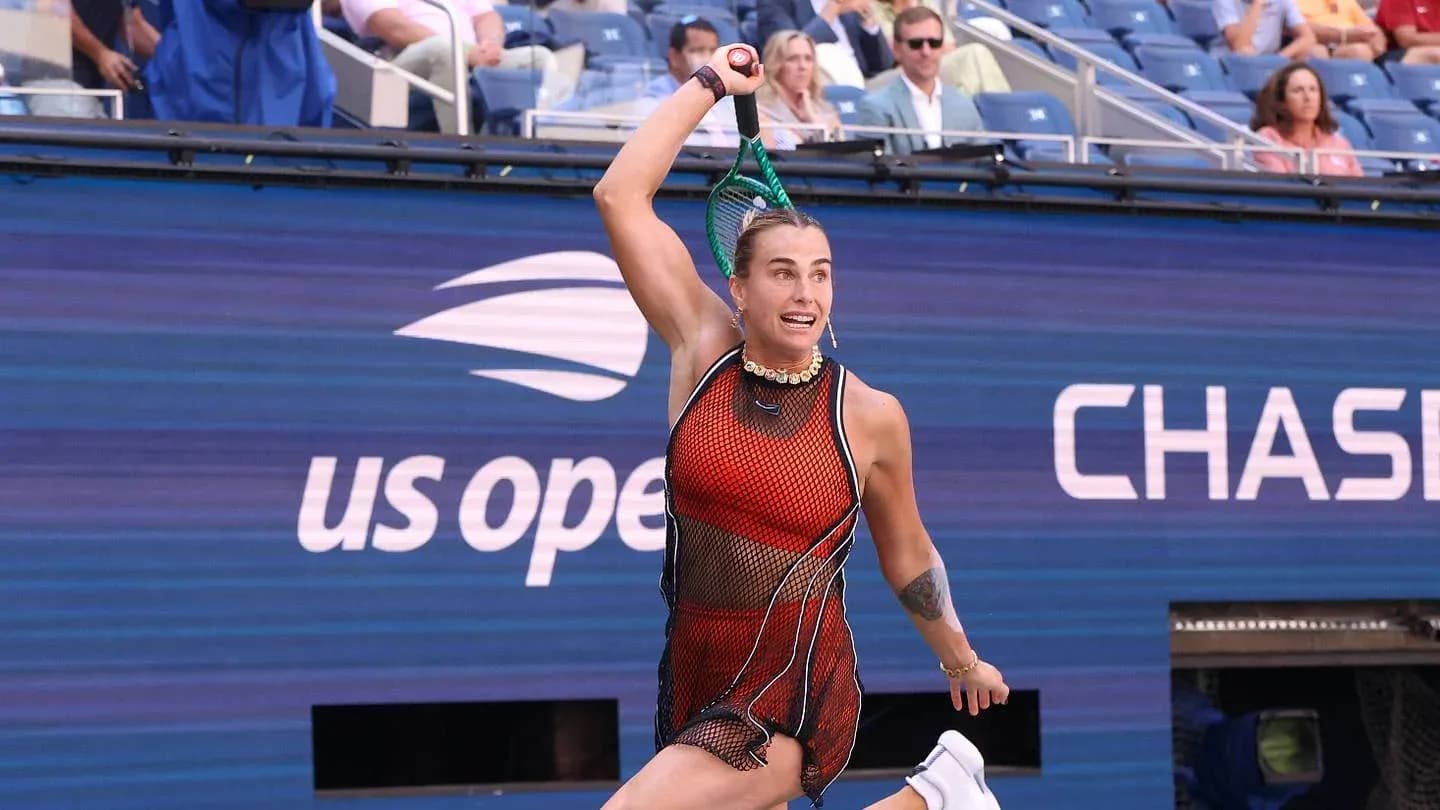
Arthur Ashe Stadium bathed in hard New York light, the roof framing a night built for royalty. Both defending US Open champions walked in with crowns to protect and questions to answer.
Aryna Sabalenka needed less than an hour to make her point. Carlos Alcaraz needed a set.
By the end, both walked off with their titles still very much alive — but carrying very different kinds of tension.
Sabalenka Ruthless, Rankings Storm Still Looming
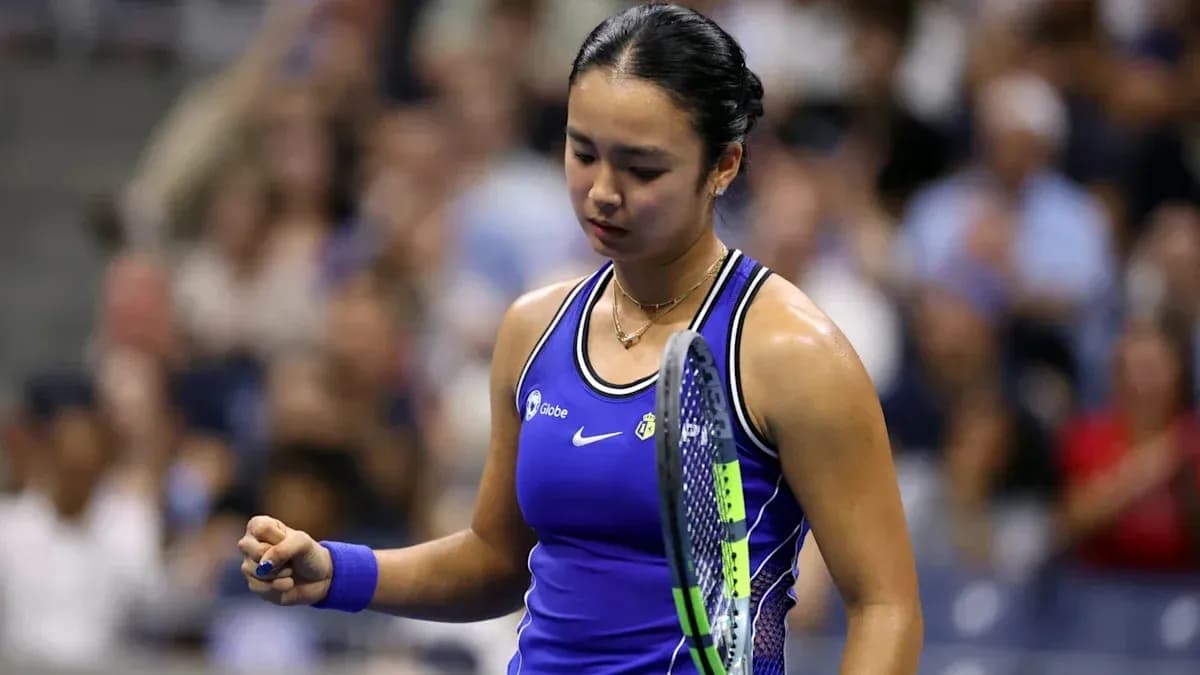
The night session opened with Aryna Sabalenka, World No. 1, four-time Grand Slam champion, and a woman trying to hold back a tide.
She did her part on the court.
Under the Ashe lights, Sabalenka tore through 22-year-old debutant Polina Iatcenko 6-1, 6-1 in just 53 minutes, a demolition that felt almost clinical in its brutality. The crowd, usually quick to latch onto an underdog, never really had the chance. This was a mismatch from the first strike.
Sabalenka broke three times in each set. Iatcenko’s lone moment of resistance came early in the second, when she snatched a break in the fourth game. It barely registered as a wobble. The Belarusian simply reset, reloaded, and resumed the barrage.
For Iatcenko, a Russian qualifier making her main-draw debut on the sport’s biggest stage, it was a harsh education. A baptism of fire in front of nearly 24,000 people. Still, she leaves New York with a first-ever Grand Slam second round and a run through qualifying that hints at more to come.
Sabalenka leaves the match with something else: no extra peace of mind.
She knows the equation. To stay No. 1, she has to win this title. She also needs Elena Rybakina, the nearest challenger, to fall before the semi-finals. The 3000-point cushion she held over the Kazakh at the end of March has shrunk to a fragile 434. What once looked like a fortress now feels like a ledge.
That erosion reflects her year. After a blistering opening stretch — three titles, an Australian Open final reached and barely lost — the summer turned sour. Early exits at majors, surprising defeats in smaller events, a sense that the certainty had leaked out of her game.
On court against Iatcenko, none of that showed. Off court, it did.
The strain surfaced in her post-match press conference, where a question about her focus heading into the tournament — framed around off-court promotional appearances — hit a nerve.
“What kind of question is that?” she shot back. “Just because I posted some activities with brands, you think that I've been partying and not training?”
When the follow-up suggested she was “getting serious” now that the event had begun, Sabalenka’s response turned sharply sarcastic.
“Oh yeah, I wasn't serious before that. Next question.”
It was a brief, tense exchange, but revealing. The stakes are clearly biting. She has held the top spot for 99 consecutive weeks; now every match feels like a referendum on whether she deserves to stay there.
On the tennis side, though, she could hardly have asked for a smoother start. Two straight-set wins, barely a scratch on the scoreboard, and a small stroke of fortune in the draw: instead of facing two-time major champion Barbora Krejcikova in the third round, she will meet Kamilla Rakhimova, the Czech’s conqueror, on Friday.
The title defence is moving, the ranking battle is raging, and Sabalenka is playing like someone who knows there is no margin left.
Alcaraz Shaken Early, Then Reminds New York Who He Is
If Sabalenka’s match was a procession, Carlos Alcaraz’s start looked dangerously like a storyline.
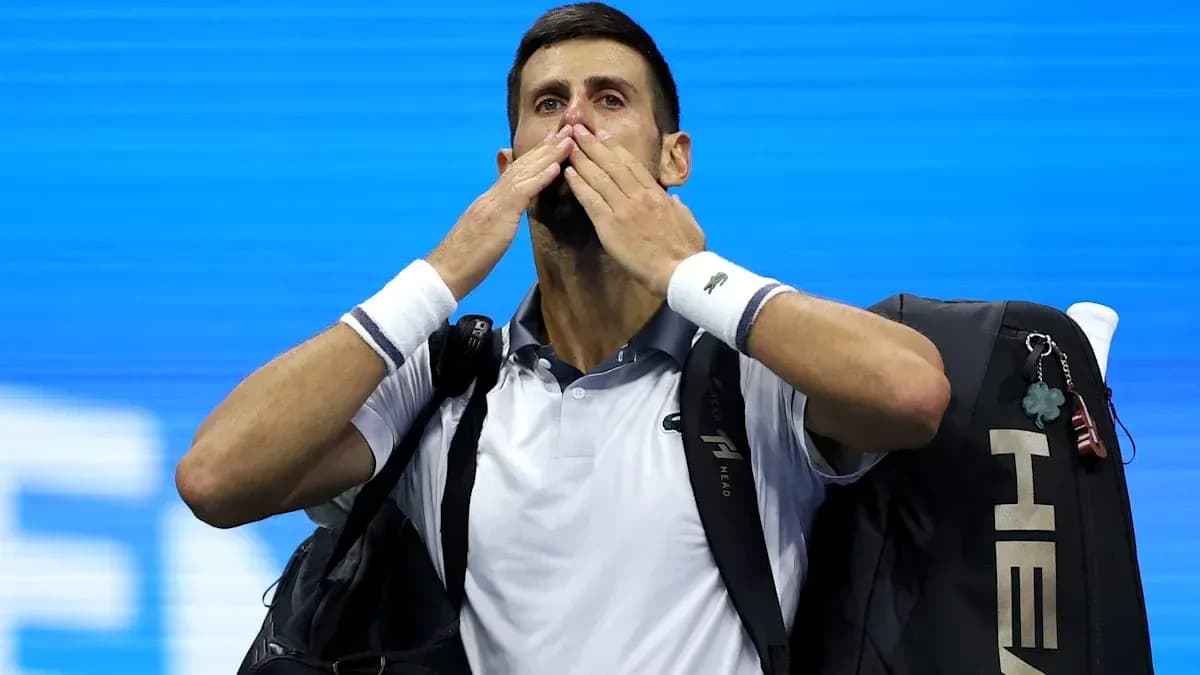
Playing just his second competitive singles match in more than four months after a delicate wrist injury, the defending men’s champion began flat against World No. 72 Jaime Faria. The Portuguese sensed it immediately.
Alcaraz’s timing was off, his rhythm slow to arrive. Faria stepped in, broke in the seventh game, and rode that break to a deserved 6-4 first set. For a few minutes, Arthur Ashe hummed with the possibility of something big.
That was as far as the upset dream went.
The turning point came in the opening game of the second set. Alcaraz faced a crucial cluster of break points. Lose that game, and the anxiety around his lay-off, his wrist, and his readiness might have swelled into something more serious.
He didn’t lose it. He dug in, held, and from there the match flipped.
What followed was a surge. Alcaraz stormed through the second set 6-0, the kind of ruthless reset that has already become part of his signature in best-of-five tennis. The forehand — the shot most scrutinised after his injury — cracked with familiar whip and conviction. No sign of caution, no visible holding back.
An exchange of breaks at the start of the third briefly reopened the door for Faria, who broke back after Alcaraz had moved ahead. The Spaniard simply broke again, steadied, and closed the set 6-3. By the fourth, the defending champion was in full control, cantering to 6-2 and a 4-6, 6-0, 6-3, 6-2 win.
Afterwards, his words matched what the eye had seen.
“I know once I step on the court, I've just got to go for it every time. I've got to feel normal,” he said. “I have to hit like I was hitting before the injury. I'm feeling great. There is no reason to be afraid and not hitting normal.”
He acknowledged the shaky opening too.
“It was a tough match for me. I felt great in the first set, but I didn't take time and that cost me,” he admitted. “After that I tried to be focused, stay calm and think the good things will happen.”
So far, they have. Two wins, no physical setbacks reported, and a game still short of its most electrifying heights but already good enough to handle what’s been in front of him.
The real questions lie ahead. Alcaraz has not yet faced a genuine heavyweight test in this draw. A potential fourth-round clash with 20th seed Tommy Paul looms, provided the Spaniard first gets past dangerous Chinese shot-maker Wu Yibing. Five-set marathons, if they come, will probe that wrist and his match fitness far more deeply than these opening rounds.
For now, though, New York has what it wanted on Wednesday night: both champions still standing, one slicing through the draw with cold efficiency, the other rediscovering his fire after a long, uncertain pause.
The next week will decide whether this was just a comfortable opening chapter, or the start of something far more dramatic for the tournament’s reigning royalty.