Roger Federer Reflects on His Legacy at Hall of Fame Induction
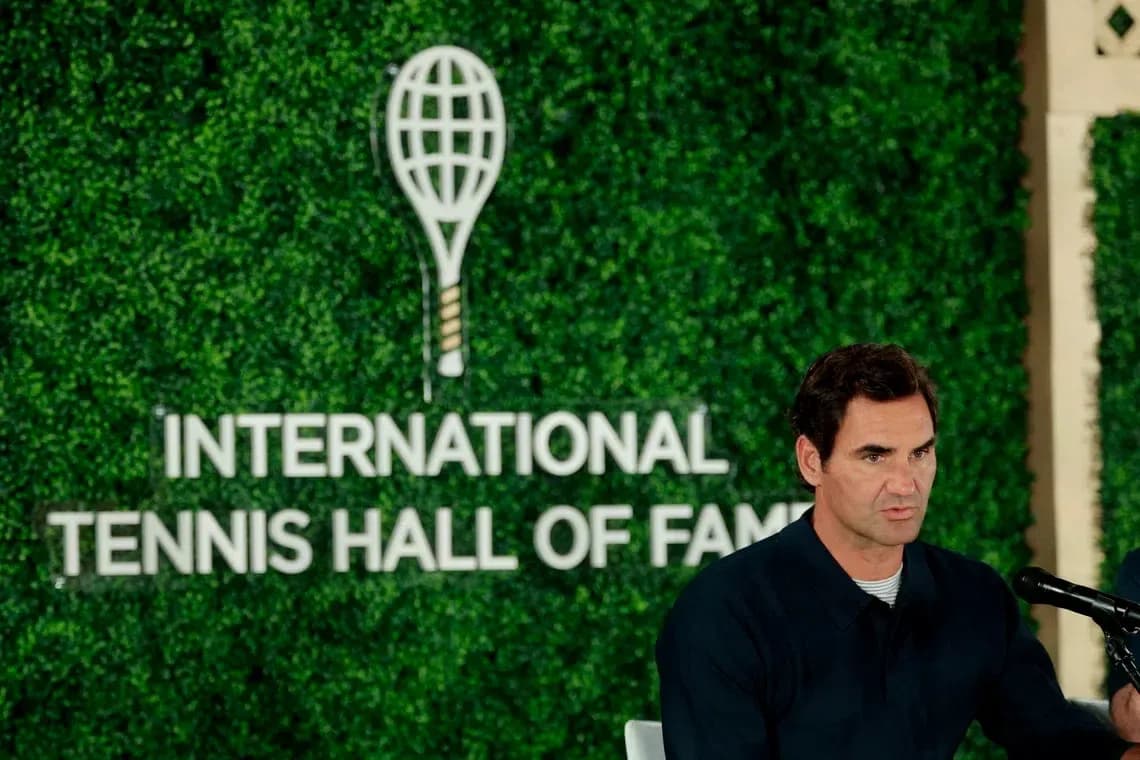
Roger Federer has spent a lifetime moving forward — into the court, into history, into the hearts of tennis fans who grew up timing their summers to his appearances on Centre Court. In Newport this weekend, for once, he was asked to stop.
The International Tennis Hall of Fame induction forced him to look back.
"It's a huge, huge honour, one of the greatest we can achieve in this sport," Federer said on Friday, the day before his enshrinement alongside broadcaster and journalist Mary Carillo. The stage, moderated by Hall of Fame president Patrick McEnroe, felt different from the ones he once ruled. No ranking points. No trophy to hoist. Just a career to measure.
And what a career to measure.
- Twenty Grand Slam singles titles.
- A men’s-record eight Wimbledon crowns.
- Six Australian Opens.
- Five U.S. Opens.
- The 2009 French Open to complete the career Slam.
- Olympic doubles gold with Stan Wawrinka in 2008.
- A Davis Cup with Switzerland in 2014.
- One hundred and three ATP Tour titles.
- Three hundred and ten weeks as world number one.
The numbers still stagger. Federer, now 45, knows that. But he sounded more interested in the space between the statistics.
"I hope I represented the sport well," he said. That was the baseline. The real question, for him, lives beyond the highlight reels and the one-handed backhand that became a global logo. "More so that maybe I helped drive the sport in the right direction through all the conversations we had together with the leaders of the sport — on the ATP side, with the Slams, the players and councils where I donated my time."
This is the part of his legacy that never appears on a scoreboard. Meetings in back rooms, player councils, negotiations that dragged on long after the last forehand winner. He pointed to the growth in prize money not only for champions, but for those losing in the first and second rounds. To better conditions for players, for media, for medical staff. To bigger, smarter stadiums that feel like modern arenas rather than relics.
"I feel like way more players can make a living. And I hope that I have helped with that as well," he said.
That sense of responsibility didn’t arrive late. It grew with him. Federer remembers the moment the sport stopped being a dream and became a weight.
"I felt like I was a winner early. I liked being on Centre Court. I preferred Centre Court to Court Five or Court 18. I wanted to be that person, so I think I embraced the pressure."
He didn’t just tolerate the spotlight; he chased it. The young Swiss with the ponytail and the temper turned into the composed champion who seemed born for the biggest stages. But the glow came with a cost.
"You get affected by so many outside comments that it's like one big storm sometimes in your brain," he admitted. The modern athlete lives inside that storm — judged on every swing, every loss, every season that falls short of perfection. "Sometimes you lose the fun in it. But I feel like, for the most part, I've really done a good job of staying really happy on the road."
Happiness, for Federer, has never been only about winning. It has been about the life around the game: the travel, the rivalries that turned into friendships, the sense of being part of something larger than his own trophy cabinet.
Retired since 2022, he still can’t quite step away from the arena. On Tuesday, at Arthur Ashe Stadium, he rolled back the years in an exhibition ahead of the U.S. Open, soaking in the noise one more time. The competitive edge may be gone, but the connection is not.
So what comes next for a man who has done almost everything the sport can offer?
He left the door deliberately ajar. A future Laver Cup captaincy. Mentoring younger players. Perhaps a move into commentary. The specifics can wait; the intent is already clear.
"I would like to give back to the sport," he said. For now, that means staying visible, staying curious. "I try to attend three, four or five events during the year, so I stay connected."
Those trips are not nostalgia tours. They are reconnaissance.
"It rejuvenates me mentally to see what I could be doing in the sport that would be meaningful down the road."
The Hall of Fame will etch his name in bronze. The real test, as Federer sees it, starts now: what he builds in tennis when the racket is no longer in his hand, but his influence still is.