Roger Federer: A Legacy Celebrated at the Hall of Fame
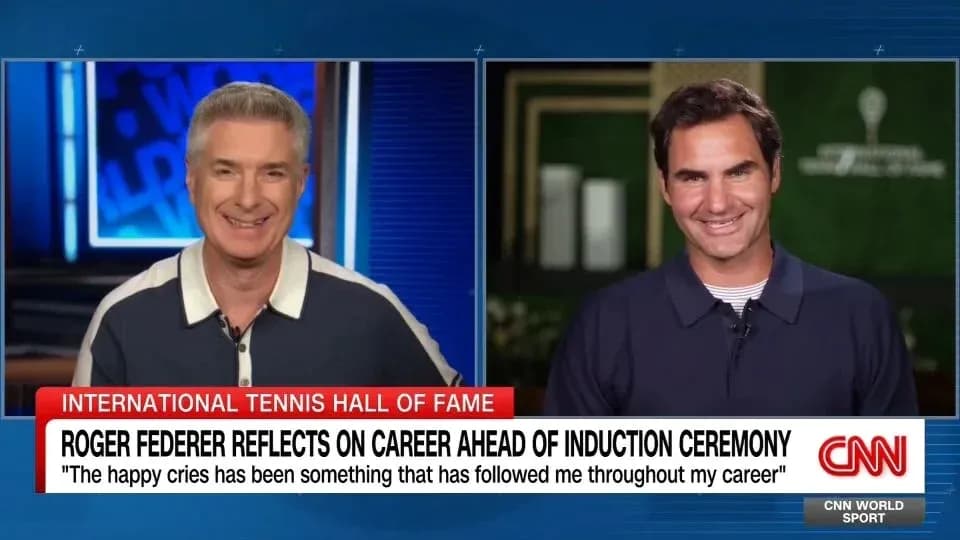
Roger Federer enters tennis immortality this weekend in Newport, and he knows exactly what might be coming.
Tears. Again.
The sport’s most elegant shot-maker has long been its most visible crier, a man whose composure with a racket in his hand often dissolved the moment the stakes and the memories caught up with him. He can trace it back to one afternoon on Centre Court in 2001, when a 19-year-old upstart stunned Pete Sampras at Wimbledon and suddenly didn’t recognize himself.
“I go to my knees, (then) I shake hands with Pete and he's my hero … and these emotions came all over me,” he told CNN Sports. “And I was like, 'What is going on?' This is not who I am normally.”
That day was his first big win and his first big cry. From there to his tear-soaked farewell in 2022, Federer built one of the most complete résumés in tennis history and, almost by accident, turned into the sport’s most famous weeper.
Now comes the International Tennis Hall of Fame, the final official stamp on a career that never really needed one. In Newport, Rhode Island, with his family and inner circle around him, Federer is braced for another emotional surge.
“If I'm speaking about the game and all the gratitude that I have, and having my entire family there – from my parents to my wife to my four children and my whole team from coaching staff and physios, etc. I think it could hit home very hard,” he said in the hours before his induction.
“If it happens, it will be more memorable for me personally, but I hope I get through the speech without too many hiccups. We'll see.”
A career that made the Hall of Fame inevitable
For his supporters, this weekend feels less like a debate and more like destiny fulfilled. The moment Federer truly set his course for Newport came two decades ago, in 2004, when he seized three of the four grand slam singles titles and climbed to world No. 1. He then stayed there for an almost absurd 237 consecutive weeks, a record that still stands and still sounds unreal.
The dominance hardened in 2005, when he won more than 95% of his matches. Then came 2006, the season that sits in bold type even in a career like his: three more major titles, 12 trophies in all, and a 92-5 record. A 94.8% win rate at the very top of the sport.
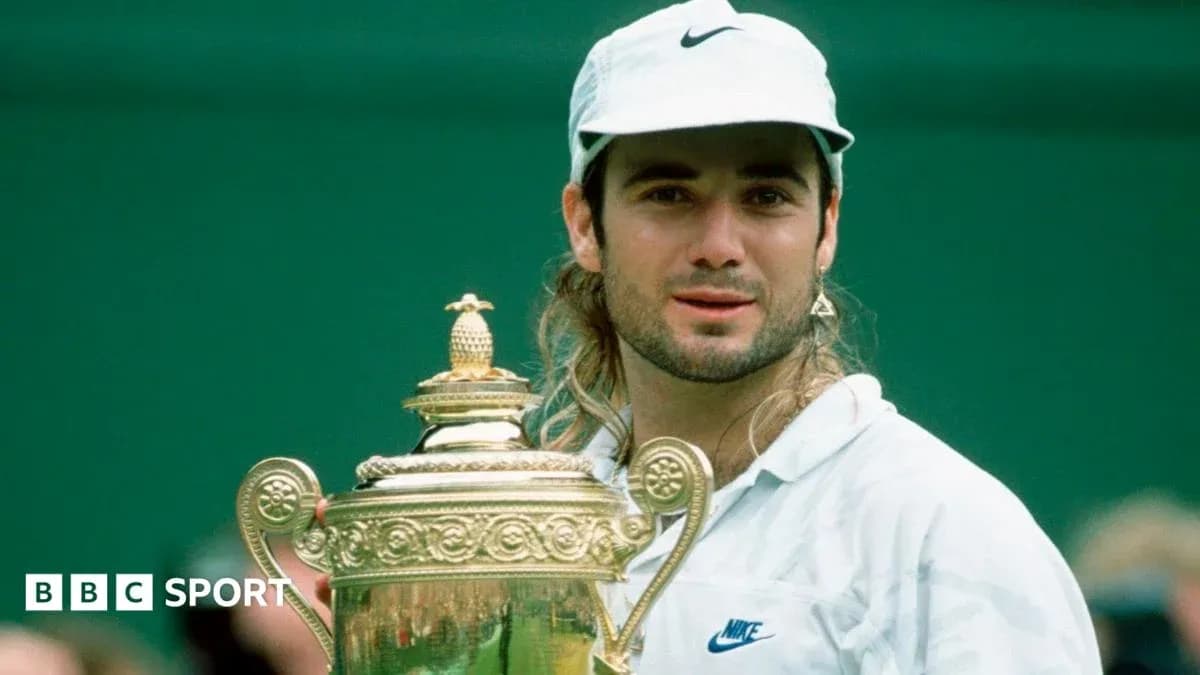
Sampras’ 14 grand slam singles titles once looked like a summit no one would reach. Federer raced past him on the lawns of Wimbledon in 2009 and never really glanced back. The numbers piled up, but the affection came from somewhere else.
He floated across the court with a kind of unhurried grace, a style that made the impossible look routine. Off it, the same ease carried into interviews, press rooms, and practice courts. He was the superstar who seemed unbothered by his own superstardom.
That image, he admits, came with a price.
The cost behind the elegance
Federer insists he doesn’t live with regrets. If anything nags at him, it’s the perception that his game came without strain, that the effort never matched the results.
“It looked like I wasn't actually hitting the ball so hard,” he said of how others viewed him as a junior. “But it was kind of flying off of my racket with a lot of power. People always thought, like, 'It's so simple for you,' because it looked like elastic. But it wasn't the case. There was a lot of work and effort put into it.
“When I would lose, they say, 'Why don't you try harder?' And when you win, they would say, 'Oh my God, it's so easy for you!'”
Somewhere in that contradiction, he suggests, sits the reason the tears came so often.
“The sacrifice was massive and I was holding a lot of pressure in.”
The outside world saw the smooth edges; he felt the grind. The public saw a natural; he remembers the weight of expectation, the years of repetition, the constant demand to stay on top once he got there.
Peace after the pressure
Now, with the racket packed away and the tour schedule behind him, Federer sounds like a man who has stepped off a treadmill he no longer needs.
It doesn’t sound like he misses the pressure. There is no hint of a void, no restless talk about a comeback or a desperate search for something to replace the roars.
“I'm actually really happy going through everyday life at a lower pace,” he said.
That “lower pace” is relative. Federer is a father of four, a philanthropist, an investor, a businessman. His days still move quickly enough. The travel itch remains, too.
“I've always been a guy who loves being on the road,” he said.
The Hall of Fame weekend offers him something different: a chance to look back without having to lace up the shoes and do it all again.
A fantasy list of legends
Induction means joining a pantheon he once only watched on television. In his mind, he has already drawn up a fantasy schedule, a list of matches he would love to play if time and the Tennis gods allowed.
“I would have a little list,” he said, before rolling through the names: Rod Laver, Bjorn Borg, John McEnroe, Stefan Edberg, Boris Becker, and Sampras again.
“I think these would be my favorite players to play against. I've always admired their personalities, what they have achieved, and what they represent in the game.”
His own numbers now sit alongside theirs. The 20 grand slam singles titles that once stood as the men’s benchmark have been overtaken by Rafael Nadal and Novak Djokovic, but Federer’s supporters rarely argue with spreadsheets. For them, he remains the standard, the player who made tennis look the way they wanted it to look.
Life after greatness
So what does a man who mastered his sport do next?
Federer isn’t chasing another arena. He is tinkering, exploring, enjoying the freedom to be a beginner again.
“I'm trying to get better at golf,” he said. “I would love to start with an instrument again. I used to play the piano, so when I have more time, I'd like to dive into that because my four children and my wife play the piano.”
He talks less about forehands now and more about character.
“I hope I'm a good listener and a good decision-maker. Hopefully I'm a guy who people enjoy being around. I'm a big family guy. I love being surrounded by my friends – that's really the priority in my life.”
In Newport, the applause will roll over him one more time, the highlight reels will flash, and the tears may come. The difference now is simple: the pressure is gone, the sacrifice is behind him, and the Hall of Fame is not a starting point or a finish line.
It is just where a career like his was always going to end up.