Rinky Hijikata's Paris Masters Journey Ends in Quarter-Final
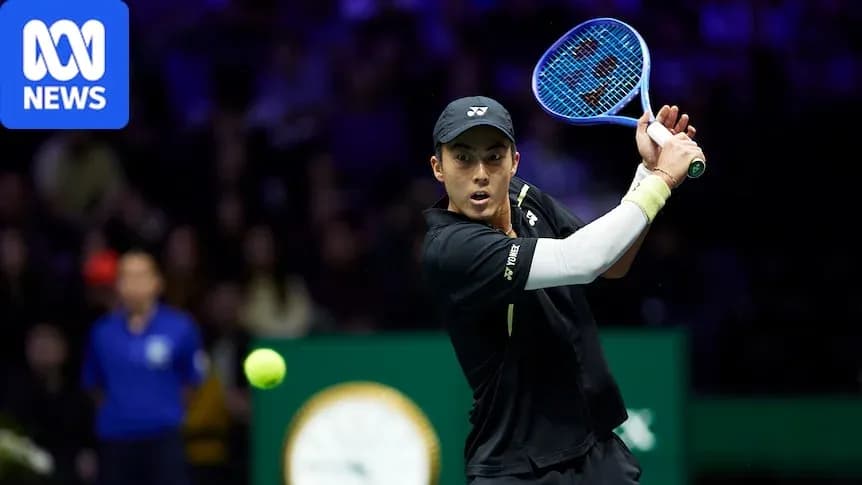
Rinky Hijikata’s Paris fairytale finally cracked under the weight of a new French hope and a fevered home crowd.
After a week in which he had stormed through qualifying, toppled Novak Djokovic and flirted with a first Masters 1000 semi-final, the Australian ran out of miracles in a bruising quarter-final against Luca Van Assche at the Paris Masters. The 22-year-old, playing in his home city and his first Masters 1000 quarter-final, dragged himself from the brink in the deciding set to win 6-4, 6-7 (4-7), 7-5 in just under two hours and 45 minutes.
It felt like the end of a dream and the start of something else.
A week that caught fire
Hijikata arrived as a qualifier and left as a headline act. The 25-year-old Sydneysider had already survived six matches in seven days, including that comeback win over Djokovic that had turned him from outsider to centrepiece.
Once again he trailed by a set. Once again he swung freely, took the ball early, and quietened a crowd desperate to anoint a new French star. His aggression in the second-set tiebreak was a statement: he ripped through it with the same fearless shot-making that had carried him all week.
When he then broke immediately to lead in the third set, the script seemed written. One more surge, one more upset, and he would become the first qualifier in nine years to reach the Paris Masters semi-finals.
Paris, and Van Assche, had other ideas.
Van Assche grows up in public
Van Assche, Belgian-born but Paris-based, has long carried the label of “one to watch” in French tennis circles. On this night, he stepped into it.
Down 0-2 in the final set and struggling physically, he leaned on the one thing that has defined him: defence that borders on defiance. Point after point, he turned himself into a wall. Hijikata kept attacking, kept taking on the lines, and kept being asked to hit one more ball. Then another. Then one too many.
The rallies stretched, the lungs burned, and gradually the match flipped. Van Assche’s legs looked heavy, but the crowd lifted him. He said as much afterwards, crediting the stands for dragging him through the toughest moments and helping him find his best tennis when he needed it most.
From there, the Frenchman’s resilience did the rest. He clawed his way back to level, then surged ahead as Hijikata’s early momentum in the set faded. At 7-5 in the third, the new home favourite had his breakthrough, becoming the 12th Frenchman to reach the semi-finals in Paris.
Next, he faces Ben Shelton.
Hijikata’s step forward
For Hijikata, the loss cuts, but the week still changes his career. His run guarantees he will rise into the world’s top 60 and start next week as Australia’s No.2 behind Alex de Minaur.
He leaves with a bigger ranking, a bigger reputation, and proof that his aggressive, front-foot tennis can stand up to the sport’s elite over a long, demanding week.
The dream stopped in the quarters. It did not stop the momentum.
Shelton’s power surge and Turin shake-up
Waiting for Van Assche is a man who brings an entirely different problem. Third seed Shelton hammered down 19 aces in an all-American clash earlier in the day, overpowering Tommy Paul 6-4, 4-6, 6-3 to reach his first Paris semi-final.
Shelton’s win did more than book his place in the last four. It shut down Paul’s late push to qualify for the ATP Finals in Turin and locked in another American for the season-ending showpiece.
The victory confirmed Frances Tiafoe’s spot at the year-end championship, joining world No.1 Alexander Zverev, Carlos Alcaraz, Shelton, Daniil Medvedev, Flavio Cobolli and Arthur Fils in a field that looks increasingly open.
Paris has its new home hero in Van Assche. The question now is whether this week marks just a stirring cameo, or the first chapter of a player ready to carry French tennis into a new era.