Rafael Nadal’s Summer: Family Moments and Solidarity
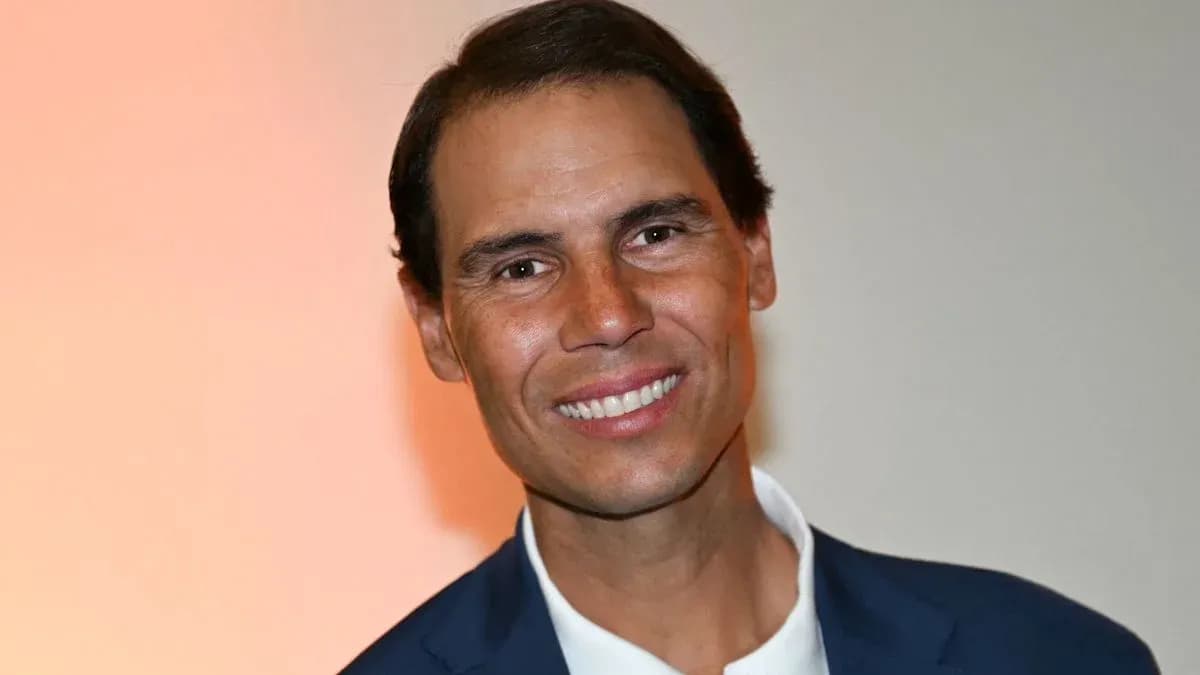
Rafael Nadal’s summer has rarely looked this ordinary, or this revealing.
The 22-time Grand Slam champion, usually seen under floodlights and in front of roaring crowds, opened a quieter chapter to the world by sharing a series of family photos from his recent holidays. No trophies, no courts, no rivals. Just Nadal, his inner circle, and a European summer built around the people who have anchored his career.
The first image sets the tone. Nadal stands with his wife, Mery Perelló, and their eldest son, Rafa, all three smiling into the camera. Behind them, a toy Jeep and a dinosaur figure hint at the setting: Dinopark Funtana in Croatia, a far cry from the gladiatorial arenas where Nadal forged his legend. The picture feels almost disarming in its simplicity — a superstar in shorts and sandals, just another father indulging his child’s fascination with dinosaurs.
From there, the curtain lifts a little higher. Nadal’s post rolls through a carousel of moments with the people who have shaped his life far more than any opponent ever could. His children, Rafael and Miquel. His wife, always a steady presence in the background of his career. His mother Ana Maria and father Sebastian, who guided him from a prodigious boy in Manacor to one of the sport’s defining figures. His sister Maribel, a constant in his support system. His uncle Miguel Ángel, another key figure in the Nadal sporting dynasty.
They appear together at beaches, at waterfalls, at busy tourist spots that millions pass through every year without a second glance. For Nadal, these are not just postcard backdrops. They are scenes from a rare window of time when his body, no longer chained to the relentless tour schedule, allows him to live like the family man he has always said he wanted to be.
“Summer 2026 in family,” he wrote beneath the post, adding a smiley emoji. Brief. Uncomplicated. The message of someone who knows that, at this stage of his life, the images do the talking.
Nadal has never hidden how central family is to his story. His parents, his sister, his wife, and now his children have been the emotional foundation beneath the ferocious competitor. His tennis education came under the stern but caring eye of his uncle Toni Nadal, who drilled into him not only the topspin forehand and the tireless footwork, but the discipline and humility that came to define his public image.
That sense of family doesn’t stop at his own front door. It stretches across sports, across continents, and into the life of another global icon: Lionel Messi.
This summer, Messi lost his father, Jorge, a man who was far more than a parent. He was his son’s agent, advisor, and constant companion through the turbulence of a once-in-a-generation career. When the news broke, Nadal reached for the same platform where he had shared his holiday joy and instead used it to send a message of grief and solidarity.
“Dear Leo Messi, I can't imagine the pain you're going through. I'm sending you all my love and all of my condolences to you and your family in these challenging times. Rest in peace, Jorge,” Nadal wrote.
No grand gesture. No elaborate statement. Just one champion speaking directly to another, united by something that dwarfs sport: the loss of a father.
Messi’s relationship with his dad has long been part of his public narrative. Jorge Messi was not just the man behind the contracts and negotiations; he was the figure who walked with his son through the early hardship of leaving Argentina for Barcelona as a teenager, through injuries, doubts, and the pressure of carrying the expectations of a nation.
“My old man was always by my side. We went through a lot of ugly things together,” Messi said in a radio interview back in 2007, in Spanish. “Sometimes, I would shut myself in my room to cry alone, or he'd do the same, without me seeing him. We'd pretend we were both OK, but we weren't. My old man asked me, 'What do you want to do? Do you want to keep going or should we go back home?' I wanted to keep going, and he stayed with me.”
It is not hard to see why Nadal felt compelled to respond. His own journey, though played out on clay instead of grass, carries similar threads: a young talent leaving the comfort of home again and again, a tight-knit family absorbing the strain, an uncle and parents who made sure the boy didn’t break under the weight of expectation.
In the space of a few weeks, Nadal has shown both sides of that bond. On one hand, the joy of a summer spent with his children and the generations above him, three and sometimes four layers of Nadals in a single frame. On the other, the awareness that such bonds are fragile, that even the most enduring partnerships in sport come with a human cost when they end.
For a man who built his reputation on grit and competitive fury, this latest glimpse into his world feels softer, more reflective. The forehand may slow, the rankings may change, but the constants remain: a family on holiday, a message of comfort to a grieving rival, and a reminder that behind the global brands and historic records stand sons, fathers, and uncles trying to navigate life just like everyone else.