Rafael Nadal Joins Real Madrid Board: A New Chapter
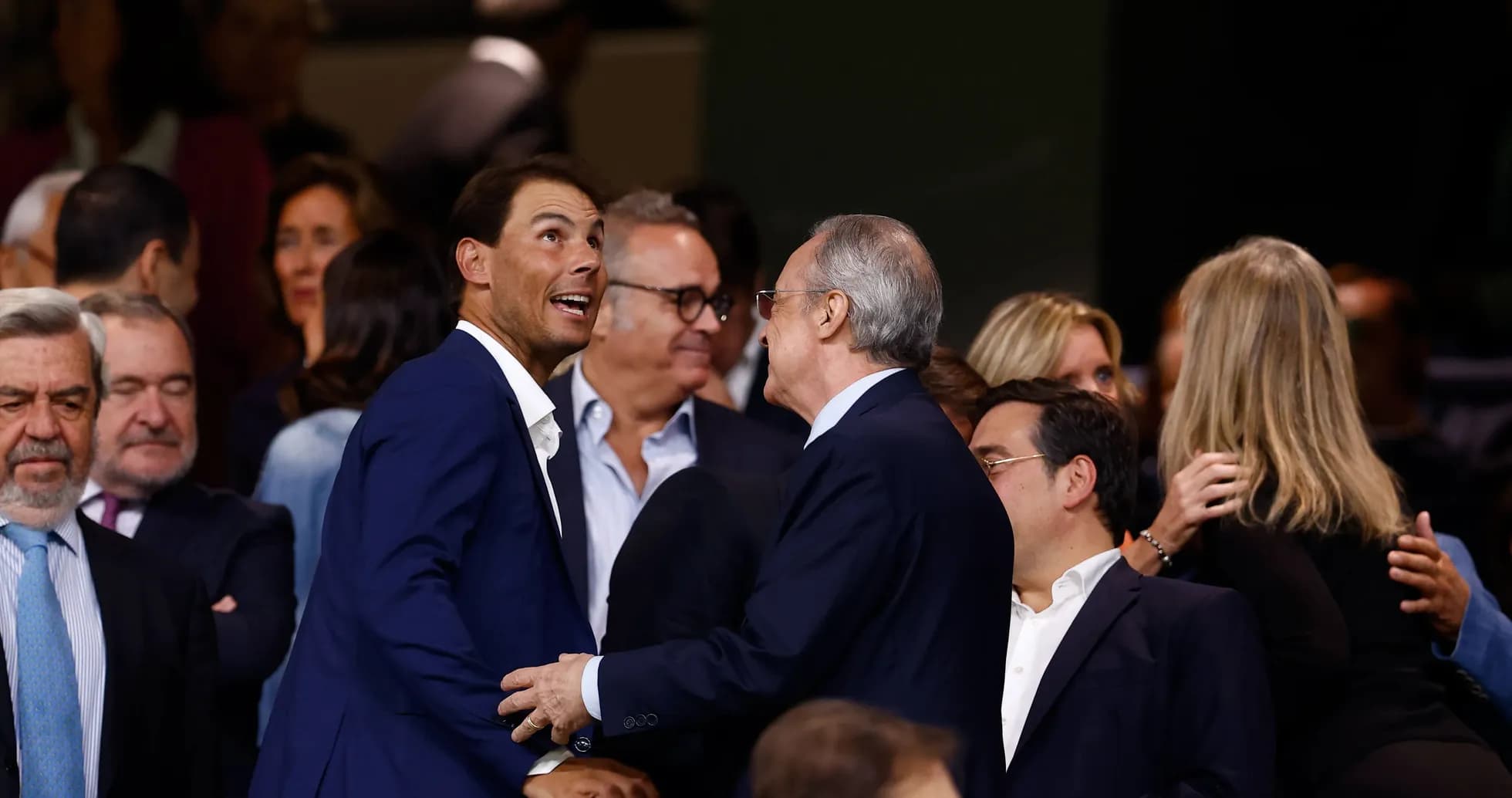
Rafael Nadal is used to ruling the clay of Paris. Now he is edging toward a very different kind of court.
Real Madrid have moved the tennis legend closer than ever to the club’s power centre, nominating him for a place on the board in a decision announced on 4 November. On paper, it is a simple institutional step that still needs ratification from the general assembly on 21 November, as reported by Spanish newspaper Marca. In reality, it feels like the first line of a new chapter at the Bernabéu.
This is not a farewell gift to a national hero. It looks like an opening.
From Centre Court to the Boardroom
Nadal’s name has hovered around the idea of the Real Madrid presidency for years, a mix of fantasy and inevitability in the minds of many fans. Now there is structure to the speculation. A seat on the board gives him something he has never had in football: access, information, and the chance to understand how one of the world’s biggest clubs truly operates.
It does not make him Florentino Pérez’s heir. It does give him a front-row view of the job.
Inside the club, the move is framed as a way for Nadal to learn, contribute and grow into the role of a director. Those close to him, according to Marca, insist he is not treating this as a ceremonial chair with his name on it. He wants to work, to apply the same competitive instincts that defined his career on court to the corridors of power at his boyhood club.
Real Madrid’s statement underlined exactly that: his competitive spirit, his commitment, and his respect for opponents. Qualities that turned him into a 22-time Grand Slam champion and double Olympic gold medallist are now being imported into the boardroom.
For Madrid, there is also the obvious upside. Few figures in global sport carry Nadal’s aura. He brings global reach, credibility and an image of integrity that clubs spend fortunes trying to build. For a member-owned institution that lives on prestige and perception, that is a priceless asset.
The Road to the Presidency
Romantic as it sounds, the presidency of Real Madrid is not won on popularity alone. It is governed by strict rules written into the club’s statutes.
Article 40 lays out the conditions for anyone seeking an administrative post. To run for president, a candidate must have been a club member for 20 consecutive years. The bar is slightly lower for other positions: 15 years for the vice-presidency, 10 for the rest of the board.
There is also the financial hurdle. Any presidential candidate must present a bank guarantee of at least 15% of the club’s budgeted expenses, backed by the personal assets of the board members. It is a filter designed to keep the post in the hands of those with both commitment and financial muscle.
Nadal has been an honorary member of Real Madrid since 2011, under number 67778. Count from that date and he would only meet the 20-year requirement in 2031. On the face of it, that pushes any formal run at the presidency into the next decade.
The board role, though, opens another door.
If the presidency becomes permanently vacant, the statutes say the board must choose one of its own members to take over on an interim basis. The general assembly then votes on ratifying that choice. It does not erase the other conditions in the rulebook, but it does create a different, more political path to the top.
Nadal is now inside that room.
Admiration Without a Campaign
Nadal has never hidden his affection for Real Madrid or his fascination with the idea of leading the club one day. He has also been careful not to turn that admiration into an active campaign.
Speaking to Ana Pastor on El Objetivo on La Sexta in 2024, he walked that line with typical precision: “Of course I would be happy with that, but it is not among my future plans.” The sentence did two things at once. It acknowledged the dream and parked it firmly in the distance.
Two years later, in May 2026, he publicly distanced himself from reports linking him to Enrique Riquelme’s potential presidential bid. Nadal denied any involvement, underlined his respect for Florentino Pérez and stressed that his focus lay on his own projects. Again, he refused to slam the door shut on the future. He just declined to step through it.
Now the context is different. This is no longer a hypothetical.
A New Match Begins
By accepting a place on the Real Madrid board, Nadal is not declaring war for the presidency. He is starting an administrative career at the club he has always loved from the stands and the VIP box.
From here, several things will shape what comes next: the experience he gathers in the boardroom, the evolution of his own ambitions once his playing days are fully behind him, and the timing and circumstances of any eventual succession to Pérez.
For the moment, all that is certain is this: Rafael Nadal is no longer just a Madridista icon watching from the outside. He is part of the structure now.
And at a club where legends often write the biggest stories, that simple fact could one day change everything.