Rafael Nadal’s Paris Masters Mystery: The One Trophy That Eluded Him
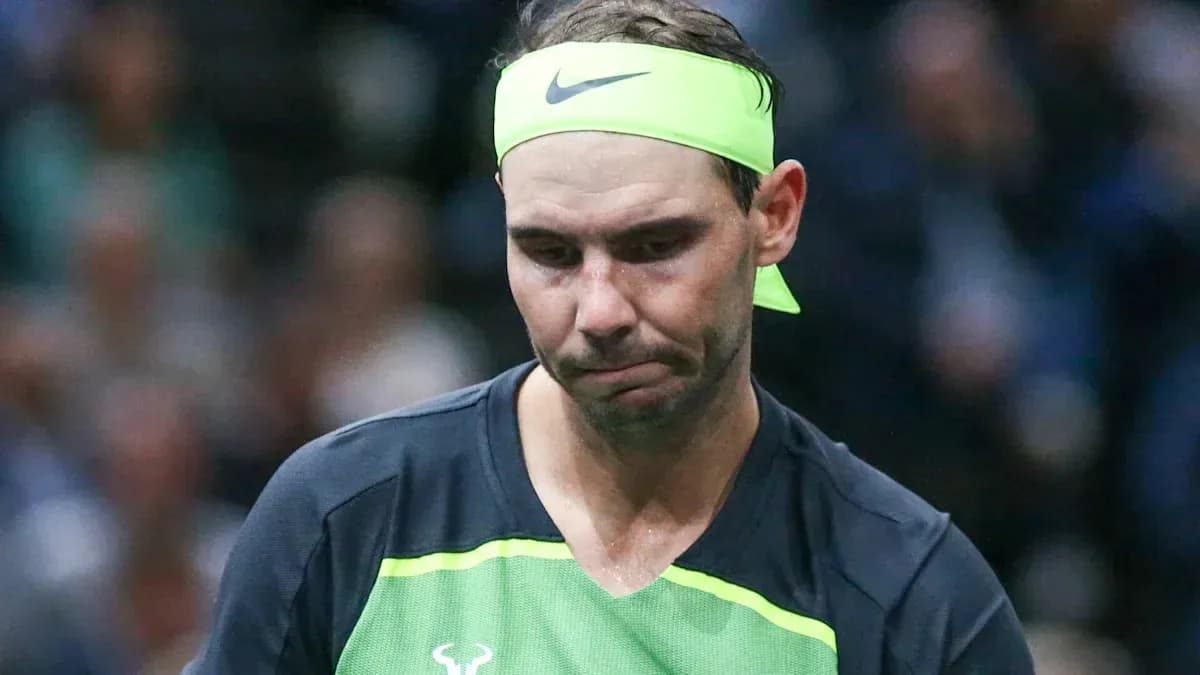
Paris crowned Rafael Nadal more than any other city in tennis history. It also denied him in a way nowhere else quite managed.
Fourteen times he walked out of Roland Garros with the Coupe des Mousquetaires, clay dust on his socks and history at his feet. Twenty-two Grand Slam titles, 36 Masters 1000 crowns, Olympic gold in singles and doubles – the numbers read like a fantasy. Yet when his career closed in 2024, one of the sport’s most complete résumés still carried a small, stubborn gap.
He never won the Paris Masters.
A flying start, a brutal lesson
Nadal’s relationship with the indoor event at Bercy began with a surge that hinted at inevitability. On his debut, he stormed through the draw, dropping just one set on his way to the final. Different surface, different conditions, same result – or so it seemed.
Waiting for him there was David Nalbandian, unseeded and unflustered.
What followed was not a coronation but a shock. Nalbandian dismantled Nadal 6-4, 6-0, a scoreline that jarred with the Spaniard’s aura of invincibility.
“All week I was playing great, and I don't know why the result was so easy,” Nalbandian admitted afterward. “After I broke him, I felt that I was playing better than him. I played more relaxed, started hitting winners almost from everywhere. That gave me confidence.”
For Nadal, that 2007 final would be as close as he ever came to lifting the trophy in the French capital’s other arena.
Injuries, interruptions, and near-misses
The following year underlined a theme that would haunt his Bercy campaigns: the body would not always cooperate.
In 2008, Nadal reached the quarter-finals, only to retire after losing the first set to Nikolay Davydenko because of a right knee injury. The tournament that should have suited his late-season competitiveness often arrived when his physical reserves were running low.
In 2009 he went a step further, pushing into the semi-finals, but Novak Djokovic stopped him comfortably. The Serbian thrived in the faster indoor conditions that never quite bent to Nadal’s will.
Then came a four-year absence. When Nadal finally returned, he again pushed deep into the draw, again to the semi-finals, and again saw the door slammed shut – this time by compatriot David Ferrer, who outplayed him and denied him another shot at the title.
The pattern hardened. Big names, big stages, but no Paris Masters trophy.
In 2015, Stan Wawrinka outhit him in the quarter-finals. Nadal’s next two appearances were cut short by injury, more late-season strain at a time when his calendar had already taken its toll.
The last push and the final fade
There was one more serious tilt at the title. In 2020, Nadal pieced together another strong run, adapting better to the conditions and marching into the semi-finals. Again, the door closed. Alexander Zverev beat him and kept him from a long-awaited final return.
For all the frustration, his consistency in Paris remained remarkable. Across his first eight appearances at the Paris Masters, Nadal never failed to reach at least the quarter-finals. Indoors, late in the year, often managing pain or fatigue, he still found a way to matter deep into the week.
Then, in his ninth and final appearance, the run simply stopped.
Tommy Paul caught him early and beat him in Nadal’s opening match. No late surge, no heroic comeback, just a quiet exit from a tournament that had so often tested the limits of his endurance.
He never came back. Nadal did not play the Paris Masters again before retiring in 2024, leaving it as one of the very few major events that resisted him from start to finish.
For a player who turned Paris into his personal kingdom every spring, the autumn week at Bercy became a reminder that even the greatest careers keep a few unsolved riddles.