Ons Jabeur Launches Tennis Academy for Athletes with Disabilities
Ons Jabeur steps away from the tour – but not from the court.
The Tunisian star, who climbed as high as No 2 in the world and became a trailblazer for Arab tennis, has opened a new front in her career: using her platform to bring athletes with developmental disabilities into the game she loves.
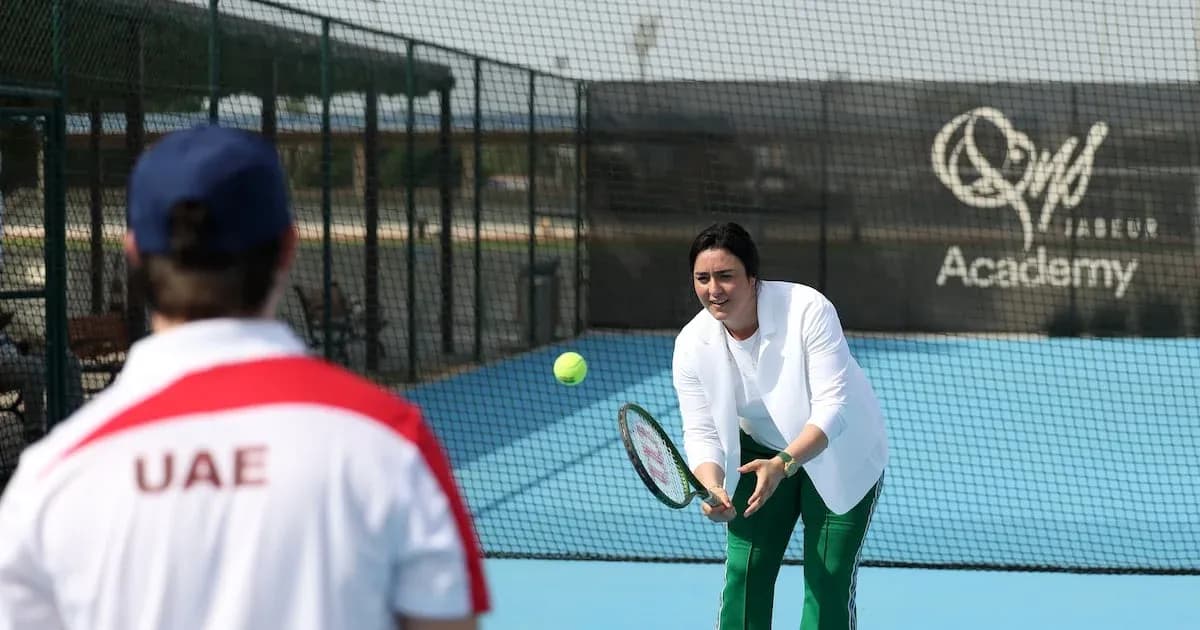
This week in Dubai’s Academic City, at the Ons Jabeur Tennis Academy she launched last year, the mission moved from idea to reality. Ten Special Olympics UAE athletes walked on to her courts, rackets in hand, to rally with one of the most recognisable players on the WTA Tour.
No exhibition. No photo-op rally and goodbye. This is a structured partnership.
Jabeur has signed an agreement with Special Olympics UAE aimed at identifying talent, building tailored training programmes and, crucially, making tennis feel like home for people with intellectual and developmental disabilities.
“Having Special Olympics with us in a collaboration, it's really amazing. This is our new family,” she told The National, speaking as athletes and coaches worked on basic strokes a few metres away.
The message from her side is simple: start with joy, build towards ambition.
“I believe in sharing the passion of playing tennis. The idea is for them to have fun, to enjoy playing tennis, hopefully compete internationally. I'm hoping we can help them train better and to enjoy every moment on the courts.”
A new chapter in Dubai
Jabeur’s academy, set in Dubai’s Academic City, has quickly become a hub for regional talent. This year, it has also become the backdrop to a different kind of comeback story.
The 29-year-old took a break from the tour to give birth to her son in April and is targeting a return to competition next year. In the meantime, she is pouring energy into a project that stretches beyond rankings and trophies.
On court, the scene told its own story. Laughter between points. Coaches gently adjusting grips. Jabeur herself feeding balls, offering small corrections, clapping every clean contact.
“We need to try everything and with our help and their motivation to play I think we can make a lot of things happen,” she said.
The ambition is high, but she knows the path will not be straightforward.
“It's going to be even sweeter because it's difficult and hopefully we can make the path easier for them. But the most important thing is I want them to enjoy tennis, see tennis from our perspective and enjoy it as much as possible.”
The academy’s staff will now go beyond standard coaching certifications. Coaches and support staff are set to attend Special Olympics workshops to understand the spectrum of developmental and intellectual disabilities they will encounter. The goal is to design sessions that are not only inclusive, but effective and respectful of each athlete’s needs.
“This is a new chapter for both of us. We’ve never done this before but we're looking forward to seeing how it goes,” Jabeur said. “We're hoping to share so many memories.”
Champions on the other side of the net
For some of the visitors, this was not their first taste of elite surroundings.
Clari Lehmkuhl, a UAE resident from South Africa, arrived on court already a world champion. She won the women’s singles title at the Bauhaus Down syndrome World Championships in Sofia, Bulgaria, earlier this year. On Wednesday, she found herself trading shots with one of the sport’s biggest names.
“It feels pretty amazing,” she said of practising with Jabeur. “I have been playing tennis since I was young, I played with my grandfather. I feel really proud, I’m grateful to be here.”
Nearby, Emirati athlete Marwan Al Khaja summed up his approach in one word: “winning”. His mother, Aliya, has seen how unified sports – where athletes with and without disabilities compete together – have reshaped his confidence across disciplines, from boxing to athletics at the Special Olympics.
“At first I was scared to put him in normal sports and then I saw it was good because they both learn from each other,” she said.
That exchange – learning both ways, not one side “helping” the other – lies at the heart of what Special Olympics UAE and the academy are trying to build.
Beyond one training session
The agreement runs deeper than a single day of drills and photos.
Special Olympics UAE will work closely with Jabeur’s coaching team to map out the different ability levels within their athlete pool, then construct training pathways that make sense for each player. The partnership also aims to use tennis as a vehicle to raise broader community awareness about inclusion and the capabilities of people with intellectual disabilities.
Talal Al Hashemi, national director of Special Olympics UAE, underlined the significance of having a figure of Jabeur’s stature involved.
He said he was proud to have her support, describing how she “serves as an inspiration to athletes and plays an important role in raising community awareness of the abilities of people of determination and the importance of including them in sporting activities”.
Joint initiatives tailored to the needs of these athletes, he believes, will open doors that previously did not exist.
From a performance standpoint, the timing is deliberate. The World Games in Chile next year loom large, and tennis is one of the sports targeted for growth.
Amr Badawi, head of sports and training at Special Olympics UAE, called the move a “new era of co-operation in tennis and inclusion”, framing it as a launchpad for a wider national push.
“We are aiming to grow the number of the athletes across the UAE,” he said. “Gathering all the groups together, giving more opportunities for our people of determination, give them the chance to be on the front line, play a sport, represent their families, their clubs and their country – this is our aim, our message.”
For Jabeur, the competitive fire that carried her to Grand Slam finals is now being redirected into something less quantifiable than rankings points. She wants to see these athletes not just hitting balls, but walking into international arenas wearing their country’s colours.
If they get there, some of the first steps will have been taken on a sunlit court in Dubai, with a former world No 2 on the other side of the net, insisting that tennis belongs to them too.