Novak Djokovic Faces First Round Loss at US Open: A Career Turning Point
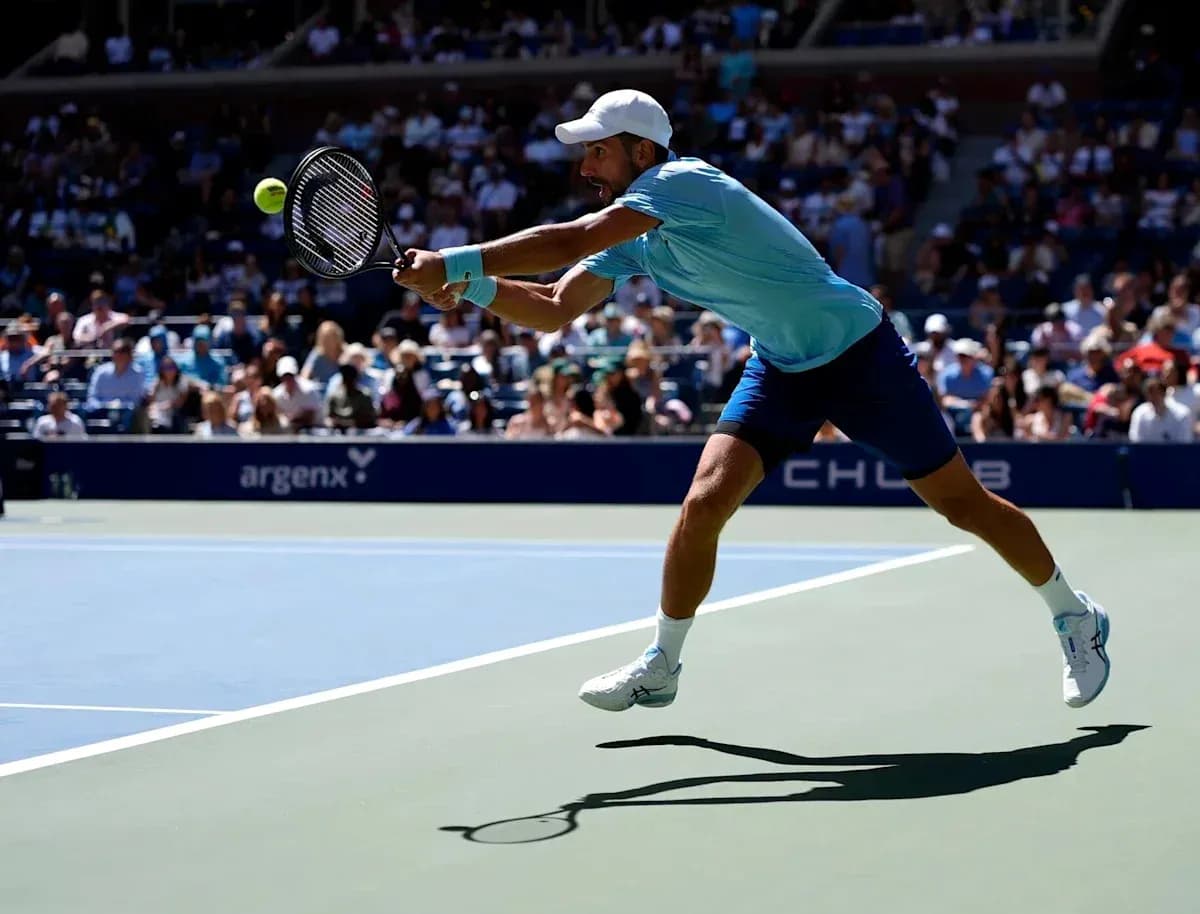
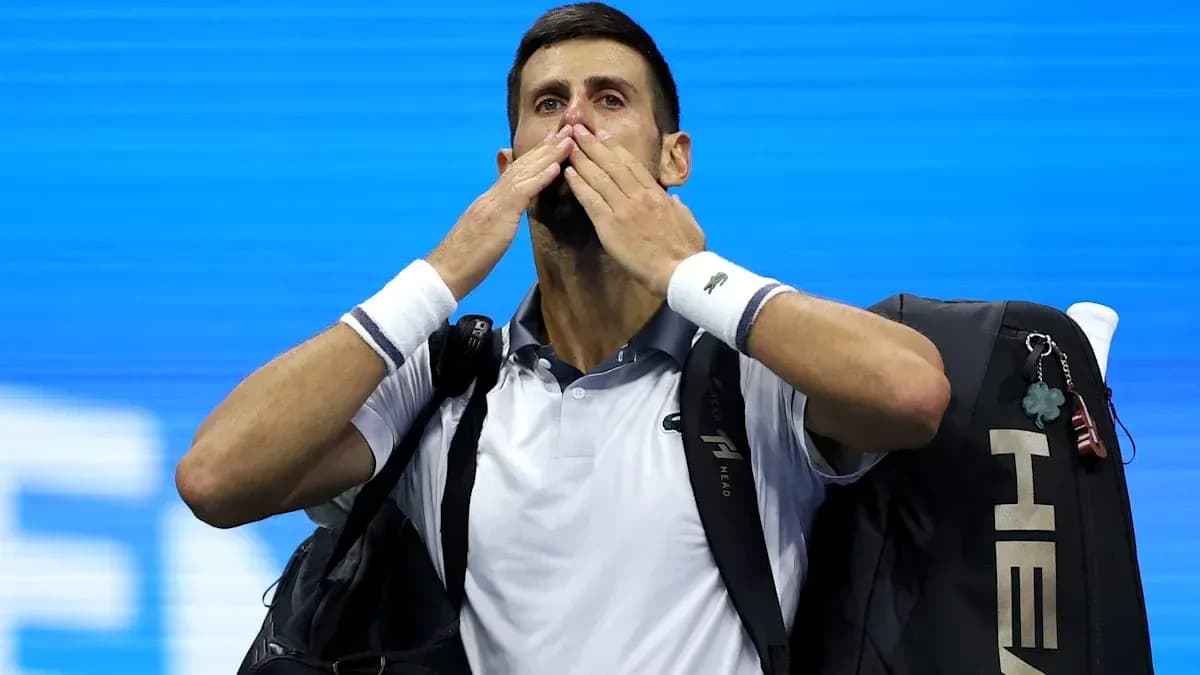
Novak Djokovic has spent a career turning fifth sets into coronations. On Sunday night in New York, he stood on the baseline in another deciding set, eyes wet, shoulders heavy, the stage familiar but the script unrecognizable.
This time, his body walked off without him.
The 24-time Grand Slam champion, a man who has built his legend on endurance and defiance, lost in the first round of a major for the first time since 2006, beaten 7-6 (5), 5-7, 4-6, 6-2, 6-1 by Mariano Navone at the US Open. He is 39 now. He will fall out of the Top 10. And he suddenly finds himself staring at a question he has pushed back for nearly two decades: what happens when willpower is no longer enough?
A Night That Unraveled
Conditions should have helped him. The brutal New York sun had dipped, the heat eased, the night session wrapped the court in something close to mercy. Djokovic even started like the old Djokovic, racing to a 3-0 lead, taking the ball early, threading winners that reminded everyone why his name sits on 24 major trophies.
Then the slide began.
Less than an hour in, he felt sick. The lead vanished. The legs slowed. Nausea crept in and never really left. By the third set he was throwing up. By the fourth and fifth, his body locked against him, cramps biting, his serve reduced to something far from the full-blooded motion that once broke opponents’ resistance as much as their return games.
Four hours and 36 minutes drained him. The numbers told their own story: flashes of brilliance drowned by 70 unforced errors, a man still seeing the right shots but no longer able to hit them often enough.
“I think it was obvious that it was an awful feeling on the court for me,” he said afterwards, speaking to a small group of reporters rather than in the main press conference. “This is something that, unfortunately, I’ve been dragging along in practically every match this year.”
Then came the line that cut deepest: his whole body, he said, started to “collapse,” his back and shoulder “gave up.”
The greatest returner of his era, undone not by a serve he couldn’t read but by a body he couldn’t command.
Navone Holds His Nerve
The story will always circle back to Djokovic, but it should not erase Navone. At 25, with just one ATP Tour title to his name from 2026, he walked into Arthur Ashe Stadium facing a monument, not just a man. He walked out with the biggest win of his life.
He did it with clarity. Deep, heavy groundstrokes that pushed Djokovic back. Over 70% of points won behind his first serve. Break points taken when they appeared, not squandered in the glare of the moment. He did not flinch when Djokovic, on muscle memory alone, dragged himself into a two-sets-to-one lead.
Navone kept asking the question: can you go again? Djokovic, for once, could not.
Father Time Steps In
Twelve months ago, Djokovic reached the US Open semifinals, losing in straight sets to Carlos Alcaraz. It was a respectable defeat to the eventual champion, a passing-of-the-torch performance without the sense that the flame was dying. Articles then spoke of “Father Time” as a looming figure, an opponent waiting at the far end of the tunnel.
Now he is standing at the net.
This is not the kind of early collapse Djokovic knows. His career has been built on growing into tournaments, not falling apart half an hour into a first-round match. Yet that is what happened: 30 minutes in, the body started to protest. Four hours later, it had staged a full rebellion.
The warning signs were there. In August, in punishing conditions at the Cincinnati ATP 1000, he lost his opening match 2-6, 6-4, 6-4 to Thiago Agustin Tirante, another younger opponent who simply lasted longer. Djokovic tried to spin that defeat as a blessing in disguise, a chance to recover and tailor his training for New York, the major he has so often circled in red.
He has been clear for years: Grand Slams are the priority. Everything else, he has suggested, is preparation.
But the calculation shifts at 39. Skipping events to save energy for best-of-five battles is a logical strategy in theory. In practice, players need matches in their legs to withstand nights like Sunday. Four hours of combat is a monumental ask for any athlete, at 19 or 39. When you start to suffer after half an hour, it hints at something deeper than one bad day.
Djokovic has played only seven tournaments in 2026. That light schedule was supposed to protect him. Instead, it now raises the question of whether the protection has come too late.
What Comes Next?
The tennis world will spend the rest of this US Open speculating about his future. Will he be back next year? Will this be the moment he decides that the mountain has finally grown too steep?
Only Djokovic can answer that. He can choose to play on as a top-20 presence, chasing moments rather than eras, competing because he still loves the grind and the roar, not because every tournament must end with a trophy. Fans would embrace that version of him, the veteran playing for the sheer act of playing.
Or he can look at nights like this, at the reality that being a serious Grand Slam contender now rests more on physical resilience than on the iron mind that once bent finals to his will, and decide the trade-off no longer suits him.
For now, the only certainty is that he is not done yet. On Monday, his name appeared on the ATP 500 Beijing entry list. The calendar rolls on. So does he.
“Forever grateful, New York,” he wrote on social media after the loss.
Gratitude, yes. But underneath it, an unavoidable question: how many more times will he walk into this city believing his body will still follow his heart?