Novak Djokovic's Painful US Open Exit: A Night of Struggle
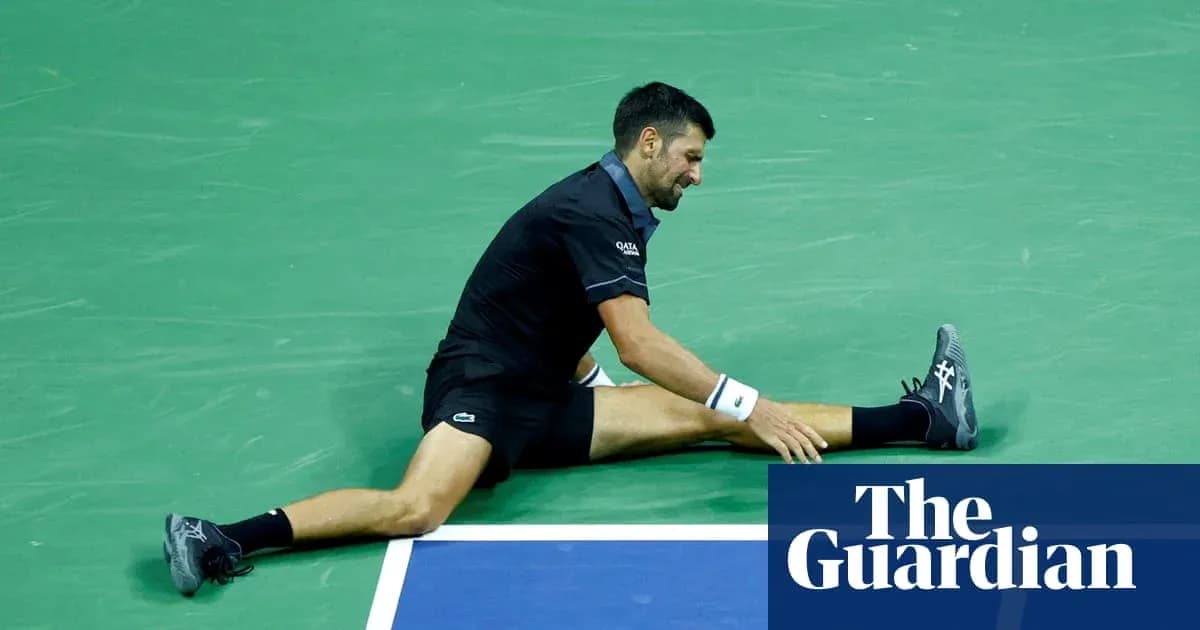
Novak Djokovic has known pain on a tennis court. He has known exhaustion, dehydration, the edge of collapse. What unfolded on Arthur Ashe Stadium in the first night session of this US Open went beyond all of that.
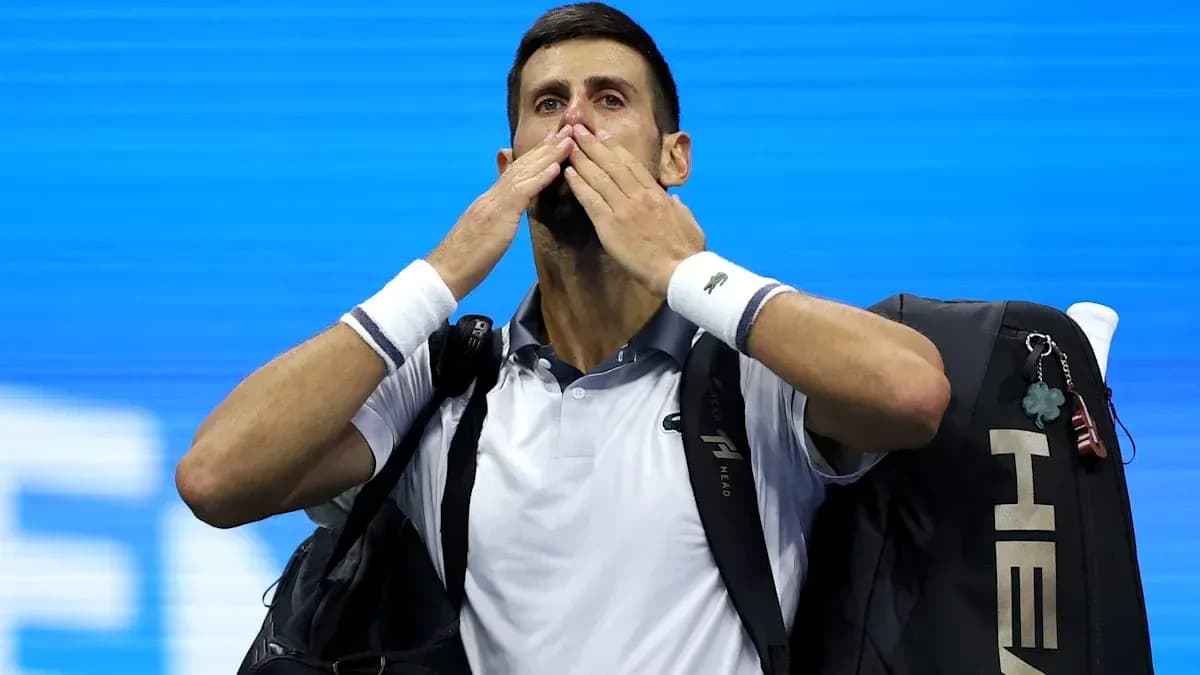
By the time the match edged towards the three-hour mark, the 24-time grand slam champion was walking briskly to the corner of the court, bending over the towel bin and vomiting. Not once. Not for the last time. Four hours and 36 minutes of torment ended around midnight with Djokovic in tears, beaten 7-6 (5), 5-7, 4-6, 6-2, 6-1 by Mariano Navone in the first round.
For a man making a record-extending 84th appearance at a major, it was one of the bleakest nights of his career. This was only the third time the 39-year-old has lost in the opening round of a grand slam, and the first since the 2006 Australian Open, when he was an 18-year-old still learning how to suffer. Two decades on, the suffering looked different. It looked brutal.
What shocked most was how quickly the body began to fail him. He broke early, led 2-0 in the first set, and yet before he could even consolidate that advantage, barely 15 minutes into the match, the signs were already there. Heavy breathing. Laboured movement. A man fighting the New York humidity on a night that was far from the worst Flushing Meadows has offered.
From there, the evening turned into a grim watch. Djokovic drifted in and out of a daze, panting behind the baseline, vomiting between points, fighting to stay upright, then fighting off cramps. He tried ice towels, pills, deep breaths, anything to keep the machine running. By the end, there was simply nothing left.
This was not a random stomach bug arriving at the worst possible time. The warning had come in Cincinnati. Under similar evening conditions there, he had struggled badly against another Argentinian, Thiago Agustín Tirante, who handled the humidity without visible trouble and beat him in three sets.
After that defeat, Djokovic pointed to an ongoing health issue that worsens in heat and humidity. He repeated the explanation in New York.
“I think it was obvious that [it was] an awful feeling on the court for me,” he said. “It is something that I’ve been carrying, unfortunately, pretty much every match this year. You know, vomiting, throwing up, serious issue there, and then my whole body starts to collapse, basically cramping and pain, and the back just gave up in the end, and shoulder, and I couldn’t close it out, break up in the fourth, but just struggled all the way since the fourth game of the match. And again, don’t want to take too much out of his win. Congrats to him; he’s a nice guy, fighter, but you know, I didn’t enjoy myself.”
The context made the loss even starker. Navone is a rugged competitor and a worthy top-50 player, but his best work has come on clay. On paper, this looked like a forgiving first-round assignment for Djokovic, the kind of match that normally serves as a gentle glide into the tournament and a chance to bank energy.
Instead, the drama arrived inside 20 minutes. Midway through the first set, Djokovic began coughing and spluttering behind the baseline, repeatedly bending over between points. At 4-3, rain forced the organisers to close the Arthur Ashe roof, sealing in the air and the tension.
From that moment, the contest became uncomfortable to watch. Navone moved freely, unbothered by the conditions, while Djokovic drenched himself in ice towels, trying to cool a body that would not cooperate. At 5-4 in the opener, the doctor came on and handed him pills. The serve, that old lifeline, kept him afloat. For long stretches, it was the only thing that looked like the Djokovic of old.
Across the net, a dream was unfolding. Navone, 25, grew up idolising Djokovic. When the draw came out, fans quickly unearthed old tweets from a 13-year-old Navone, post after post on X devoted to cheering for the Serb. His parents had not planned to come to New York this year; once the draw paired their son with his hero, they scrapped a Caribbean holiday and flew to Flushing Meadows instead.
On the biggest stage of his life, Navone did not shrink. He chased everything. He held his ground on the baseline, kept immaculate depth off both wings and dragged Djokovic into long, bruising rallies that the veteran’s body simply could not handle. He did not need to be spectacular. He just needed to be relentless.
Djokovic, as he has so often, refused to surrender. He vomited repeatedly throughout the night, then started to cramp in the fourth set. Still he found ways to cling on, riding his serve and his ingrained defiance to turn a one-set deficit into a two-sets-to-one lead. He even broke early in the fourth, a familiar script threatening to reassert itself.
Then the legs went. The first serve faltered. The rallies lengthened, and each changeover told its own story: one man springing to his chair, the other almost collapsing into his. The match flipped sharply. Navone surged through the fourth set, then swept the fifth as Djokovic’s body finally called time.
When it was over, there was no roar, no defiant gesture to the crowd. Just Djokovic walking off Arthur Ashe and back to the locker room in tears, handed another harsh reminder of what it costs to keep chasing the summit of the sport at 39, with a body that now talks back.
The record books will show a first-round exit. The images from this night will ask a different question: how much longer can he keep waging this kind of war against himself just to stay in the fight?