Novak Djokovic's US Open Exit: A Turning Point in His Career
Novak Djokovic has walked off grand slam courts beaten before. He has limped, he has grimaced, he has stared down scoreboards that told him the story was over and then rewritten the ending.
Sunday in New York felt different.
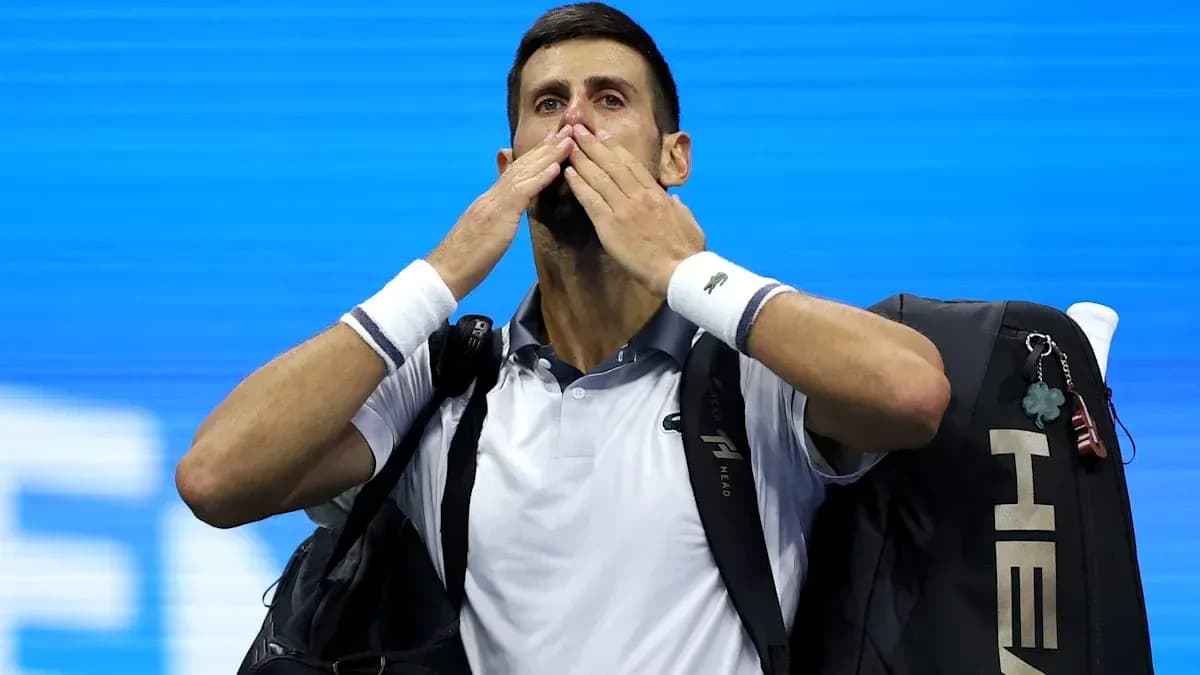
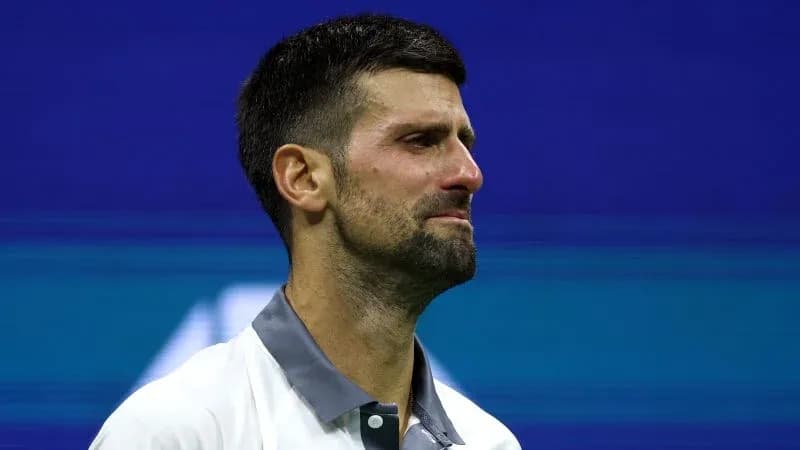
As he bent over between points against Mariano Navone, retching into a towel, legs barely holding him up, the familiar aura of indestructibility was nowhere to be seen. Tears welled, the body seized, and for the first time in two decades on this stage, Djokovic looked not just beaten, but spent.
A first-round exit at the US Open. His worst grand slam result in 20 years. On paper, it’s a statistic. On court, it looked like a reckoning.
Only seven months ago, Djokovic was in the Australian Open final, still the immovable object in the way of Carlos Alcaraz and Jannik Sinner. In July, he was a Wimbledon semifinalist, still flirting with that almost mythical 25th major singles title. The idea of him chasing down history felt entirely plausible. Routine, even.
Now, that record feels distant. Not impossible, because this is Djokovic, but suddenly lodged in the realm of hope rather than expectation.
He is no longer a week‑in, week‑out presence on tour. That was his choice. The schedule has been stripped back, the focus narrowed to the four majors, with the odd tournament used as a tune‑up. It was a clever, veteran’s blueprint: conserve energy, protect the body, peak when the sport really counts.
This time, the body didn’t listen.
Earlier this month, Djokovic revealed he has been managing an underlying health issue, one that flares in hot, humid conditions. In New York’s late‑summer soup, that problem roared back. He vomited between points, his movement disintegrated, his frame locked up. By the end, he could barely chase a ball.
The tears in that final set said as much as the scoreline. They looked like the tears of a man realizing that the opponent he cannot outlast is no longer across the net. It’s inside his own body.
“I didn’t enjoy myself,” he said afterward. “I think it was obvious that it was an awful feeling on the court for me.”
He did not sugarcoat the reality of his season.
“It’s something that I’ve been carrying, unfortunately, pretty much every match this year: vomiting, throwing up, a serious issue there.
“Then my whole body starts to collapse, basically cramping and pain. Yeah, the back just gave up in the end and shoulder.”
Those are not the words of a player talking about a bad day. They are the words of a 39‑year‑old trying to decide how much more punishment he can absorb.
Djokovic left New York admitting he needs time to think about his future in the sport. After what the world watched on Sunday, how could he not? The question is no longer whether he can summon one more great performance. It’s whether he should keep asking his body to go there.
And yet, this is the same man who has mapped his career all the way to the LA Olympics in 2028, the dream of finishing under the Olympic rings, racket in hand, Serbia on his chest. Today that ambition looks wildly optimistic. But doubting Djokovic has always been a dangerous game.
In 2017, his elbow looked like it might end the story. The following year he won two of the four majors. Time and again, whenever the whispers of decline grew louder, he has answered them with another surge, another reinvention.
The retirement narrative has stalked him for years. Every January has been framed as the beginning of the end. Every loss, a supposed last shot at greatness. Yet he kept adjusting, tightening the margins, finding new ways to suffocate opponents who were often a decade younger.
At the start of this year, he did it again, digging out a five‑set epic against Sinner at the Australian Open, a match that felt like a statement: not yet. Not now.
But the numbers no longer lie in his favor. Djokovic has not lifted a grand slam trophy since 2023. His great rivals Roger Federer and Rafa Nadal both won their final majors at 36. Djokovic has pushed that barrier, but the sport has changed around him. The physical demands are brutal, the new generation relentless, the margins thinner than ever.
For him to win another major now would require not just brilliance, but a run of good fortune with his health and the draw that is harder to imagine with each passing month.
So what did Sunday really represent? Another false alarm, another chapter in the long saga of “Is this it?” Or the first clear sign that the era is finally closing?
The look on his face as he tried to summon one last surge against Navone hinted at the latter. The control that once defined him — of rallies, of tempo, of his own emotions — slipped away. For perhaps the first time on a grand slam court, Djokovic looked like a man discovering his limits in real time.
Whatever comes next, his place in history is untouchable. Twenty‑four majors. Years spent bullying an era that already included Federer and Nadal, then standing firm as Alcaraz, Sinner and the rest arrived. He will leave as arguably the greatest player the sport has ever seen.
The temptation for champions is always to stay just a little too long, to chase one more night under the lights, one more roar from the crowd. Djokovic is no different. The question now is not whether he can adjust his goals — perhaps redefining success as deep runs, occasional big wins, the thrill of competition without the tyranny of expectation.
The question is whether Novak Djokovic, the ultimate collector of trophies and records, can live with that version of himself.