Novak Djokovic Faces Shocking Exit at U.S. Open 2023
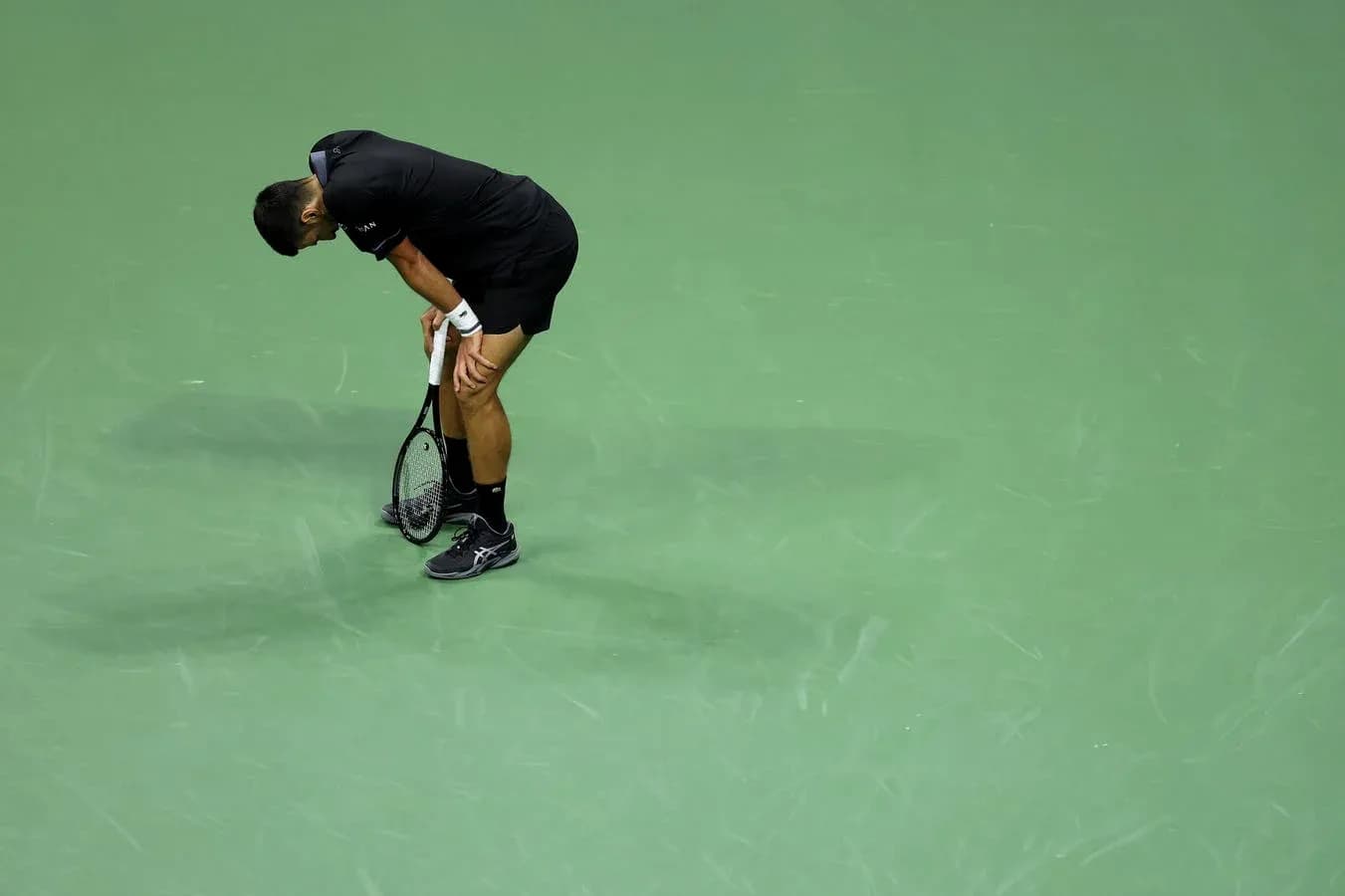
Novak Djokovic has spent two decades turning Arthur Ashe Stadium into his personal proving ground. On Sunday night in New York, it became something else entirely: the scene of his most jarring Grand Slam exit in years.
From the opening games against Mariano Navone, something was clearly wrong. Djokovic, usually a conductor of noise and emotion, barely acknowledged the crowd. His shoulders slumped, his steps looked heavy. He reached for an inhaler. He took tablets on the changeovers. Between points, cameras caught him vomiting into the towel bin, his body rebelling on one of the sport’s grandest stages.
Across the net stood a 49th‑ranked Argentine with no ATP Tour title to his name, playing his first match against the man he grew up idolizing. Four hours and 36 minutes later, that same underdog walked off with a 7-6(5), 5-7, 4-6, 6-2, 6-1 victory over a 24-time major champion who had not lost in the first round of a Slam since 2006.
The roof was closed over Ashe because of rain, trapping the noise and the disbelief. Djokovic, 39 years old now, fought through waves of stomach discomfort and visible distress, but the fifth set turned brutal. Serving at 0-1, he fell behind 0-40. Navone finally broke for 2-0 when Djokovic couldn’t reach a passing shot after venturing forward, and from there the match slid away from one of the game’s greatest finishers.
Djokovic held for 1-3, and the arena responded with a roar that felt like a plea as much as a cheer. He looked close to tears, trying to summon something from a body that kept betraying him. The man who has made a career of bending time and tension to his will suddenly seemed to be fighting both.
This was no ordinary early-round stumble. Djokovic’s wife Jelena and their children, Stefan and Tara, watched from the stands as he absorbed a defeat that cut against everything his career has represented: endurance, inevitability, the sense that he always finds a way. The date added another twist of irony—21 years to the day since he made his U.S. Open debut against Gael Monfils on August 30, 2005.
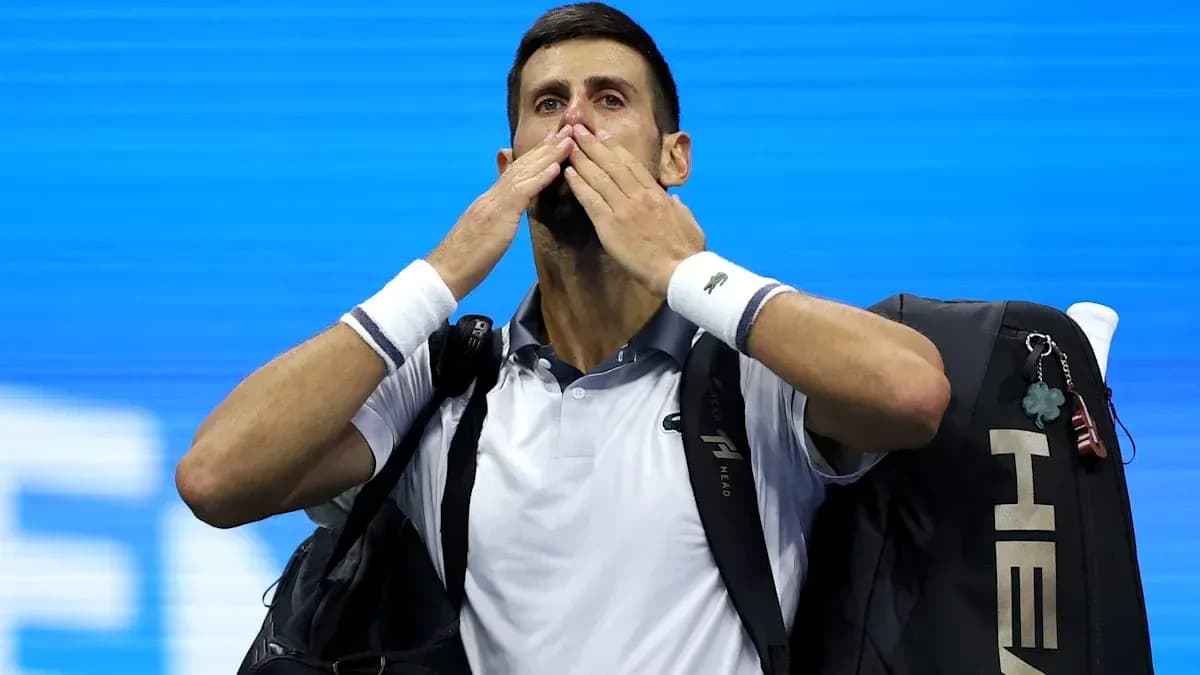
He did not rage or sulk at the end. He waved, traced a heart with his hands, signed autographs. A quiet exit, on a loud night.
“I think it actually turns out better for him because it shows he’s human,” John McEnroe said on ESPN. “It gives you an even greater sense of how amazing his accomplishments were.” Coming from a man who knows something about vulnerability on big stages, the line landed with weight.
The result also underlined a larger shift in men’s tennis. According to ESPN, the last time none of “The Big 3” — Djokovic, Roger Federer, Rafael Nadal — reached the second week of a major was Roland Garros in 2003. Back then, Djokovic had not yet played a main draw at a Slam. On Sunday, he became the one left behind.
For Navone, this was not just a breakthrough. It was the match of his life.
“This is [an] amazing court on the biggest stage,” he said in his on-court interview, almost out of breath from the occasion as much as the effort. “It’s amazing the way we played, I mean five sets against the GOAT is nothing to every day. I’m very happy, what can I say.”
He didn’t hide what it meant to beat his hero here, of all places.
“Novak means a lot for me,” he added. “It was very tough for me because you’re playing with the GOAT on this court here and he is here every day in this court when he plays the U.S. Open. This means a lot, it’s a dream come true. It’s certainly 100%. Now I have to recover, I think it’s almost 12 o’clock, we have to go to sleep.”
The night had started as if it might follow a familiar Djokovic script. He led 4-2 in the opening set, only to let it slip into a tiebreak that Navone stole 7-5. The Argentine, serving boldly, held for 5-4 in the second set with a 100 mph ace, and Djokovic suddenly stared at a dangerous deficit.
The response came on instinct. He broke Navone at love for 6-5, then held to love to level the match at one set all. McEnroe, watching the old pattern re-emerge, noted on air: “And now all of a sudden, he’s starting to look like Novak Djokovic.”
Yet something remained off. McEnroe also pointed out how uncharacteristically detached Djokovic seemed from the crowd. “Almost no recognition of the crowd so far, except when he walked out,” he said. For a player who often feeds on friction and noise, that silence felt telling.
In the third set, the physical struggle became impossible to ignore. Cameras showed Djokovic vomiting into the towel bin, prompting “Boot and rally” jokes from James Blake and the ESPN crew, a gallows humor response to an increasingly grim picture. On the scoreboard, though, he still looked like himself: no break points faced on serve, and a crucial break for 5-4 when Navone netted a forehand on break point. Djokovic finally cupped his hand to his ear, inviting the crowd into the fight, and served out the set 6-4.
That was the last time the match felt under his control.
Early in the fourth, he threw up again. His movement grew tighter, his legs and back clearly bothering him as he stretched repeatedly between points. “This is not much fun for him tonight at all,” Chris Fowler said on ESPN, a simple line that matched the pictures.
Navone sensed the opening and took it. He broke for 4-2 when Djokovic sprayed a forehand wide, then rolled through the set 6-2 as the Serb’s resistance thinned. The fifth became a test of survival, and Djokovic, for once, could not pass it. Navone surged, Djokovic faded, and a career built on turning deciders into inevitabilities ended in a 6-1 final set that felt almost surreal.
The loss lands in the middle of an uncertain stretch for Djokovic. He mentioned after his first-round defeat in Cincinnati that he has been “dealing with [a health issue] for many years now,” and those words echoed louder as he doubled over on Ashe. He is a 10-time U.S. Open finalist, losing six of those finals, and his last major triumph in New York came in 2023. Three years on, he is still chasing a record 25th major title, still reaching deep into the late rounds — he made the semifinals of all four majors last year and beat world No. 1 Jannik Sinner to reach the Australian Open final earlier this season.
Yet this night was different. No trophy on the line. No familiar surge in a deciding set. Just a legend, his family in the stands, his body rebelling, and an opponent who refused to blink on the biggest night of his career.
Navone leaves New York with the win of his life and a story he will tell forever. Djokovic leaves with questions about what his body will allow him to do from here.
For the first time in a very long time, the U.S. Open marches into its second week without him.