Novak Djokovic's Challenging 2026 Season: A Year Without Masters 1000 Quarter-Finals
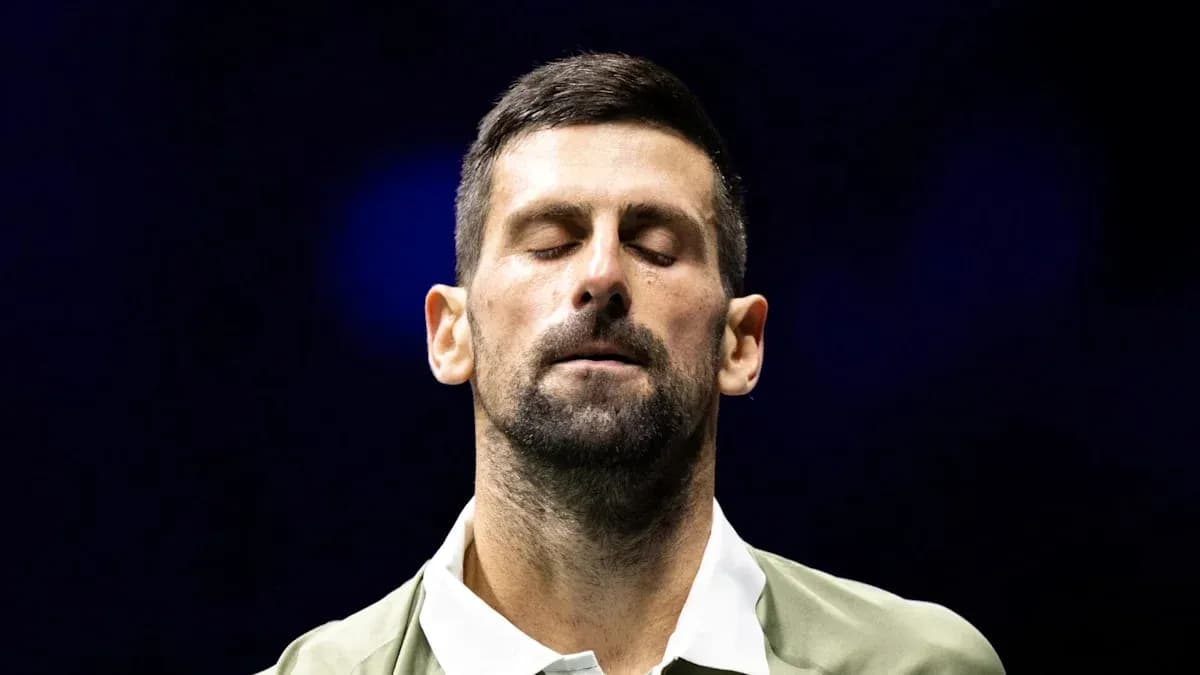
Novak Djokovic’s season is over. Not with a trophy lift or a defiant late surge, but with a flat second-round defeat to Rinky Hijikata at the Paris Masters that closed the door on the ATP Finals and snapped a streak that had lasted more than two decades.
For the first time in 21 years, Djokovic has gone through a season without reaching a Masters 1000 quarter-final. Indian Wells, the Italian Open, Shanghai, Paris – four stops, no last eight. For a player who once treated this level as his personal playground, the numbers tell the story of a year that never quite caught fire.
Hijikata became the 10th different man to beat Djokovic in 2026, and the lowest-ranked of them. That statistic alone would have been unthinkable not long ago. Now it sits as the final entry on a results sheet that has dragged the 39-year-old out of the world’s top 10, a ranking drop that underlines how much ground he has lost.
A season that never settled
It all began with a reminder of who he still is. Djokovic opened 2026 at the Australian Open and tore through the draw, stunning two-time defending champion Jannik Sinner to reach his first Grand Slam final since Wimbledon 2024. Melbourne seemed ready to stage his coronation: a 25th major, another layer to a career already straining under its own history.
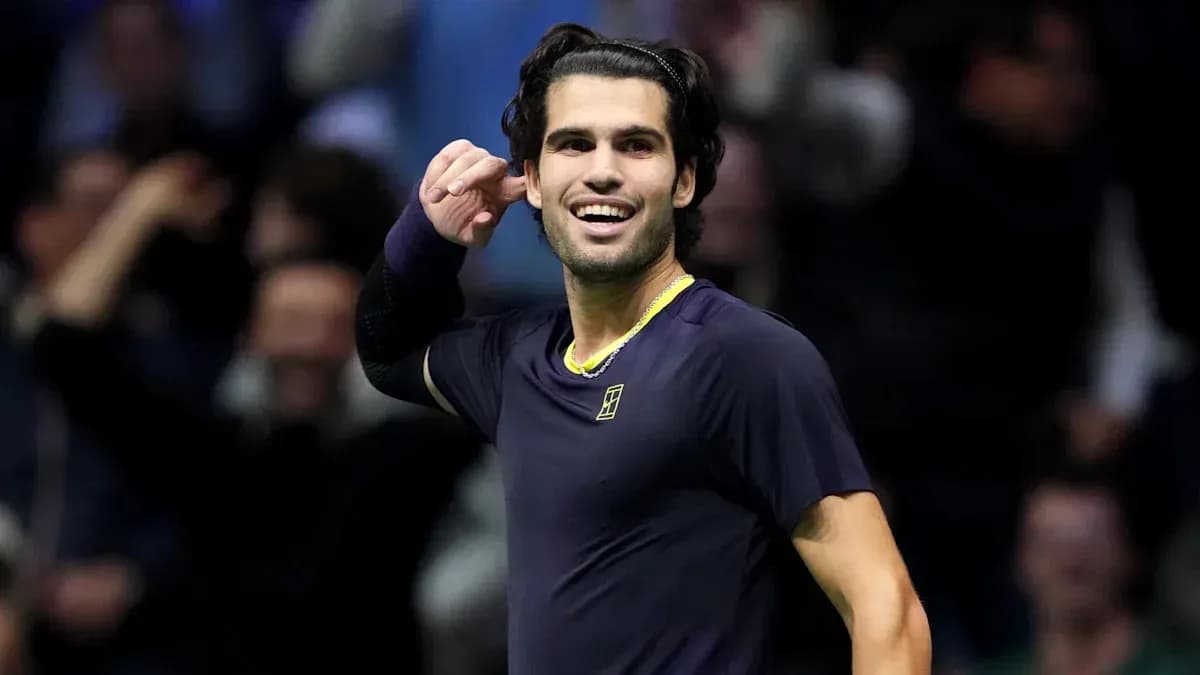
He even took the first set in the final against Carlos Alcaraz. Two sets from the record. Two sets from a number that would have rewritten the sport’s mythology again. Then the match turned. Alcaraz dragged the contest away from him and handed Djokovic his first defeat of the year, a loss that felt bigger than a single result.
Djokovic did not appear again until Indian Wells, and the rust showed in the cruelest way. He reached the fourth round but fell in a thriller to Jack Draper, one of only eight wins the Briton has managed all year. A match Djokovic once would have closed out by instinct slipped through his fingers.
The clay brought no relief. At the Italian Open, he ran into Croatian qualifier Dino Prizmic and walked off on the wrong side of a shock defeat. Roland Garros was no kinder. There, another young name, Joao Fonseca, sent him to his earliest exit in Paris for 17 years. The most dominant clay-court disruptor of the Nadal era suddenly looked vulnerable on the surface where he had so often hunted giants.
Flickers of the old force
Wimbledon, as so often, offered a sense of order. On the lawns he knows better than any surface bar Melbourne’s Plexicushion, Djokovic pieced together a run that looked far more familiar. He reached the semi-finals for the eighth consecutive time at the Championships, a streak that speaks to his enduring class on grass. But even there, he ran into a now-familiar obstacle: Sinner. The Italian, who has steadily shifted from upstart to rival, stopped him short of another final.
Then came a North American hard-court swing he will want to forget. In Cincinnati, Thiago Agustin Tirante beat the former world No 1, a result that would once have shaken the locker room but now felt like part of a pattern. At the US Open, the pattern hardened into a landmark Djokovic never expected to see: a first-round defeat at a Slam for the first time in 20 years. Two decades of always being a factor in New York, gone in a single opening hurdle.
Just when the season seemed to be drifting into irrelevance, he struck back in Beijing. At the China Open, Djokovic rolled through the field, beating Alexander Zverev, Daniil Medvedev and Alex de Minaur to keep his record in the Chinese capital perfect and secure his only title of 2026. It was a reminder that, on his day, he can still bully elite fields, still dictate, still win.
That title pushed him into a strong position to qualify for the ATP Finals, a clear target he had set for himself. The path was there. The rankings math was in his favour. All he needed was a steady finish.
It never came.
New names, new reality
Shanghai brought Hubert Hurkacz and an early exit. Swiss Indoors brought Jan-Lennard Struff and another. Paris delivered Hijikata, a player Djokovic had never lost to – just as he had never previously fallen to Hurkacz or Struff. Three new names added to a ledger that used to intimidate before it even appeared on a draw sheet.
The cumulative effect has been brutal. The highest Djokovic climbed this year was world No 3. Now, as the season closes, he finds himself outside the top 10, a place he once treated as a minimum requirement rather than an aspiration. For a generation of fans, the idea of Djokovic as anything other than a permanent fixture near the summit feels almost surreal.
And yet, there is no hint of farewell. The 24-time Grand Slam champion has made his intentions clear: he will be back next year, still chasing that elusive 25th major, still convinced there is one more defining chapter to write.
The numbers say this was a down year. The rankings say he has slipped. The results show a man increasingly stalked by younger, fearless opponents. But Djokovic has built a career on ignoring what the numbers say about what he should or should not be able to do.
The question now is simple: in 2027, does he bend the sport back to his will one more time, or has this season drawn the first real line under an era?