Nick Kyrgios Cleared to Return After One-Month Cocaine Ban
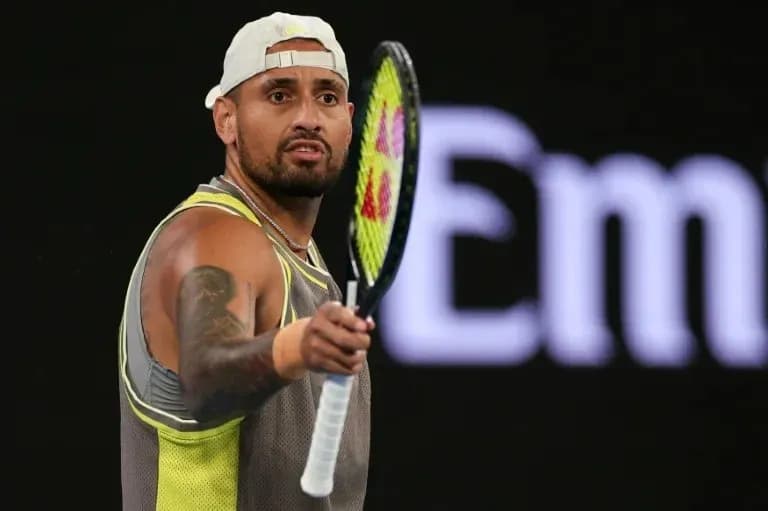
Nick Kyrgios has been cleared to return to tennis after accepting a one‑month ban for cocaine use and enrolling in a treatment programme, in the latest dramatic twist of a career that has rarely stayed out of the spotlight.
The 31-year-old Australian, a Wimbledon finalist in 2022, failed a doping test during an ATP event in Mallorca on June 22 and was provisionally suspended on August 4 by the International Tennis Integrity Agency (ITIA). He admitted then he had made “a huge mistake”.
On Friday, the ITIA confirmed that Kyrgios’ suspension would be limited to one month after accepting his explanation that the cocaine use happened socially on a night out before the tournament, and not in a competition context.
An independent scientific expert at a World Anti-Doping Agency (WADA)-accredited laboratory reviewed the case and found that the levels detected in his sample matched his account. That proved decisive.
“As a result, the ITIA accepted that Kyrgios’ use of cocaine was outside of competition,” the agency said.
Under WADA rules, a violation of this kind usually carries a three-month suspension. That period can be cut to one month if the athlete commits to a recognised treatment programme.
Kyrgios has done exactly that. The ITIA confirmed he has entered treatment, and that his suspension will end on September 3, 2026, provided he completes the programme. He will forfeit prize money and ranking points earned in Mallorca.
For a player who once sat at No. 13 in the world, the fall has been stark. Kyrgios, owner of one of the most explosive serves and heaviest ground strokes on tour, now finds himself ranked 918, his talent repeatedly stalled by injuries and long absences.
His peak remains that electric run on the grass of Wimbledon in 2022, when he surged into the final before losing in four sets to Novak Djokovic. It felt then like the start of something. It never quite became that.
Injuries kept coming. Surgeries followed, including a complete reconstruction of his right wrist in 2024, the most serious of the lot. Each comeback grew harder, each layoff longer.
His most recent appearance came at Wimbledon this July, sneaking into the men’s doubles draw as a wildcard alongside Alexander Bublik. They went out in the first round, a brief and subdued cameo from a player who once lit up the same lawns.
When news of the failed drug test broke last month, Kyrgios did not hide. On Instagram, he confirmed he had tested positive for cocaine in Mallorca and said he took full responsibility.
“I made a huge mistake and I take full responsibility for it,” he wrote, apologising to fans, family, sponsors and, pointedly, to “the kids who follow me”, acknowledging the example he sets and his disappointment in himself.
The ban is short. The consequences may not be.
Kyrgios now faces yet another attempt to rebuild a career already scarred by physical breakdowns and volatility. The question is no longer whether he has the talent. It is whether this latest line in his story becomes a turning point, or just another detour on a road that has never run straight.