Naomi Osaka's Resilient Return at the US Open 2024
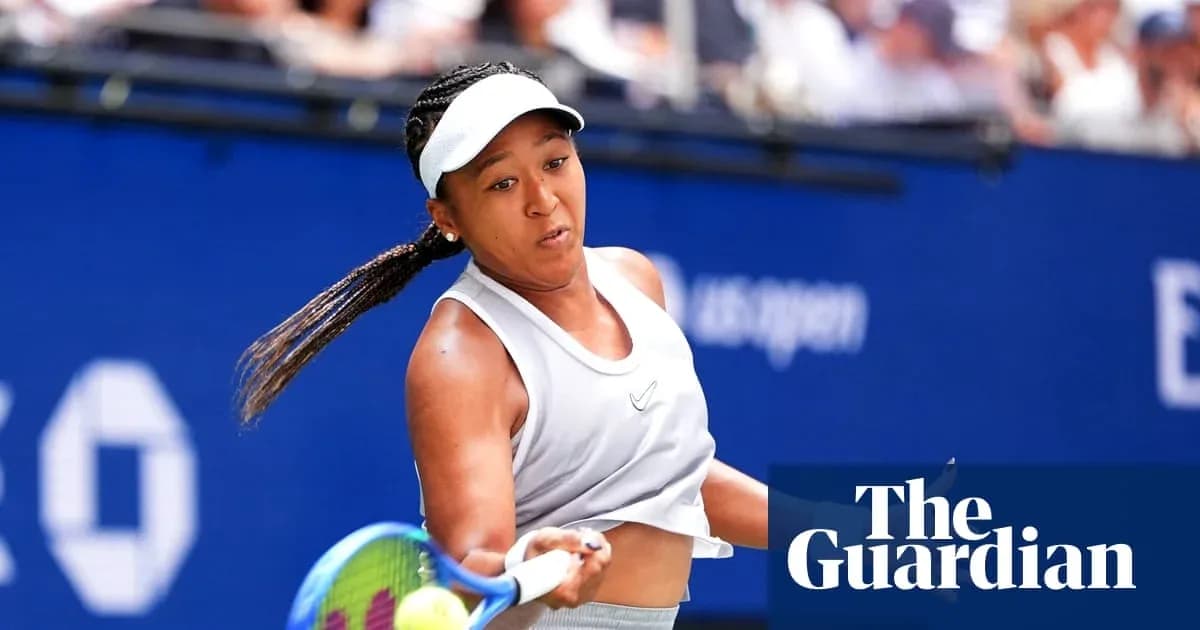
Naomi Osaka had the match in a headlock. Again.
For the second straight outing at this US Open, the two-time champion looked as if she would glide through without drama. A set up, a break up on Katerina Siniakova, the night humming along to a familiar New York rhythm. The third round was already forming in the mind’s eye.
Then the tension walked in.
Osaka’s forehand, so clean and decisive for a set and a half, tightened. The first serve wavered. Siniakova, who had been clinging on more than competing, suddenly had a foothold. The Czech broke back, Osaka’s shoulders stiffened, and the match that had felt routine turned jagged.
The second set slipped. Siniakova snatched it 7-5. A contest that should have been done and dusted was heading into a decider, and Arthur Ashe Stadium could feel the unease. Osaka has lived this kind of swing before: from command to chaos in a handful of games.
This time she refused to let it spiral.
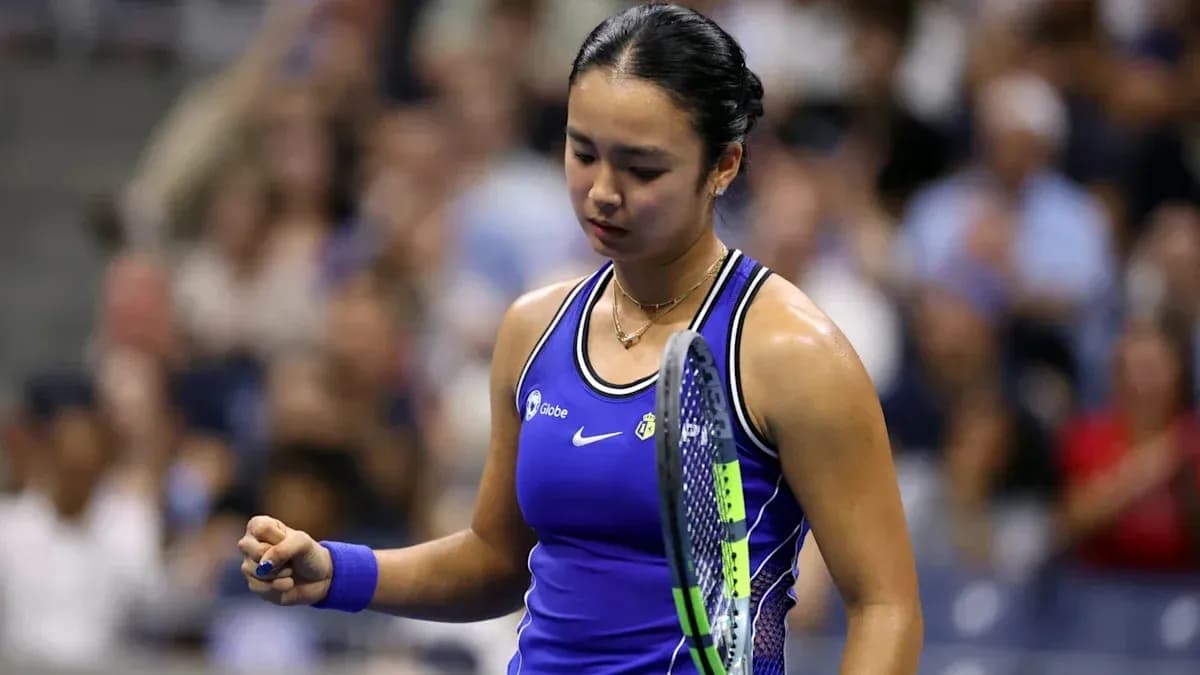
Osaka reset, stripped the match back to its basics and tore through the final set 6-1 to complete a 6-2, 5-7, 6-1 victory and reach the third round. The scoreline in the end looked comfortable. The route there was anything but.
A different Osaka in 2024
What is striking about Osaka’s return to New York is not just that she is winning again. It is where she has come from this season.
For years, the clay and grass stretches felt like long, joyless layovers before the hard courts. She never hid her discomfort on those surfaces. This year, that script changed. A run to the fourth round at the French Open, then the quarter-finals at Wimbledon, marked the best combined clay- and grass-court campaign of her career.
Wimbledon, especially, felt like a breakthrough. On a surface that has often exposed her movement and timing, she produced some of her sharpest tennis in years, capped by a statement win over world No 1 Aryna Sabalenka in the fourth round. The charge ended in the last eight, fatigue catching up after a deep run in Bad Homburg the previous week, but the level she reached evoked the player who last lifted a major at the Australian Open in 2021.
She arrived back in North America with something she had been missing for a long time: sustained belief backed by results.
With that comes expectation. And expectation, with Osaka, rarely travels alone.
Her first two matches in New York have carried that familiar nervous edge. Against Anastasia Zakharova in round one, Osaka twice let breaks slip and needed a pair of tie-breaks, 7-6 (6), 7-6 (3), to scrape through. Against Siniakova, the nerves cost her more: a full set.
What still separates her, though, is the ability to reach into a career full of high-pressure moments and pull out a blueprint. She spoke about those memories afterwards, about how often her mind goes back to the 2019 Australian Open final against Petra Kvitova when a match stretches to a third set and the pulse quickens. That night in Melbourne, she steadied herself after blowing a championship lead and came back to win. The lesson has stayed with her.
Experience, for Osaka, is no longer an abstract word. It is a bank of specific matches, specific points, specific escapes. In New York, where she has already lived so much, that reservoir runs deep.
More than tennis, again
With Osaka, though, the conversation never stays solely between the lines of the court.
Her tennis has sharpened this year, but each grand slam appearance has also become a runway of sorts. Walk-on outfits, match kits, and carefully curated looks have generated their own headlines. In New York, her attire pays homage to Allen Iverson, the former NBA star whose defiant style and on-court swagger once shook up basketball’s establishment.
The reaction has been predictably split. For some, it is harmless expression. For others, it is ammunition. Osaka, a reserved and fundamentally gentle figure, somehow provokes a disproportionate level of ire. She is accused of chasing attention, of caring more about fashion than forehands, of contradicting the mental health struggles she laid bare in 2021 by daring to stand out now.
The criticism often comes from the same corners that never forgave her for using her platform to highlight racial injustice in the early 2020s. The arguments rarely engage with the reality that people change, heal, and grow; that a woman in her mid-twenties might be in a different emotional place than she was five years ago.
Osaka has always been introverted, almost shy in press rooms and mixed zones. Fashion offers her a language that does not require a microphone. She runs, she swings, she entertains. She happens to do it in outfits that say something about who she is and what she likes. In a sport that sells itself as entertainment, the outrage over a dress or a walk-on jacket feels wildly misplaced.
A brutal path ahead
The draw has given Osaka little room to breathe. Of all the contenders in the women’s field, she faces one of the more unforgiving routes. Second seed Elena Rybakina looms as a possible fourth-round opponent, a power-serving, flat-hitting test that will demand Osaka’s very best.
To get there, she must first navigate the minefield of the early rounds, where rhythm is patchy, conditions shift, and nerves sit close to the surface. At this stage of a major, style points do not matter. Survival does.
Elsewhere in the women’s draw, another former champion is quietly building a head of steam. Iga Swiatek, seeded eighth and crowned here in 2022, moved through her opener with clinical ease, dispatching Nadia Podoroska 6-3, 6-2. The Pole’s baseline weight and relentless intensity translated smoothly to the New York hard courts once again.
For Britain’s Harriet Dart, the main draw proved unforgiving. The qualifier ran into the 25th seed Marie Bouzkova and was brushed aside 6-2, 6-2, outplayed by the Czech’s consistency and court coverage.
In the men’s event, one of last year’s standout performers fell early. Félix Auger-Aliassime, the third seed and a semi-finalist here 12 months ago, struggled with dizziness and illness and could not keep pace with Karen Khachanov, who rolled through the final three sets to win 6-7 (5), 6-3, 6-2, 6-2. A contender on paper, undone by a body that would not cooperate.
Osaka, by contrast, walks on to court this fortnight with her body sound, her game sharpening, and the noise around her as loud as ever. She has chosen to meet it all head-on, racquet in one hand, a statement outfit in the other.
The tennis, ultimately, will decide how long she stays in New York. The question now is whether this version of Osaka — battle-tested, expressive, unapologetically herself — is ready to turn resilience into another run at the title.