Mike Tyson's Journey: From Financial Ruin to Gratitude
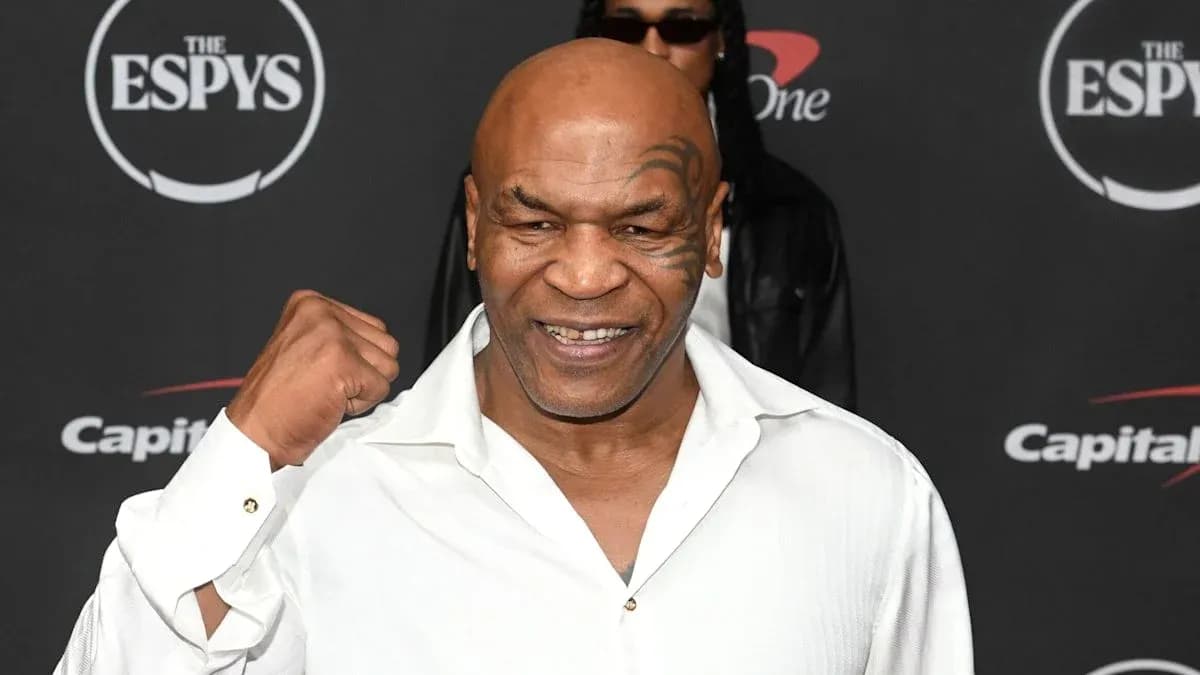
Mike Tyson has taken punches from the taxman and the courts that hit harder than most heavyweights ever could. On the latest episode of the Fly on the Wall with Dana Carvey and David Spade podcast, the former undisputed champion laid out, with disarming honesty, how he crawled back from financial disaster to a calmer, more disciplined life.
The conversation started light. The hosts teased him about living in Florida, a haven for those looking to escape state income tax. David Spade, 62, fired off a line that landed clean: “Go broke with me and Dana in California.” Tyson didn’t hesitate. “No way, Jose. I went that route before!”
He wasn’t joking.
At his peak, Tyson lived like a man who believed the money would never stop. According to NBC News, he owned six mansions, a fleet of 110 cars, and even white Bengal tigers. His fortune sat somewhere between $300 million and $400 million, a number that seemed to confirm the myth of invincibility that surrounded him in the ring.
Then the bottom fell out.
In 2003, Tyson filed for Chapter 11 bankruptcy. By the following year, his debt had ballooned to $38 million. The man who once terrified opponents with a single step forward now faced a different kind of fear: the silence that comes when the phones stop ringing and the bills keep coming.
Two decades on, the story is very different.
Tyson, now 60, has rebuilt his finances and, more importantly, his perspective. Speaking to Carvey and Spade, he described himself as “very grateful at this stage in my life,” a line that would have sounded impossible during the chaos of his prime.
The ruin, he says, became his education.
“That’s what’s so good about starting over,” Tyson explained. “From the first time you learned, you won’t do it the second time.”
The man who once signed off on wild spending now spots a bad deal the way he used to spot a weak chin.
So who actually controls the money these days?
“I give it all to my wife,” Tyson told the hosts. When they asked if she was in the room, he broke into a laugh and added, “She said it’s not true!”
The joke landed, but the message underneath was clear: the days of reckless solo decisions are over.
Tyson has been married to his third wife, Lakiha Spicer, since 2003, a partnership that began just as his financial life publicly imploded. Together they have two children, Milan, 17, and Morocco, 15. Tyson also has five other children from previous relationships, a sprawling family that now sits at the center of his world.
In an interview with People in October 2026, Tyson said his focus had shifted decisively toward fatherhood. The man once defined by knockouts and headlines now measures his life in school events, family time, and quiet moments.
“Everything that was quote-unquote ‘negative,’ turned out to be a positive for me,” he told the magazine, reflecting on the chaos and scandal that followed him for years. “I’m very grateful for it all because it made me a better person. Everything bad that happened to me, I’m grateful for.”
It’s a remarkable stance from someone who has lived through prison, public humiliation, and financial collapse. But Tyson has always been extreme — in his violence, in his spending, and now, in his gratitude.
That journey, from excess to emptiness to something approaching peace, sits at the heart of a new Netflix documentary, TYSON, now streaming. The film revisits the familiar images: the brutal knockouts, the lavish estates, the tigers, the headlines. What’s different now is the man narrating it all.
Once, Tyson’s life was about what he could acquire — belts, cars, houses, status. Today, as he jokes about taxes, hands the finances to his wife, and leans into being a father, the question hangs in the air: how much more powerful is a fighter who finally learns when not to swing?