The Mental Battle of Men's Tennis: Delusion and Dominance
At the sharp end of men’s tennis, talent is a given. Athleticism too. Commitment is the bare minimum. None of it, on its own, is enough to carry a player through seven suffocating matches and into the club of Grand Slam champions.
What separates the nearly men from the ones holding the trophy is something more irrational. A kind of stubborn inner noise that insists you can beat anyone, anywhere, when the lights are hottest and there is nowhere to hide.
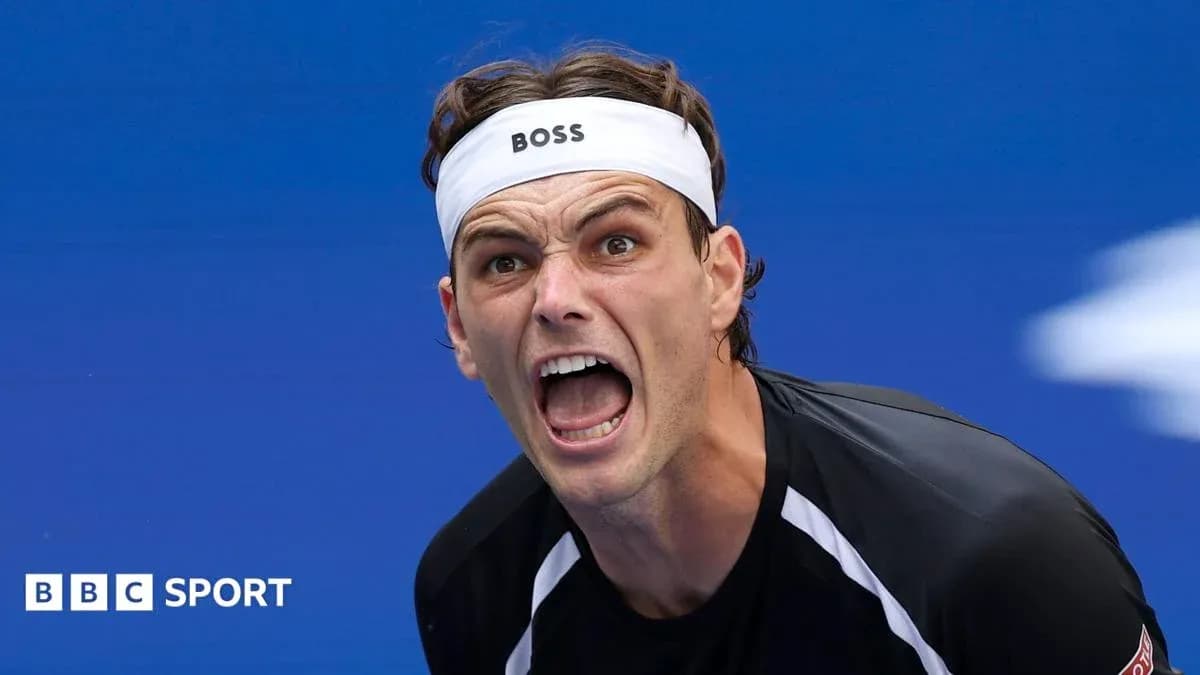
Unwavering belief. Or, as Taylor Fritz has started to call it, “delusion”.
The American, world number 10 and long since touted as part of the sport’s next wave, arrived in New York with a golden chance. Jannik Sinner was out injured. Carlos Alcaraz was only just returning from a long lay-off. The draw looked open, the path inviting. For Fritz and several of his peers, this US Open felt like a rare crack in the armour of the new duopoly.
Instead, the draw chewed them up.
By the time the fourth round rolled around at Flushing Meadows, six of the top 10 seeds had already gone. Fritz’s own campaign collapsed in brutal fashion in round three, when he squandered a two-set lead against Argentina’s Francisco Cerundolo. A match he appeared to control slipped through his fingers, and with it another chance to test that “delusion” on the second week of a Slam.
Cerundolo, the 24th seed, has been one of the beneficiaries of the chaos.
“It shows you how even the circuit is, how tight every match is, how difficult it is to win matches,” he said. “Anything can happen right now.”
He is right. The men’s draw has become a minefield, even as two figures tower over it.
Daniil Medvedev, champion here once and a fixture at the business end of majors, fell in the fourth round on Sunday. His exit left just three top-10 players standing: top seed Alexander Zverev, defending champion Alcaraz and eighth seed Ben Shelton. Around them lies a landscape of upsets, retirements and empty seats in the players’ box where the favourites were supposed to be.
Hovering over all of it is the dominance of Sinner and Alcaraz. Between them, they have claimed 10 of the past 11 Grand Slam men’s singles titles. Every time another seed falls, their grip on the sport seems to tighten.
That grip also weighs heavily on those trying to break it.
Earlier this year, in an interview with the Guardian, 28-year-old Fritz admitted he expects to feel an “emptiness” at the end of his career if he never wins a major. It was a rare, raw confession in a locker room that usually prefers platitudes. The American is not alone in feeling the strain.
Zverev, now world number two, finally cracked the code in Paris this season, lifting his first Grand Slam trophy at Roland Garros. The German later revealed that in previous Slam fortnights he “could not sleep” and was “not eating” because of nerves. The pressure of expectation, the sense of time slipping away, had been eating into his preparation.
Once that valve released, his tennis flowed. He reached the Wimbledon final, where he played with more freedom but still lost to Sinner. In New York he is battling through his half of the draw without hitting top gear, grinding more than gliding, yet still firmly in the hunt.
Lurking on the other side is Alcaraz, sharpening with every round. The Spaniard’s four months away from competition have not dulled his instincts. Each win makes him look less like a returning champion and more like the man to beat.
“The two-horse race between Sinner and Alcaraz is not healthy for the tour,” former Wimbledon champion Pat Cash told BBC Radio 5 Live. “With every win, Alcaraz is becoming more of a favourite. Four months off, no matches and he could win the US Open.”
The implosion of the seeds in New York cannot be pinned solely on nerves or the looming shadows of Sinner and Alcaraz. There is also the nagging question of depth at the top.
Strip away the Italian and the Spaniard and one argument goes that this top 10 is softer than previous eras. The evidence at Flushing Meadows has not exactly silenced that claim.
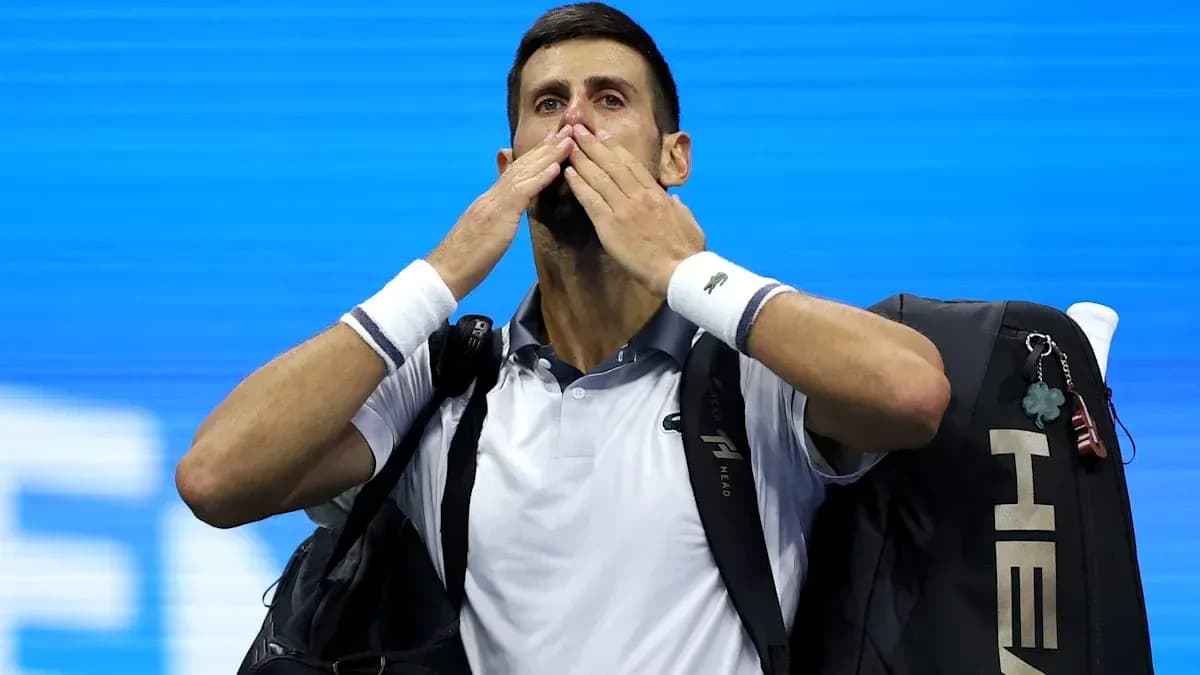
Illness, injuries and fatigue have cut into the field at the tail end of a punishing season. Fourth seed Novak Djokovic, who once treated the US Open as his personal hunting ground, saw his ageing body betray him in a shock first-round exit. Third seed Felix Auger-Aliassime blamed dizziness for his second-round defeat.
Fifth seed Flavio Cobolli admitted he simply ran out of energy in his third-round loss, pointing to a heavy schedule and the draining New York heat. Cincinnati champion Arthur Fils crashed out in a brutal opener against former world number three Stefanos Tsitsipas. Teenager Rafael Jodar, already past 50 matches in his first full year on tour, looked spent as he bowed out in round one.
“The season is long. I think all the guys who performed well in the preparation tournaments have it more difficult here,” said Belgium’s Alexander Blockx, who took out French Open finalist Cobolli. “We’re all human. We’re not robots. Every week is difficult. Especially at a Grand Slam where it gets even more physical. Mentally you have to really stay in it.”
That mental toll is not limited to the men’s side.
In the women’s draw, four leading players are locked in their own battle at Flushing Meadows, this one for the world number one ranking. Aryna Sabalenka has occupied the top spot for the past two years, a symbol of consistency at the summit. A recent dip in form, though, has left her position under serious threat.
Elena Rybakina will overtake Sabalenka if she reaches the semi-finals. Jessica Pegula and Coco Gauff are poised just behind, ready to pounce if they go all the way and lift the trophy.
“Looking at the difference between the points in the top 10 compared to the men, you can see how the depth is pretty crazy,” said Pegula. “Everyone has been very consistent and makes it hard to a certain extent [to win a Slam]. But then you know there’s not one or two super dominant players where you feel like they have to lose in order for you to have a chance.”
On the women’s side, opportunity is spread wide; on the men’s, it keeps funnelling back to the same two names. Around them, players talk about belief, pressure, fatigue, “delusion”.
Somewhere in this turbulent New York fortnight, someone outside that two-man axis will have to prove those words are more than just talk.