Max Purcell Returns to Davis Cup Team After Anti-Doping Ban
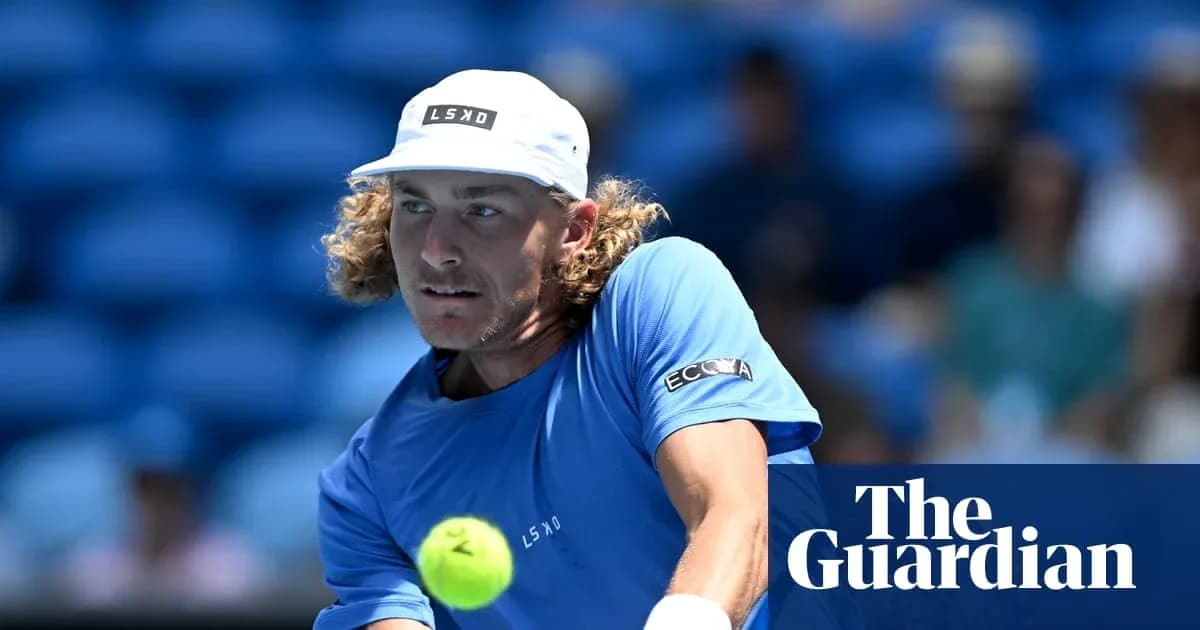
Max Purcell’s name is back on an Australian team sheet. That alone tells you how far he has travelled in nine bruising months.
The grand slam doubles champion, whose career was abruptly halted by an anti-doping ban that left much of the sport shaking its head, has been recalled by captain Lleyton Hewitt for Australia’s Davis Cup World Group 1 tie against Poland in Brisbane on 19-20 September.
For Purcell, 28, it is a return to the fold and a chance to play his first Davis Cup rubber in two years. For Hewitt, it is a clear statement: the past is not being held against one of his most reliable performers.
From provisional suspension to Pat Rafter Arena
Purcell’s story since late 2024 has been as much about endurance as tennis.
In December that year, he chose to accept a provisional suspension under the International Tennis Integrity Agency’s Tennis Anti-Doping Programme. The case centred on an IV infusion of vitamins he received while ill on holiday in Bali a year earlier. The volume exceeded the permitted 100ml limit, even though the substances themselves were all on the World Anti-Doping Agency’s approved list.
No prohibited substance. No attempt to cheat. But a rules breach all the same.
The sanction was heavy: 18 months, initially two years and then cut by 25% because of the cooperation and substantial assistance he offered the ITIA. The numbers told only part of the story. On social media, Purcell later described developing “nervous and anxious tics” and struggling to eat properly as the case dragged on, saying it had “seriously affected” his quality of life.
He did not suffer alone. Within the locker room, support arrived quickly. Fellow Australians John Millman and Jordan Thompson – Purcell’s partner in his 2024 US Open men’s doubles triumph – publicly backed him, stressing that the breach was clearly unintentional and that no banned substance had entered his system.
Hewitt turns to a proven Cup performer
When Purcell finally returned in June, he did so without fanfare. No grand announcement, just a quiet rebuild of a career that had been gathering real pace before the interruption.
The results have come quickly enough. He has already picked up a singles title at a modest event in China, a useful marker of sharpness rather than a headline-grabber. More important to Hewitt is what Purcell represents in a team environment.
On Davis Cup duty, his record speaks loudly: nine wins and just two losses in doubles rubbers. In a competition where one swing in a deciding set can tilt an entire tie, that kind of reliability is priceless.
So when Hewitt named his squad for Brisbane, the headline was not the expected presence of Alex de Minaur, James Duckworth, Rinky Hijikata or potential debutant Adam Walton. It was the inclusion of the world No 803, a ranking that reflects absence rather than ability.
Purcell, the 2022 Wimbledon and 2024 US Open men’s doubles champion, now returns to the national stage with scars, perspective and a point to prove. For a captain who values fight as much as flair, that combination is irresistible.
Australia eye Poland – and a path back to the big stage
The assignment itself is simple on paper, ruthless in reality: beat Poland at Pat Rafter Arena or wave goodbye to any hope of chasing next year’s Davis Cup trophy.
De Minaur, still stung by an underwhelming US Open, leads the side and will be expected to set the tone on home hard courts. Duckworth and Hijikata bring depth and options in both singles and doubles, while Walton’s selection hints at Hewitt’s eye on the future.
Across the net, Poland will not arrive empty-handed. Kamil Majchrzak, the world No 73, heads their line-up and carries the confidence of having already beaten de Minaur this season in the grass-court ATP final in ’s-Hertogenbosch. He knows how to hurt Australia’s No 1.
One name is missing, though, and it changes the feel of the tie. Hubert Hurkacz, the injury-prone Polish No 1 and established top-level threat, was not listed in their team on Wednesday. His absence strips Poland of their most dangerous weapon and, on paper at least, eases Australia’s task.
But Davis Cup rarely obeys the rankings. Ties swing on momentum, on crowd noise, on a doubles rubber under lights when nerves start to fray.
That is where Max Purcell steps back into the frame.
He returns not as a symbol of controversy, but as a specialist in the very format that often decides these weekends. After months of isolation, anxiety and doubt, he now walks into a home dressing room, into a team that has chosen to stand behind him.
For Australia, it is a calculated selection. For Purcell, it is something else entirely: a chance to turn a painful chapter into fuel, and to let his racquet, at last, do the talking again.