Marion Bartoli: From Wimbledon Champion to Resilient Survivor
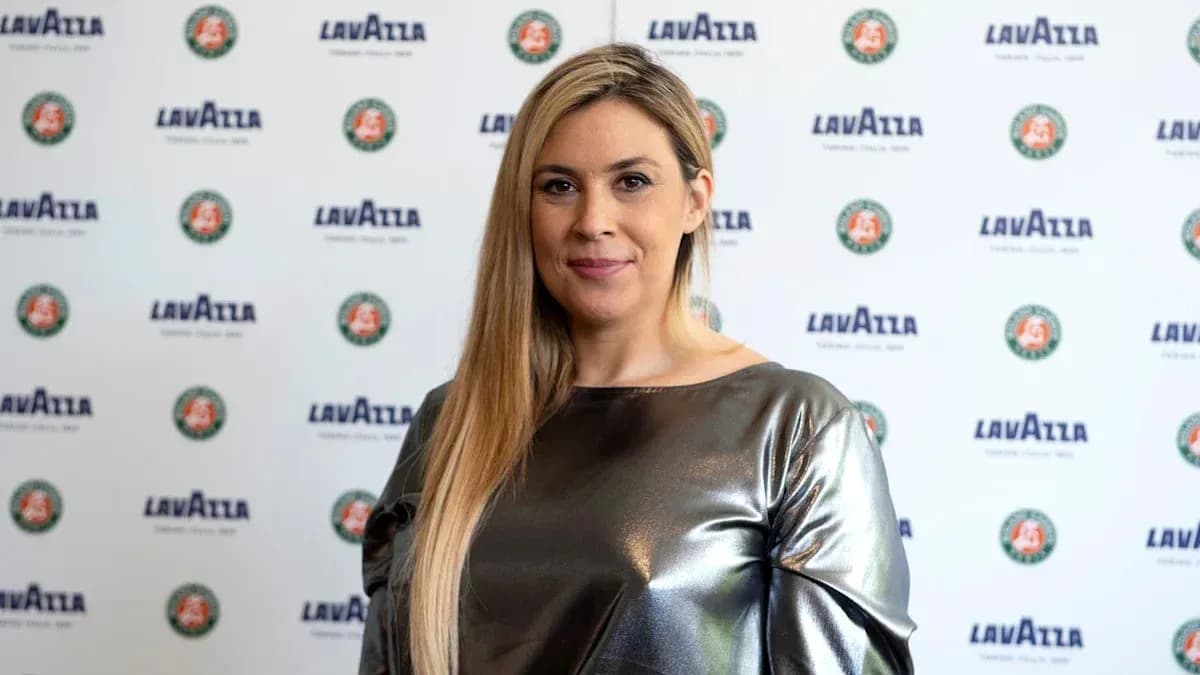
Marion Bartoli still cannot quite believe it. Not the Wimbledon title, not the Centre Court roar, not the childhood dream finally realised. The comment.
On the greatest day of her professional life in 2013, moments after she dismantled Sabine Lisicki to win Wimbledon, Bartoli should have been wrapped entirely in joy. Instead, a line from BBC commentator John Inverdale cut through the euphoria and has never really left.
He suggested on 5 Live that her father and coach, Walter, might have told her as a child that she would have to “be scrappy and fight” because she was “never going to be a looker” like Maria Sharapova. Live. On air. As the new Wimbledon champion was still processing the magnitude of what she had just done.
“I still can't understand the comment he made. How on earth, when someone just achieved a childhood dream, can you say that?” Bartoli told The Times.
The backlash at the time was fierce. The BBC apologised and accepted the remark was “insensitive”. But for Bartoli, it was not just a clumsy phrase that could be tidied away with a statement. It was another layer added to a lifetime of scrutiny.
A champion judged for everything but her tennis
Bartoli’s career had always been a battle on multiple fronts. She played with an unorthodox style, took the ball early, gripped the racket with both hands off both wings, bounced on the baseline between points like a boxer on the ropes. Critics questioned her technique, her ability, her weight. She kept winning anyway.
Wimbledon 2013 was supposed to be the vindication. The zenith. She had outlasted injuries, sneers and whispers to stand alone with the trophy. Yet even then, the conversation turned to her appearance.
“It is just absolutely disgusting, so yes, unfortunately it's been a constant pressure,” she said. “And it's only on female [players]. A male would never be treated that way.”
That last line hangs in the air. Men are judged on serves and forehands; women, too often, on everything else.
Bartoli retired just 40 days after that title, her body finally giving up after years of punishment. She spoke of constant pain, of waking up each day knowing that simply stepping on court would cost her. The decision stunned many, but it made brutal sense. She had climbed the mountain and discovered there was nothing left in the tank.
A brief comeback in 2018 flickered and then faded. Injuries again. The body that had carried her to Wimbledon could no longer carry her through the tour.
A fight far from Centre Court
Retirement did not bring peace. It brought something far darker.
In the years after she first walked away, Bartoli spiralled into a life-threatening battle with anorexia. By Wimbledon 2016 she had lost 30kg. The transformation was shocking. She was eventually hospitalised for months as doctors fought to stabilise her health.
This was no longer about rankings or results. It was about survival.
The turning point, she says, came from an unexpected place: the All England Club itself. Philip Brook, then chairman, saw her that summer and intervened. He told her she was too unwell to play in the Wimbledon legends’ invitational event. It was a hard line, delivered at the one place that had always felt like home.
She remembers that moment vividly.
“That's when I really hit the lowest of the low, because you can take everything away from me, but not tennis,” she said. “Tennis is my true passion. When the racket is in my hand, that's when I'm happiest, so that's when I thought, ‘I have to get myself back up somehow. I can't let this destroy me.’”
Those words marked the start of a climb that was far tougher than any run to a Grand Slam final. This time there were no crowds, no trophies, no cameras. Just a former champion trying to rebuild her body and mind.
“I will be forever thankful to Philip because I was in such denial that I think otherwise I would have kept hurting myself. He was strong enough to tell me and that got me to understand that I had to recover.”
From survivor to mentor
Today, Bartoli is back in tennis, but in a different role. She now coaches British player Harriet Dart, passing on the resilience and tactical intelligence that once drove her own career. Her presence in the sport carries a different weight now. She is not just a Wimbledon champion; she is a survivor who has seen the sharpest edges of the game and of public life.
The Inverdale remark remains part of her story, an ugly reminder of how quickly a woman’s greatest moment can be dragged into a conversation about looks. Bartoli refuses to let that be the defining line of her career, yet she will not pretend it did not matter.
Her Wimbledon trophy sits as proof of what she achieved. The scars, visible and invisible, tell the rest.