The Laver Cup: A New Tradition or Just an Exhibition?
Tennis has never been short on history. Change, though? That has always been a tougher sell.
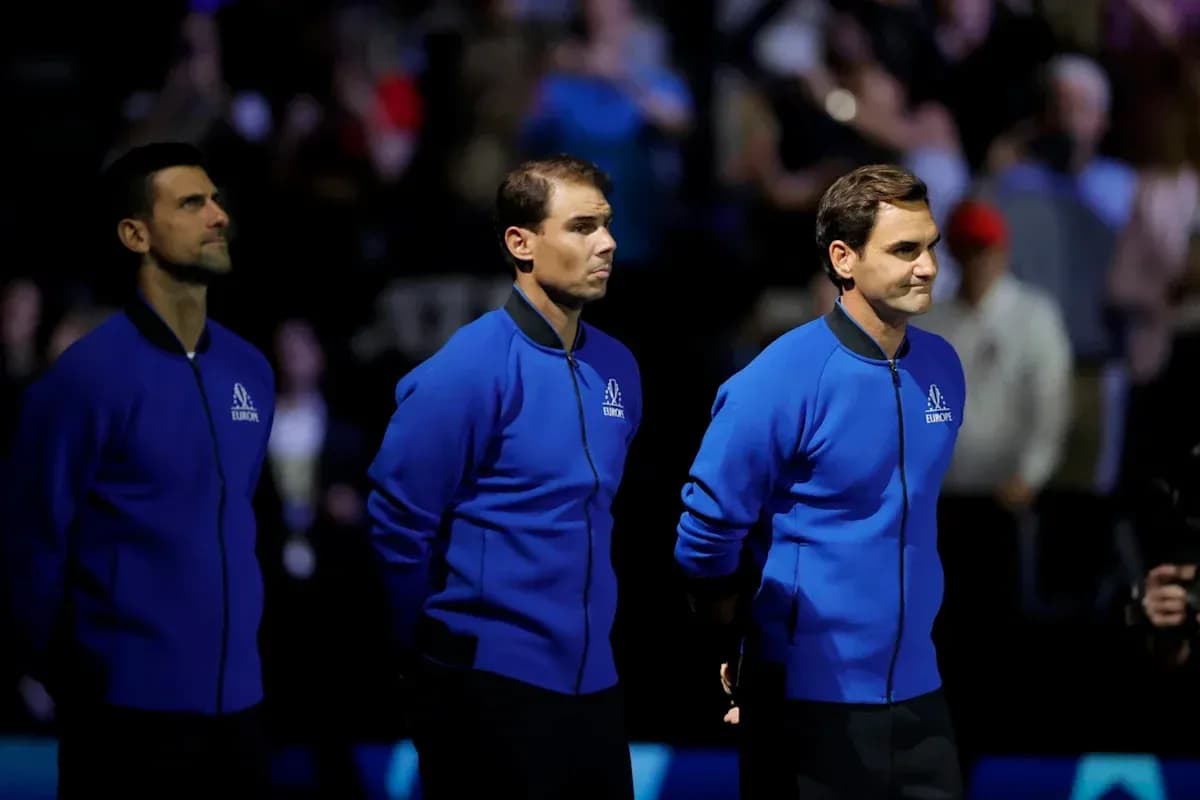
In 2017, the sport tried something different. The Laver Cup arrived – part homage to Rod Laver, part answer to golf’s Ryder Cup, and very much a Roger Federer production. Six of Europe’s best against six of the world’s best, three days of singles and doubles, a team bench, a captain, a scoreboard that climbs in value as the weekend wears on.
Seven years on, with the ninth edition set to begin on 25 September 2026, the tournament sits in a curious space. Its star power is undeniable. Its status, still contested.
A new idea in an old sport
From the start, the concept was clear: build a tennis version of the Ryder Cup, with all the emotion and edge that comes with national – or in this case, continental – allegiance.
Federer helped create it. Rafael Nadal signed on early. The format was simple enough: Team Europe versus Team World, six players a side, points increasing each day to keep the final session alive. The atmosphere, they hoped, would do the rest.
The event has succeeded in one crucial area. It keeps attracting elite names. Year after year, some of the biggest stars in the game sign up, lending the Laver Cup a legitimacy that exhibition events rarely enjoy.
But not everyone is buying it.
‘No sporting value’ – the critics bite back
The tournament has taken some heavy hits, not only from fans who dismiss it as a glossy showpiece, but from within the locker room.
Former French pro Julien Benneteau did not bother with euphemisms when he spoke on the Grandes Gueules du Sport podcast in 2024. He said the Laver Cup had “no sporting value” and claimed players turn up for one reason above all: “The players are only participating because the cheque is huge.”
The numbers are not small. The total prize money for the 2026 edition stands at $1.5 million. Each player on the winning team will collect $250,000. The losers get nothing.
For some, that only hardens the view that the event is a well-paid exhibition dressed in team colours.
Federer and Nadal push back
That accusation isn’t new. It was put directly to Federer and Nadal before a ball was struck at the very first Laver Cup in 2017.
Is this just an exhibition?
Nadal bristled at the idea.
“No, is not an exhibition at all. No, no, I don't think,” he said. “No, we are here to try our best, no? I woke up today at 4:00 in the morning to practice. An exhibition match, I don't practice before an exhibition match normally, no.
“We are here to try our best. We are here to try to win. Not at all like a friendly match, no? We are here to really play with passion and to play for our continent.
“We have a great team behind us. We want to do it well for all of them. Let's see if we are able to do it.”
That first weekend in Prague gave the organisers what they needed. Team Europe beat Team World 15–9, the bench roared with every point, and Federer – playing and promoting – saw enough to believe the concept had legs.
What lit the fuse for Federer
On that same day, Federer was asked how important it was to bottle the Ryder Cup’s passion and pour it into this new event.
His answer revealed what had already convinced him.
“Well, I think it's going to be vital. That's why I'm very excited to see that the guys all arrived a day early,” he said. “You know, they were supposed to arrive on Wednesday. They all came in on Tuesday. Everybody seems really eager to play, to win.
“But of course we have to give it the passion and the energy. Without that, the fans are just going to sit there and maybe enjoy some tennis, but they're not going to get into it.
“I hope that while we are playing on home soil, the fans are going to understand how much we need their support and how lovely it would be if everybody got really excited and make this event something very unique and special for years to come. But it's clearly crucial.”
That early arrival, that hunger he sensed in the locker room, is what “excited” Federer most. It suggested players were treating the Laver Cup as more than a paid hit-and-giggle.
Exhibition or event?
And yet the divide remains.
On one side, critics like Benneteau see a made-for-TV spectacle, fuelled by big cheques and clever marketing. On the other, some of the game’s biggest icons insist the competition, the pride, the 4 a.m. practice alarms are real.
The Laver Cup cannot change its origin story. It is a created event, not a century-old championship. What it can change, year by year, is how seriously players approach it and how deeply fans care about the result.
When the 2026 edition starts on 25 September, with another $1.5 million on the line and another set of stars in blue and red, the same question will hang over the court.
Is this still an exhibition, or has tennis quietly built itself a new tradition?