Joe Salisbury Retires: Britain’s Doubles Legend Exits on His Own Terms
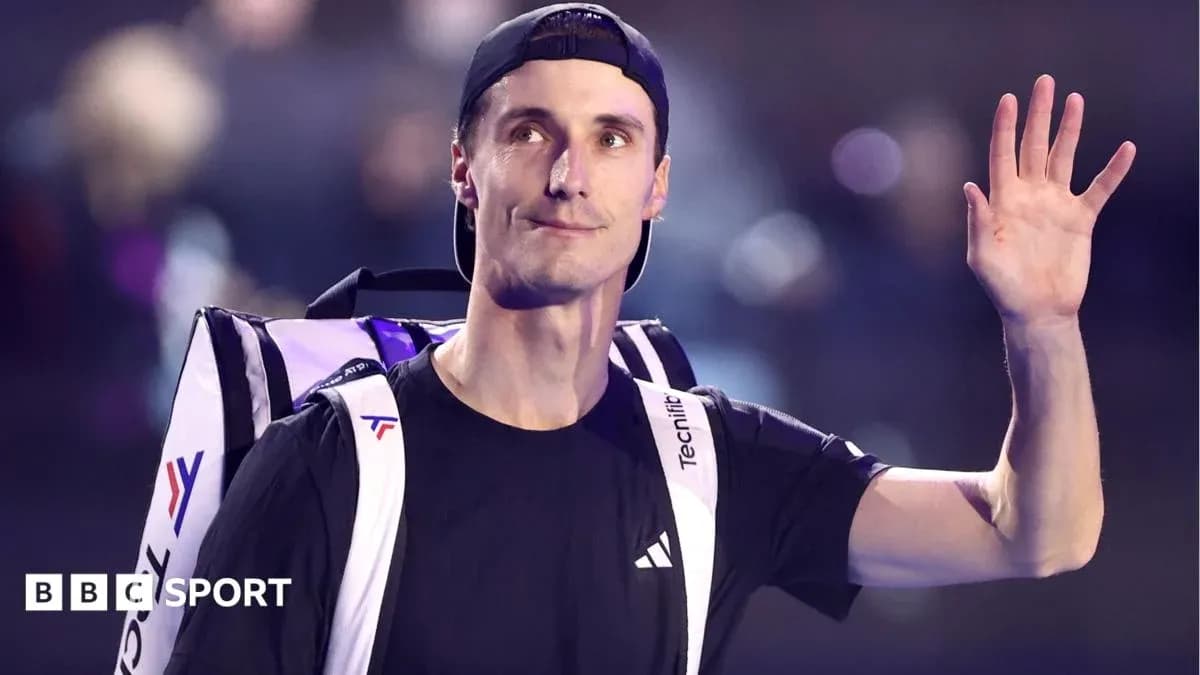
Joe Salisbury chose to walk away from tennis in a place that had come to feel like his own court. Under the lights of New York, at the US Open where his name is etched into history, Britain’s most decorated men’s doubles player of the Open Era played his final tournament – and, fittingly, went deep one last time.
The 34-year-old reached the semi-finals in Flushing Meadows alongside long-time partner Rajeev Ram, who is also retiring. It was a last run for one of the most successful and understated partnerships of modern doubles, a duo who turned the US Open into their private stronghold.
In 2023, Salisbury and Ram became the first pair ever to win three consecutive US Open men’s doubles titles. Three years, three trophies, same team. Before that, they had already broken through at the 2020 Australian Open, and together they built a record that places them among the elite pairings of their era.
Salisbury’s numbers tell their own story. Seventeen tour-level titles. Six Grand Slam doubles trophies: four in men’s doubles and two in mixed, the latter alongside Desirae Krawczyk. Back-to-back triumphs at the season-ending ATP Finals in 2022 and 2023, the event reserved for the very best teams in the world. At his peak, he climbed to world number one in doubles – a landmark no British man had reached in the format before.
Yet the way he chose to say goodbye was as revealing as the titles themselves. There was no drawn-out farewell tour, no dramatic last-minute U-turn. Salisbury admitted he had been weighing up his future for some time and finally reached a calm conclusion: he was ready.
He described himself as “very happy with the decision” and, in a message to fans on Instagram, laid out the emotional core of his journey. Tennis, he wrote, had been his life “for as long as I can remember”. He spoke of feeling “incredibly fortunate” for the opportunities and success he had enjoyed, of travelling the world and being able to call playing tennis his job – “a dream come true”.
Crucially, he added the line every athlete hopes to earn the right to say: “I gave it my all and know I can be proud and look back with no regrets.”
That sense of closure did not arrive overnight. At the start of this year, Salisbury stepped away from the tour for three months, opening up to BBC Sport about the anxiety that had been shadowing his life on the road. He said he did not believe it damaged his tennis significantly, but it left him with a “feeling of dread” that made the constant travel and churn of the circuit far less bearable.
For a player whose career blossomed relatively late and who built his reputation on reliability, composure and resilience in tight moments, that admission cut through the usual clichés. It hinted at the cost of sustaining excellence in a discipline that rarely commands headlines but demands relentless precision.
Salisbury, though, managed to turn that internal struggle into a line in the sand. He came back, reunited with Ram, and chose the arena of their greatest triumphs as the stage for their final act. No fairy-tale fourth straight US Open title this time, but one more surge into the latter stages, one more reminder of the standard they set.
When the dust settles on his retirement, the labels will be simple enough: former world number one, six-time Grand Slam doubles champion, Britain’s most successful men’s doubles player of the Open Era. The legacy is a little richer than that. Salisbury leaves as the player who quietly redefined what British success in doubles could look like – and as a man who knew exactly when to put the racquet down.