Jessica Pegula's Remarkable Journey to Four Grand Slam Semifinals After 30
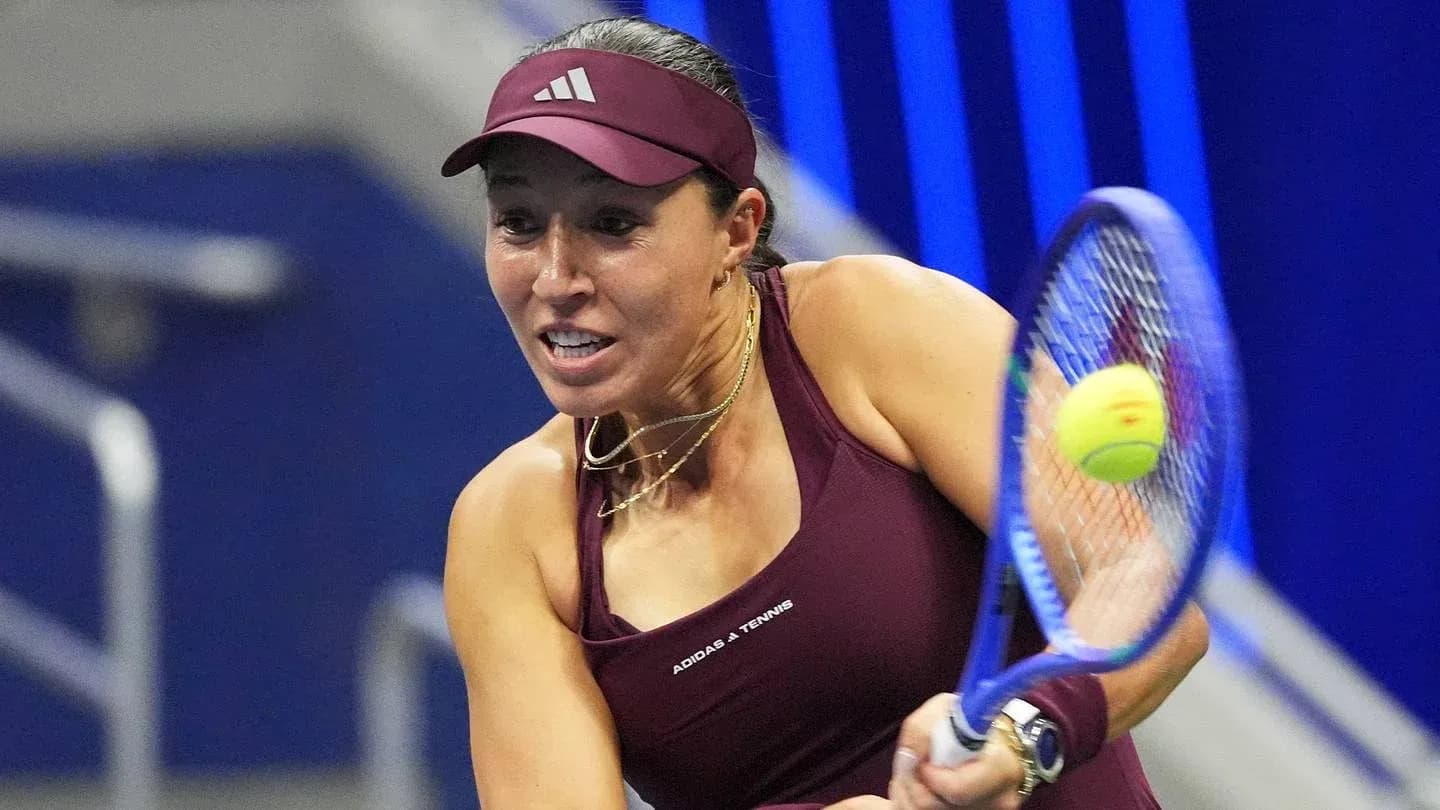
Jessica Pegula has spent most of her career being told she was late to the party. On Wednesday in New York, she turned that narrative into a record.
By reaching the US Open semifinals again, the American became the first player in the Open Era to reach her first four Grand Slam semifinals after turning 30. Not a prodigy. Not a teen sensation. A veteran who refused to go away.
A Late Bloom That Wouldn’t Stop Growing
Pegula’s first major semifinal did not come until the 2024 US Open, a few months after her 30th birthday. That run stretched all the way to her first Grand Slam final, where Aryna Sabalenka shut the door 7-5, 7-5. It felt, even then, like a breakthrough that had arrived years behind schedule.
She came back 12 months later and did it again in New York. Same stage, same opponent, same brick wall. Sabalenka beat her in three sets in the 2025 semifinal, 4-6, 6-3, 6-4, another reminder of how narrow the margins are at the very top.
The third step in this late-career surge came in Melbourne this year. At the Australian Open, Pegula pushed Elena Rybakina hard before falling 6-3, 7-6(7) in an hour and 40 minutes that felt like a fistfight disguised as a straight-sets match.
Now, at 32, she has climbed back into another US Open semifinal, her third in a row in New York. This time, the route was anything but straightforward. Against fellow American Emma Navarro, Pegula trailed by a set and then by a break in the third. She clawed her way back, turned the match around, and finished it 3-6, 6-4, 6-3. A comeback that summed up her entire career in three sets.
She has never pretended this took shape overnight. Earlier this year, after finally cracking the last four in Melbourne, she let some of the frustration spill out.
“I’ve been [into major quarterfinals] so many friggin’ times,” she said. “I just kept losing, but to great players, I mean, to girls that went on and won the tournament... So I know everyone keeps asking me about it, but I don't know what else to do. I just need to get there again and win the match.”
The numbers say she has done the first part. The second still hangs over every big match she plays.
Built on Scar Tissue
Pegula’s resurgence looks tidy on paper. It is anything but.
Her body stalled her career long before the rankings ever did. A serious knee injury kept her out from late 2013 to early 2015 and required surgery. When she finally gathered some momentum, a hip surgery in January 2017 wiped out most of that season as well. Those lost years shoved her peak into a window that, for most players, has already started to close.
That is what makes her current run so striking. She is not just winning late. She is winning late after the kind of medical file that usually shortens careers, not extends them.
In 2024, she became the oldest U.S. woman in the Open Era to reach her first major singles final. That milestone looked like a quirk at the time, a trivia note. It now reads like the first line of a much bigger story.
This season, she has been one of the tour’s most reliable forces. Pegula walked into this week’s semifinal with a 50-12 record and two titles already in her pocket from Dubai and Charleston. On the North American hard courts, she reached finals in Washington and Cincinnati, form that carried straight into Flushing Meadows.
She still does not have a Grand Slam trophy. She does have one of the best seasons of her career.
A Race She Can See the End Of
Her fourth major semifinal set up a familiar, unforgiving assignment: Sabalenka again, at the same stage of the US Open, for the third straight year. Pegula entered that showdown trailing 4-9 in their head-to-head, the world No. 1 looming like a recurring boss in a video game she has not yet solved.
Around that matchup swirls the question that now follows Pegula into every second week of a Slam: how long does she have left to turn these deep runs into a title?
She has not ducked the subject. On the Tennis Insider Club podcast, Pegula said she does not plan to play beyond 35 and floated the 2028 Los Angeles Olympics as a possible farewell. That is not a vague horizon. That is a date circled in pen.
At 32, with four semifinals on the board and one final behind her, she is running against the calendar as much as against the field. Every major now feels loaded. Every second week is a chance she knows will not come endlessly.
For some players, the clock is a shadow. For Jessica Pegula, it is a scoreboard she can see every time she walks on court. The question now is simple, and brutally clear: can she land the one match that changes everything before time runs out?