Jessica Pegula Dominates Sofia Kenin at US Open
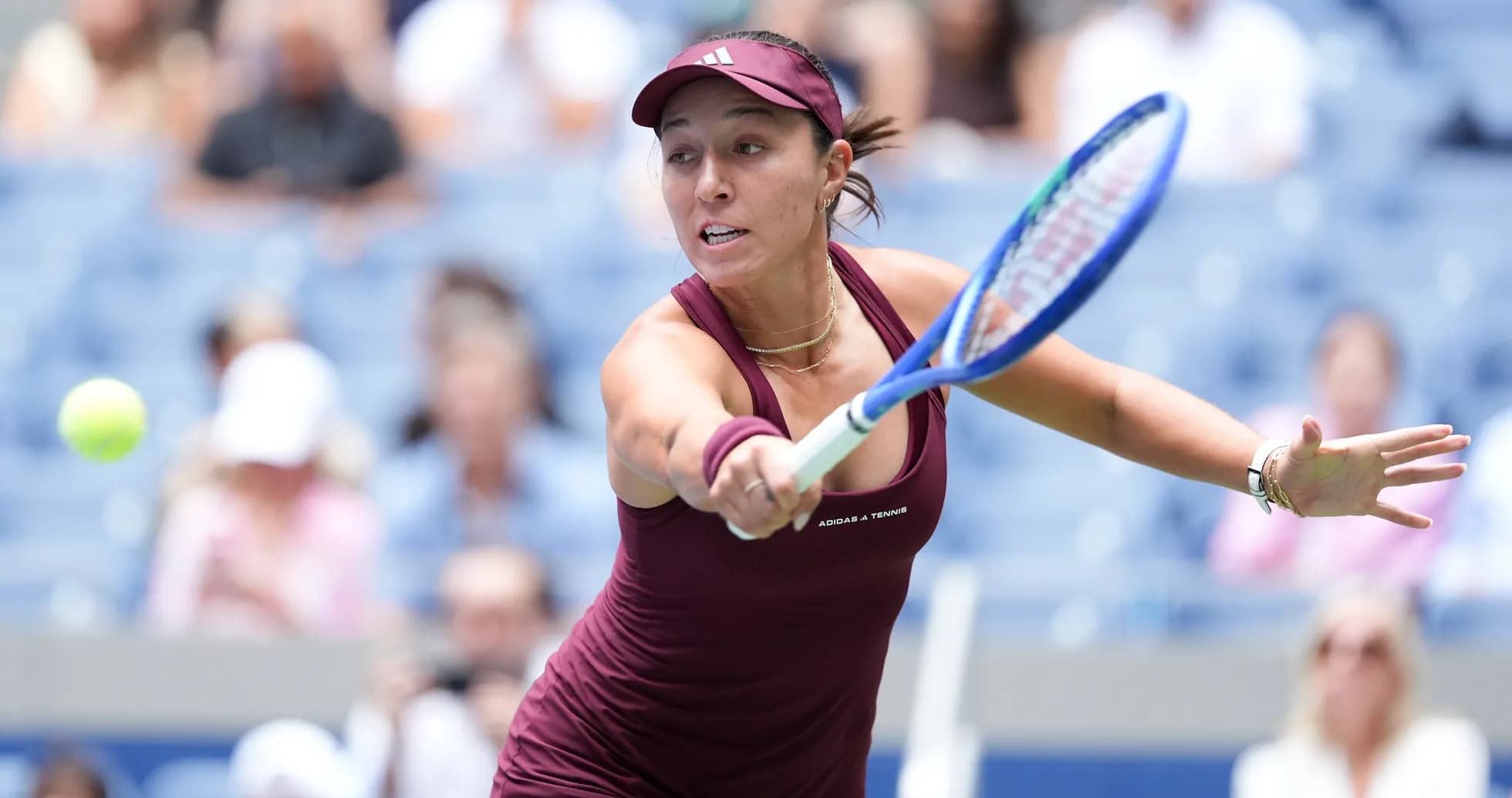
Jessica Pegula barely broke a sweat. Sofia Kenin barely had a say.
On a warm New York afternoon, the No. 3 seed delivered a cold, clinical statement, dismantling the former Australian Open champion 6-3, 6-1 in just 56 minutes to reach the US Open third round for the seventh straight year.
This was not the tight, nervy duel their history promised. It was a separation.
Pegula’s title push gathers force
Pegula walked onto Arthur Ashe Stadium knowing the stakes. Win a first Grand Slam title here, and if Elena Rybakina falls before the semifinals, she will rise to World No. 1 for the first time in her career. That kind of carrot can tighten shoulders.
It had the opposite effect.
She improved to 47-12 on the season and 5-2 in her rivalry with Kenin, and this time there was no hint of the three-set grind that defined their early meetings. Their first four clashes, from 2016 to 2021, all went the distance. Pegula has now won the last three in straight sets, and for the first time she held Kenin to fewer than eight games.
“Every match we've played throughout the years has been very tough,” Pegula said on court. “Sonya's given me a lot of trouble in the past, she's a great player and a champion. I was just trying to stay focused on what I needed to do, and luckily was able to be pretty efficient out there today.”
Efficient is one word. Ruthless is another.
Serve as a weapon, not a safeguard
The numbers behind Pegula’s win jump off the page because they mirror what she did in the first round. Against Elena-Gabriela Ruse, she gave up only seven points on serve. Against Kenin, she did it again: seven points lost on serve, no break points faced, and five aces to push her tournament total to nine.
This is not the profile of the Pegula who once relied more on consistency than first-strike tennis. This is a player leaning hard into a serve she has clearly rebuilt.
“I'm going for my spots,” she explained. “I'm going pretty big on second serves, I'm trying to mix up where I'm going and just trust that I can hit good serves in the moment. That's been a lot of work we've done off court, so really excited when I can practise something and it pays off in the match.”
The trust shows. The second serve, often a pressure point in the past, now looks like a platform. Kenin rarely got a look at anything short enough to attack. When she did, Pegula snapped the rally back under her control with early, flat strikes off both wings.
Return game slams the door
If the serve provided the base, the return supplied the edge.
Kenin’s first donation came early, a double fault handing Pegula the opening break. That set the tone. Pegula stepped inside the baseline and stayed there, refusing to give Kenin the rhythm she usually thrives on.
The pressure finally told at the start of the second set. Pegula needed four break points to crack Kenin’s resistance for 2-0, but she refused to back off, hammering backhands at the lines and forcing the American compatriot into rushed swings. At 4-0, she found her cleanest backhand returns of the day to secure the double break, and the match was effectively over.
Kenin, once a Grand Slam champion and a frequent problem for Pegula, never found a foothold. Pegula dictated the tempo, the height, and the direction. The scoreboard reflected that control.
From one finalist to another
The narrative now turns from one US Open finalist to another.
Pegula, the 2024 runner-up, will next face the 2021 runner-up, No. 31 seed Leylah Fernandez. The Canadian arrived in New York still searching for her first Grand Slam win of 2026; she now has two, after beating Mananchaya Sawangkaew 6-4, 6-1 to reach the third round here for a third time.
Pegula leads their head-to-head 3-1, all on North American outdoor hard courts. The most recent meeting was in Miami this year, where Pegula rolled 6-2, 6-2. That history flatters her, but she knows Fernandez brings a different kind of chaos to the court.
“I think she's tough to play,” Pegula said. “She plays a little bit unorthodox, likes to use her forehand and take the ball super early. When she's feeling it, it can be really tough to play against. I have had situations where I feel like I've played well against her and done well, but then sometimes if she's on and you start a little slow, she can really be super-aggressive and it's tricky to play against.
“It's hard. And then on top of that, being a lefty and returning her serve I think is always another hard part. There is definitely some stuff I'm going to have to work on and address probably tomorrow, and then hopefully I'm able to play well against her in the next round.”
Pegula’s respect is grounded in experience. Fernandez thrives on taking time away, on rushing opponents with early contact and emotional surges that can sweep a crowd with her. Pegula, by contrast, has built her rise on control, on patterns, on clarity of shot selection.
One of them will bend.
For now, Pegula leaves the court with a serve that looks sharper than ever, a scoreboard that flatters her dominance, and a path that could end with a trophy and a new number beside her name. The question is no longer whether she belongs in the conversation.
It’s whether anyone here can stop this version of her.