Iga Swiatek Reflects on a Challenging Season and the Press
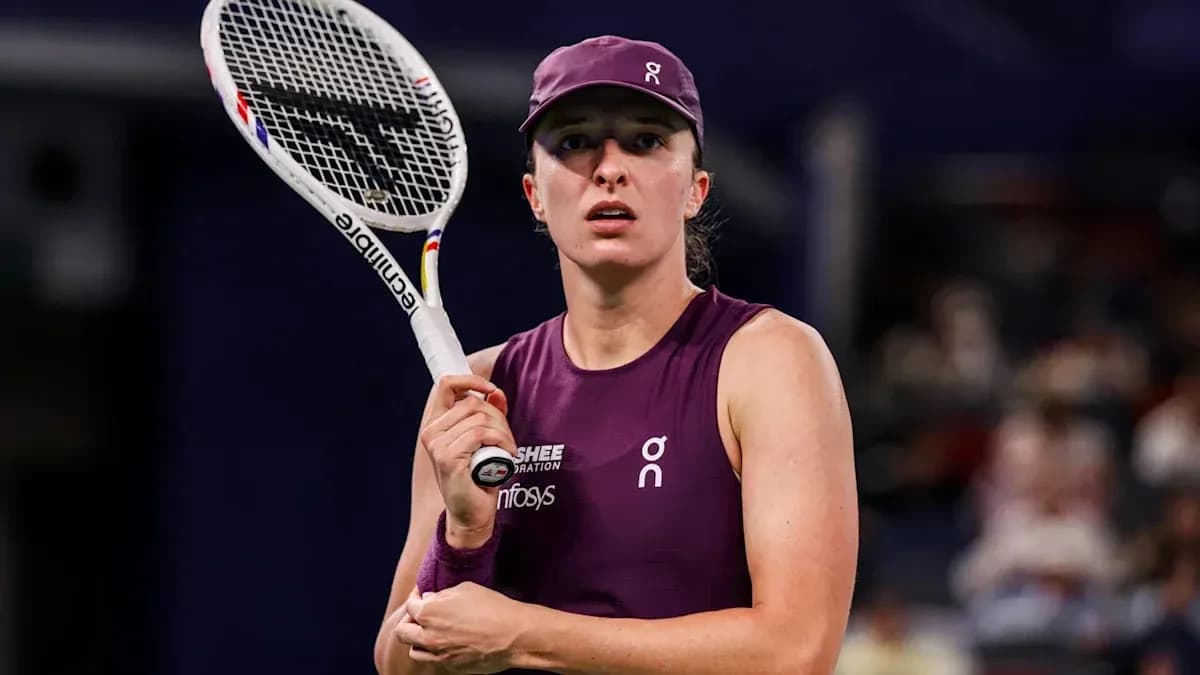
Iga Swiatek is used to finishing seasons at the very top table. This year, she watched the WTA Finals from home.
For the first time in seven years, the Pole failed to qualify for the season-ending showpiece, the clearest sign yet of a campaign that never quite caught fire when it mattered most. The Grand Slams told the story in brutal shorthand: quarter-finals at the Australian Open, a fourth-round exit at both Roland Garros and the US Open, and a third-round defeat at Wimbledon, where she arrived as defending champion and left far earlier than anyone had planned.
For a player who had made consistency look routine, the backlash came quickly. Some pointed at her coach, Francisco Roig. Others questioned the role of sports psychologist Daria Abramowicz. Many skipped the nuance and went straight for Swiatek herself.
She has heard all of it. And she has her own line in the sand.
Swiatek pushes back: ‘Mean and judgy’ journalism crosses the line
Speaking on the "What's the Point" podcast, Swiatek acknowledged what happens when dominance becomes expectation. Fans, she said, had grown used to pencilling her name into the final weekend before a ball was struck.
She understands the disappointment when that doesn’t happen. She even understands the frustration.
She talked about supporters booking tickets only for semi-finals and finals after her remarkable runs in 2022, 2023 and 2024, as if her presence on those stages was guaranteed. Tennis, she reminded them, does not work like that. Even for a former world No. 1.
The criticism from the stands and on social media, she can live with. She accepts that some comments will be harsh, some naïve, some downright hateful. The worst of it, she said, is “not acceptable,” but the judgy tone and unsolicited coaching? She can flip that in her head, turn it into a sign that people care enough to be invested.
Where she draws a firmer line is with the press.
“The only thing that hurts me a bit more is when the journalists are being mean and judgy, and they are supposed to be experts, but they have never been on tour or been in a tennis tournament,” Swiatek said. That, she added, feels “quite painful” because those opinions shape the way fans see her.
She is willing to absorb negativity from supporters. From commentators and writers who present themselves as authorities, she expects more. When the tone turns needlessly sharp, when criticism becomes personal rather than analytical, she believes “this is not right.”
In a season where she slipped to No. 9 in the world and missed out on the WTA Finals, that distinction matters to her. The noise has been loud. The source of it matters just as much as the volume.
A bruising year with a late surge of light
Strip away the emotion and the rankings table is blunt: Swiatek ends 2026 outside the top eight, sitting ninth. For a player who had made the No. 1 spot feel like home, that drop is jarring.
Look closer, though, and the second half of her year starts to read differently.
At WTA 1000 level, the results gradually shifted from uneven to impressive. She reached the quarter-finals in Doha, losing to Maria Sakkari, and again at Indian Wells, where Elina Svitolina stopped her. Miami brought an early sting — a second-round loss to fellow Pole Magda Linette — followed by a third-round exit in Madrid to Ann Li.
Then the tide started to turn.
In Rome, Swiatek pushed into the semi-finals before Svitolina again blocked her path. That run signalled a rising level; what followed confirmed it. She took the title at the Canadian Open, her lone WTA 1000 trophy of the season, then backed it up with a semi-final in Cincinnati, losing to Jessica Pegula.
The Asian swing kept the pattern. Quarter-final in Beijing, where Elise Mertens ended her week. Semi-final in Wuhan, halted by Maja Chwalinska.
This was not the steamrolling Swiatek of her peak stretches, but it was something important: a player rebuilding, round by round, tournament by tournament. A season that began with questions about her form ended with evidence that her game is still calibrated for the biggest stages, even if the rankings dip says otherwise.
A different route into 2027
Swiatek’s schedule is shifting too. Poland lifted the United Cup in 2026, a bright early highlight in a complicated year, and that event has often been her chosen launchpad. This time, she is expected to start in Brisbane instead.
The Brisbane International begins on January 3, and it will offer a clean slate and a clear test. No team format, no shared spotlight. Just Swiatek, her racquet, and a new year to rewrite the conversation.
She has heard the criticism. She has pushed back at what she sees as unfair. She has watched her ranking fall and her WTA Finals streak end.
Now comes the only response that ever really counts in tennis: what she does when the next ball is tossed in the air.