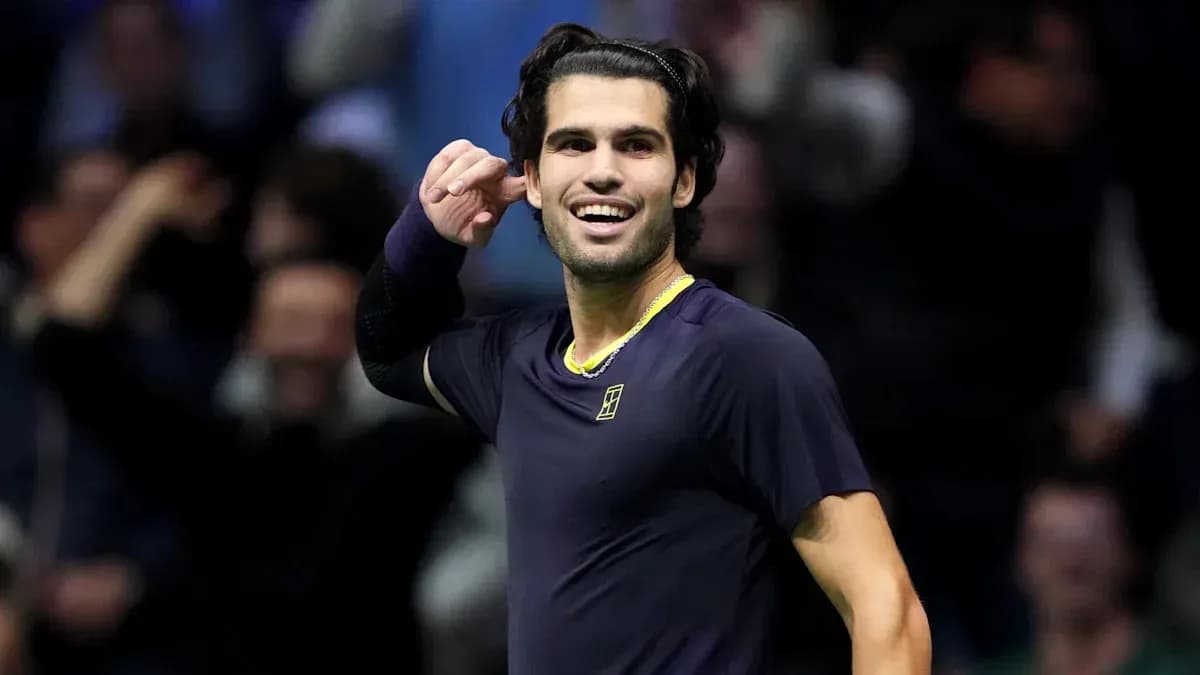
Holger Rune's Comeback: From Concern to Quiet Excitement
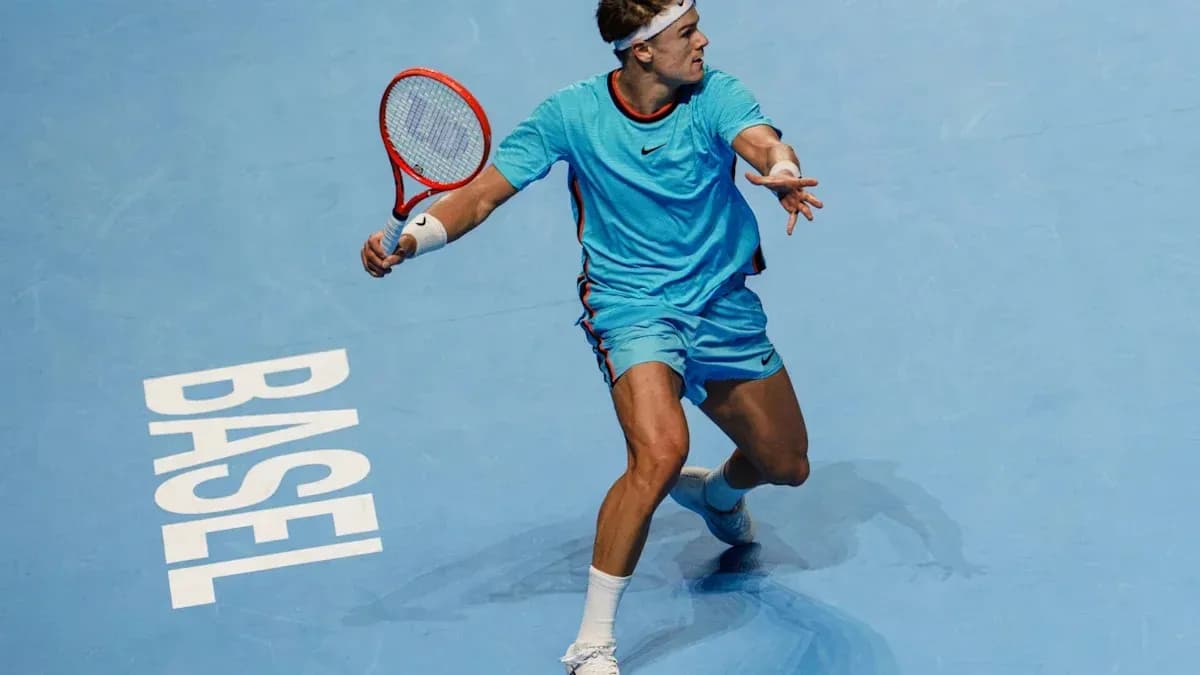
Holger Rune is only three tournaments into his comeback, yet the mood around him has already shifted from concern to quiet excitement.
The Danish talent has not returned with fireworks and flawless scorelines. Far from it. But in Basel, after nearly a year of pain, rehab and doubt, the outline of the old Rune has started to reappear.
A Stuttering Return Finds Its Footing
Rune dipped his toes back into competition at the Davis Cup, then officially restarted his ATP Tour journey in Japan. It was brutal. Kyrian Jacquet swept him aside with ease, a reminder that timing, confidence and match fitness cannot be rushed, no matter how gifted the player.
The rust showed. Rune knew it, too, and apologised for that early performance. The words mattered less than what followed.
Shanghai brought another first-round exit, the kind that could easily have deepened any lingering doubts. But this time, something was different. The movement looked sharper. The ball-striking carried more conviction. The defeat still stung, yet the signs were there: he was beginning to feel like a competitor again, not just a player testing his body.
Basel turned those hints into hard evidence.
Basel: From Glimpses to Results
Rune’s decision to withdraw from Brussels had already signalled a mature approach. No bravado, no forced heroics. Just an honest admission that after such a long layoff, he needed to manage his body carefully.
The response in Basel justified that call.
He earned his first win back on the ATP Tour against Quentin Halys, grinding through a three-set battle and edging the deciding-set tiebreak. It was not vintage Rune, but it was exactly what he needed: a hard match, a test of nerve, and a reminder of how to close.
Then came the statement victory.
Facing an in-form Hubert Hurkacz, one of the tour’s most reliable operators indoors, Rune went the distance again and prevailed in another third-set tiebreak. This was no charity win or opponent off-day. It was a high-quality scrap, decided by fine margins, and Rune held firm when it mattered.
The fitness work, the long months of rehab, the lonely training blocks – all of it showed. His baseline level of quality had not vanished during those 11 months; it had simply been put on hold.
A tight three-set loss to Valentin Vacherot followed, but it did little to puncture the optimism. Rune competed. He moved. He trusted his body. Those are the markers that matter at this stage of a comeback, far more than a single result on the scoreboard.
Give him a full off-season, and suddenly the picture of January in Australia looks very different. He will not just be travelling there to test himself. He will be travelling to chase titles again.
The Weight of 348 Days
To understand why this run in Basel feels so significant, you have to rewind to where the nightmare began.
Rune was in the Stockholm Open semi-final, a set up on Ugo Humbert and seemingly on course for another deep week. Then his Achilles gave way. A horrific injury, the kind that can haunt even the most resilient athletes.
The date is seared into his story: 18 October 2025.
From that moment, everything stopped. While the tennis world dissected Carlos Alcaraz’s five-month absence and Jannik Sinner’s early end to his season, Rune’s ordeal stretched even longer. The Danish star spent 348 days away from an official ATP Tour singles match, nearly 11 months and two weeks of waiting, working, and wondering.
He made his return at the Davis Cup, but his first official tour match did not come until 1 October this year. Almost a full year after Stockholm.
The drought did not end there. His first ATP Tour win since the injury finally arrived in Basel against Quentin Halys, snapping a 373-day wait between victories at that level.
That number tells its own story. For a player who had grown used to competing at the sharp end of big events, to go more than a year without a tour-level win is a psychological test as much as a physical one.
A Different Kind of Threat on the Horizon
Rune is not back to his peak yet, and nobody inside his camp will pretend otherwise. The forehand can still misfire, the decision-making can still drift. But the key elements – the fire, the competitiveness, the willingness to suffer in long matches – have survived the layoff.
Basel has shown that his ceiling remains intact. The question now is how quickly he can climb back up to it.
With an uninterrupted off-season ahead, a rebuilt body and the scars of a brutal year behind him, Rune heads towards Australia carrying something he has not had for a long time: momentum.
If this is what he looks like three tournaments into a comeback, how dangerous might he be once the rust is fully gone?