Harriet Dart Secures Grand Slam Win at US Open
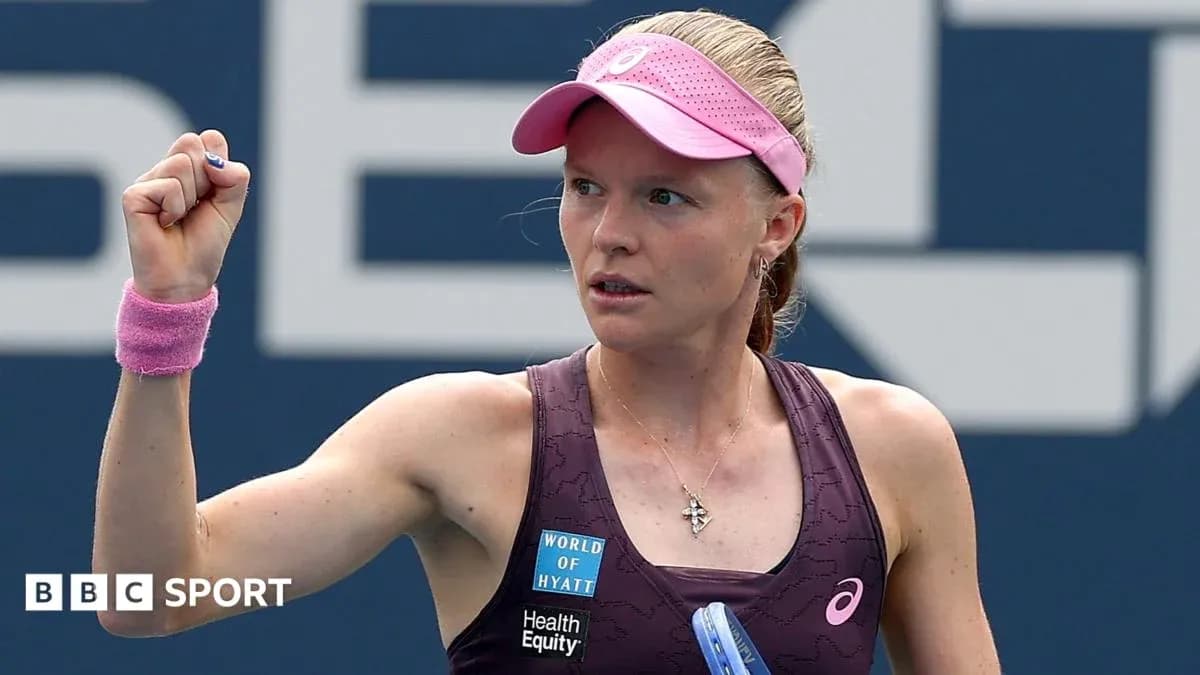
Harriet Dart had been waiting 19 long months for this feeling. On a sticky New York afternoon, with her family scattered around the stands and her voice hoarse from constant self-encouragement, she finally got it back.
A Grand Slam win. The hard way, of course.
Down a set and a break to American Peyton Stearns, ranked more than 75 places above her, Dart looked headed for another early exit on one of tennis’ biggest stages. Instead, she dug in, rode out the storm of winners and errors from across the net, and turned the match on its head to win 3-6 6-3 6-2 and reach the US Open second round.
A career stuck in neutral
For Dart, 30, this wasn’t just another first-round scrap. It was a break in a long, frustrating pattern.
She had not won a main-draw singles match at a major since the 2025 Australian Open, when she also reached the second round. Since then, the calendar had been brutal. Four failed qualifying campaigns at Grand Slams. Two first-round defeats at Wimbledon despite wildcards and home hopes. Plenty of miles, not much reward.
Even getting into this main draw felt like a marathon. Dart went three sets in all three of her qualifying matches at Flushing Meadows, twice losing the opening set to Kristina Penickova and Heather Watson. Each time she clawed her way back. Each time she refused to let the chance slip.
So when Stearns came out swinging on Louis Armstrong’s outside courts, the script felt depressingly familiar.
Stearns starts fast, Dart hangs on
The match began with a chance. Four of them, in fact. Dart earned four break points in the opening game, only to see Stearns erase them all. The American settled, her serve held up, and she shut the door for the rest of the set.
Stearns hammered away, piling pressure on Dart’s serve. The breakthrough came in the eighth game, the American breaking and then calmly serving out the set 6-3. Dart had barely had a look at another break point.
When Stearns broke again in the first game of the second set, the gap between world number 131 Dart and the higher-ranked home favourite looked exactly as the rankings suggested.
Then the match flipped.
Stearns’ aggression, so effective early, began to fray at the edges. The winners kept coming – 40 by the end – but so did the errors. Too many of them. Forty-seven unforced errors dragged her performance back to the pack, and Dart, sensing a crack, pushed hard.
She broke back, then broke again. The rallies lengthened, the Briton absorbing pace and asking Stearns to hit one more ball, then another. The second set slipped away from the American 6-3. Suddenly, Dart had a foothold.
A third set built on nerve
The decider became a test of nerve as much as tennis. Both players traded breaks in a jittery passage, three consecutive games going against the server. The tension rose with every missed chance.
Dart steadied first.
Serving at 3-2, she produced what felt like the match’s hinge moment – a gritty hold that snapped that run of breaks and gave her a platform. The belief that had been fragile for so long hardened into something more durable.
From there, she seized control. Stearns’ radar continued to misfire, the errors mounting, the crowd growing restless. Dart broke again and moved clear, her own game tightening as the finish line came into view.
It still wasn’t straightforward. She needed four match points to finally close it out, but when the last Stearns error flew long, Dart had her win in just under two and a half hours. A roar, a clenched fist, and then she was off, sprinting to the corner of the court.
Straight to her people.
A “home away from home” and a champion in her corner
This was not a solitary triumph. Dart talked about her “community” of supporters, and they were out in force in New York.
Her parents were there. Her uncle and cousins, too. One cousin had flown in from the UK. Her mother had been in town since qualifying began; her father arrived the night before the match. Other family members were dotted around the city, turning Flushing Meadows into something that felt surprisingly familiar.
“New York always feels like a home away from home,” she said. “It feels like a community for me and I really felt the support out there.”
Behind the scenes, another important figure has joined that community. Dart now works with 2013 Wimbledon champion Marion Bartoli, a partnership that began in January and is starting to show its value.
“From her experience, she knows what I'm going through, how I'm feeling, how the day starts, how it finishes – everything from the little things to the big things,” Dart said. “To be able to soak up everything, all of her experience, and learn from her – I feel I'm learning so much every time we speak. I feel like I'm improving at a lot of things which motivates me.”
The results are beginning to stack up. A run to the quarter-finals at July’s Challenger event in Vancouver. Qualification for the Cincinnati Open in August. Now, a gritty, confidence-building win in New York.
Bouzkova next – and a chance to push on
The reward is a second-round meeting with 25th seed Marie Bouzkova, a different kind of challenge against a seasoned campaigner who thrives in long, physical matches. Dart will not be favoured, but then she wasn’t supposed to win this one either.
She will at least go into it with momentum and a reminder that she can still outlast, outthink, and outfight higher-ranked opponents on the biggest stages.
Dart also joins compatriots Toby Samuel and Katie Boulter in the second round, a small but meaningful British presence in the draw.
For a player who has spent the last year and a half on the outside looking in at Grand Slam success, this victory felt like more than just a line in a results sheet. It looked like the start of a season that might finally move forward again – and this time, she won’t be walking that road alone.