Harriet Dart Claims First WTA Title in Guangzhou
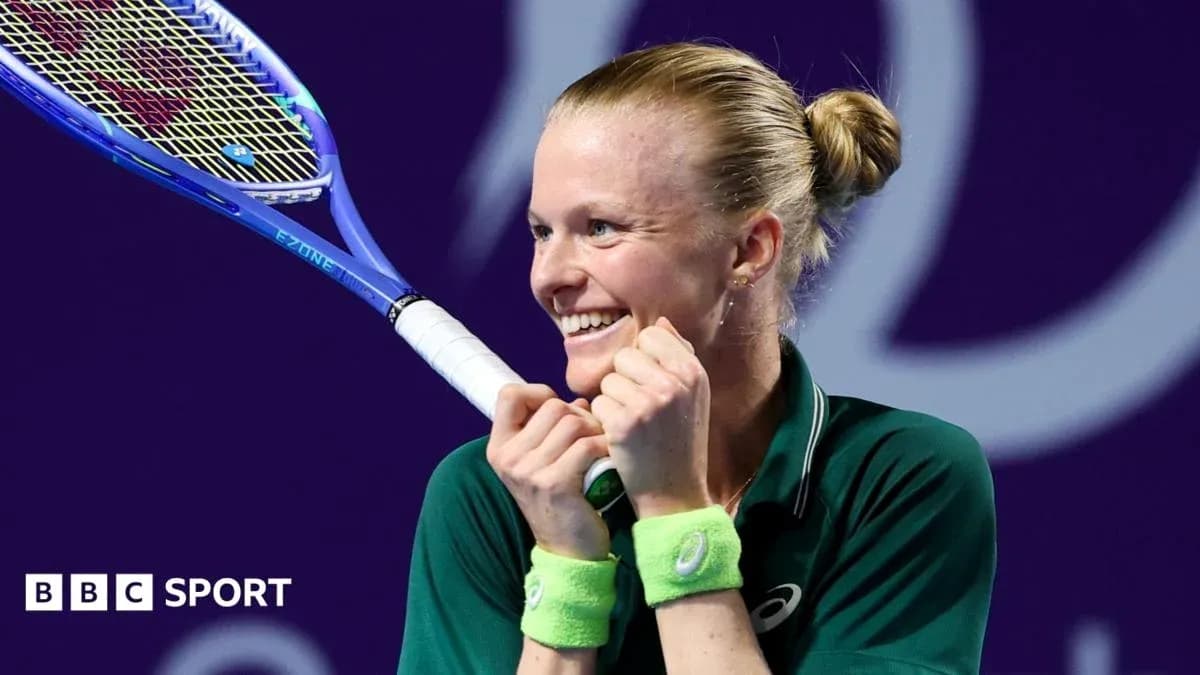
Harriet Dart has waited a long time for a week like this. Thirty years old, ranked outside the top 100, carrying the scars of near-misses and stalled momentum, the Briton walked into Guangzhou as a qualifier. She walked out a WTA champion.
In a tense, nervy final, Dart beat fast-rising Austrian teenager Lilli Tagger 4-6 6-3 6-4 to lift the first WTA Tour singles title of her career. When the final ball flew past Tagger and the service winner clipped the line, Dart dropped to the court, overcome, before rising to embrace her team. This was not just a match won; it was a career turning on its axis.
A final that wouldn’t let go
Tagger, 18 and already with the 2025 French Open junior title on her résumé, has spent the year announcing herself as one of the most dangerous young players on tour. She had beaten seven-time major champion Venus Williams earlier in the week and came into the final ranked 53 in the world, brimming with confidence.
She played like it in the opening set. Dart, the British number five at 115 in the rankings, found herself on the back foot, pushed around by Tagger’s heavy groundstrokes and fearless shot-making. The Austrian teenager took the first set 6-4 and looked every inch the player of the future.
But Dart’s season has been built on refusal. Refusal to accept her ranking slide. Refusal to fold when the scoreboard turns against her. Once again, that stubborn streak surfaced.
She tightened her patterns, cut out the loose errors, and began to drag Tagger into longer exchanges. The second set swung on Dart’s willingness to step in on return and absorb the teenager’s pace, then redirect it. She broke, held her nerve, and levelled the match 6-3. The final, suddenly, felt very different.
A decider full of tension
The third set turned into a test of nerve as much as ball-striking. Dart twice surged ahead, twice saw her lead wiped out by Tagger’s bold hitting. Each time she moved in front, the teenager punched back, refusing to be intimidated by the occasion or the opponent.
At 3-3, the pressure finally told. Dart broke for a third time in the decider, prising open Tagger’s serve with depth and discipline. At 4-3, she held to move within a game of the title, the finish line finally in sight after a week of grind.
Then came the drama.
Serving at 3-5, Tagger stared down two championship points. Dart had done the hard work, engineered the chance, and then saw a mid-court ball sit up begging. She stepped in, swung, and dumped it into the net. A point she will replay in her mind for years, the simplest of chances at the cruellest of moments.
Many players would have unravelled there. Dart didn’t. She reset, kept Tagger under pressure, and though the Austrian escaped that game, the Briton did not let the opportunity slip a second time.
Serving for the title at 5-4, Dart faced down the weight of her own history. This time, she nailed it. On her third championship point, a clean service winner sealed the 6-4 set and the biggest win of her life.
A season of resurgence rewarded
The Guangzhou title crowns a superb second half of the season for Dart, one that has quietly rebuilt a career that had drifted. She peaked at 70 in the world earlier in 2024, helped by a run to the third round at Wimbledon and the second round at the US Open, but for most of the past two seasons she has lived outside the top 100, fighting for main-draw spots and confidence.
Working with former Wimbledon champion Marion Bartoli has changed that trajectory. The improvements have been clear: cleaner ball-striking, more conviction under pressure, and a resilience that has become the defining feature of her tennis.
This week in Guangzhou underlined it. Dart came through qualifying, then battled through the draw to reach her first tour-level final at a WTA 250 event. Four times in seven matches she lost the opening set. Four times she came back to win, including against Tagger in the final.
Her numbers on hard courts since Wimbledon tell the same story. Nineteen wins from 24 tour-level matches on the surface, and an overall WTA record this season of 23 victories from 34 contests – the highest winning percentage of her career. Those are not the stats of a player merely clinging on. They belong to someone moving forward.
A ranking rise and a door flung open
The ranking reward will be immediate and significant. The Guangzhou title hauls Dart back inside the world’s top 100, a symbolic threshold but also a practical one. It guarantees her a place in the main draw of the Australian Open in January, no qualifying gauntlet, no last-minute scramble.
For a player who has had to fight for every foothold, that matters. It gives her a clean run at the first Grand Slam of the season and a platform to build on the momentum of this Asian swing.
On the other side of the net, Tagger’s week should not be overlooked. Beating Venus Williams on the way to the final and pushing Dart to the brink at 18 years of age only reinforces the sense that she belongs at this level. Even in defeat, she carried herself with maturity, telling Dart in the trophy ceremony that it “wasn’t fun to be on the other side of the court today” and acknowledging the Briton’s remarkable year.
But Guangzhou belongs to Harriet Dart. To the qualifier who refused to be a supporting act. To the player who turned a season of quiet resurgence into a statement week.
From here, the question changes. She is no longer the outsider trying to get back in. With a trophy in her hands and Melbourne already on the horizon, how far can she push this new version of herself?