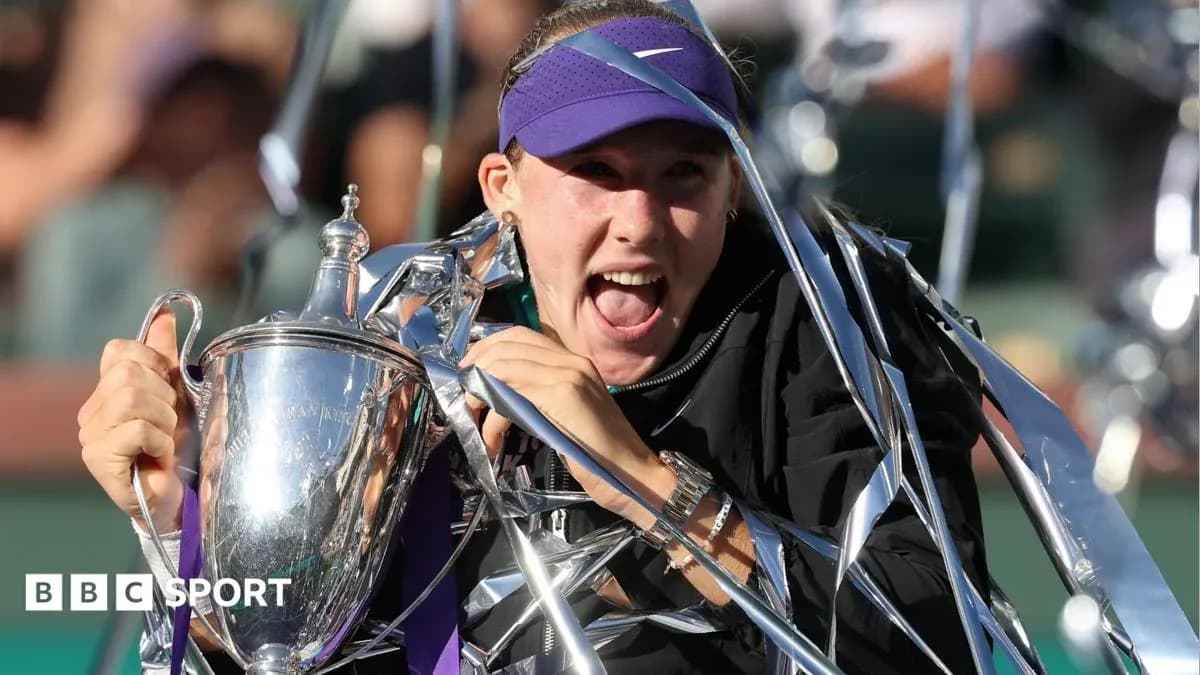
Harriet Dart Reaches First WTA Singles Final in Guangzhou
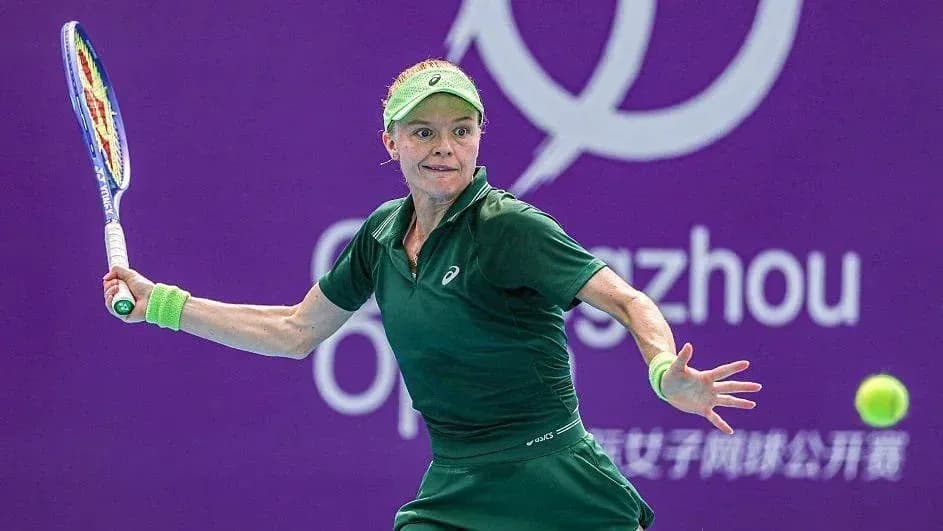
Harriet Dart wept on court in Guangzhou, and with good reason. After nearly a decade of grinding on the tour, the 30-year-old Briton has finally reached her first WTA singles final – and she had to drag herself through the kind of match that leaves scars as well as belief.
She beat 16-year-old Chinese wildcard Sun Xinran 5-7 7-6 (7-1) 6-0 in a bruising, two-and-a-half-hour semi-final at the Guangzhou Open, saving multiple match points and riding out waves of frustration, nerves and a fiercely partisan home crowd.
“It’s been a really long journey. I’ve wanted it so much, so badly – sometimes too much. To finally be here means the world,” Dart said, still tearful after sealing the win. This wasn’t a cliché. You could see it in the way she walked off court: drained, disbelieving, but refusing to let go of the moment.
A brutal start, a wild response
The match began badly. Dart double-faulted on break point in her opening service game, gifting Sun an early foothold and slipping 3-0 behind. The teenager, reigning US Open junior champion, looked loose and fearless. Dart, by contrast, looked tight.
Then something shifted.
From 0-3, the British number five began to step in on the baseline, taking control of the rallies and stringing together four consecutive games to turn the set on its head and lead 5-4. She was dictating, finally, moving Sun from side to side, striking through her groundstrokes with purpose.
Serving for the set, the old demons returned. Two more double faults, visible anger, shoulders tensing. The game slipped away, and with it the set. Sun held comfortably for 6-5, then broke Dart for a third time to snatch the opener 7-5. A huge roar from the crowd, a long stare from Dart towards her box. She knew she had let it go.
Nerves, noise and match points
The second set turned into a test of nerve as much as tennis.
Dart twice broke first, in the opening and fifth games, and twice Sun hit straight back. Every time Dart seemed to edge ahead, a loose service game or a spike in tension dragged her back into trouble. The home support grew louder, and Dart’s irritation grew with it; she repeatedly complained to the chair umpire about the noise between serves and points.
That only added to the chaos in her head. Yet when the match tightened, she refused to fold.
Serving to stay in the match twice in the second set, she stared down multiple match points. This was the moment that has undone her so often at this level. Not this time. Dart dug in, trusted her forehand, and made balls. She survived.
The pressure finally told in the tie-break. After two hours of ebb and flow, Dart suddenly played with clarity and freedom, racing through it 7-1. The crowd, so loud for Sun, fell almost silent as Dart reeled off point after point. She walked to her chair with a clenched fist and a glare that said the match had turned.
“I found it tough out there. It was a rollercoaster,” she admitted. “Playing in this part of the competition, more nerves and more feelings come out. I was really battling with myself. I’m proud of the second set and was able to turn it quickly.”
One-way traffic in the decider
From there, Sun faded. The physical and emotional toll of her run in Guangzhou, and the strain of seeing match points slip away, caught up with the 16-year-old. She took a medical timeout for treatment on her left leg and never truly recovered her intensity.
Dart, sensing weakness, did what experienced pros must do: she shut the door.
The third set became ruthless. No games conceded, barely any cheap points offered. Dart won 28 of the 41 points in the decider, cruising to a 6-0 finish that looked simple on the scoreboard but was built on two sets of psychological warfare.
For a player whose career has often hovered on the fringes of the top 100, this was a statement of resilience as much as talent.
A final, and a ranking revival
This is only Dart’s second tour-level singles semi-final – the first came earlier this year at the 2024 Transylvania Open – but this time she has gone one step further. Her WTA Tour debut came back in 2015 in Eastbourne. Nine years later, she finally has a final.
She will face either fourth seed Lilli Tagger or Kaitlin Quevedo on Sunday. The stakes are clear. Win, and she not only lifts a first WTA title but also guarantees a return to the top 100. She has already climbed 14 places to 101st in the live rankings; one more victory would complete the climb.
For now, though, the image that lingers is simple: Harriet Dart, eyes wet, talking about wanting it “so badly – sometimes too much” and finally standing where she has long believed she belonged.
On Sunday, she finds out if this breakthrough is a destination, or just the start of something bigger.