Felix Auger-Aliassime's Shocking Exit at the US Open
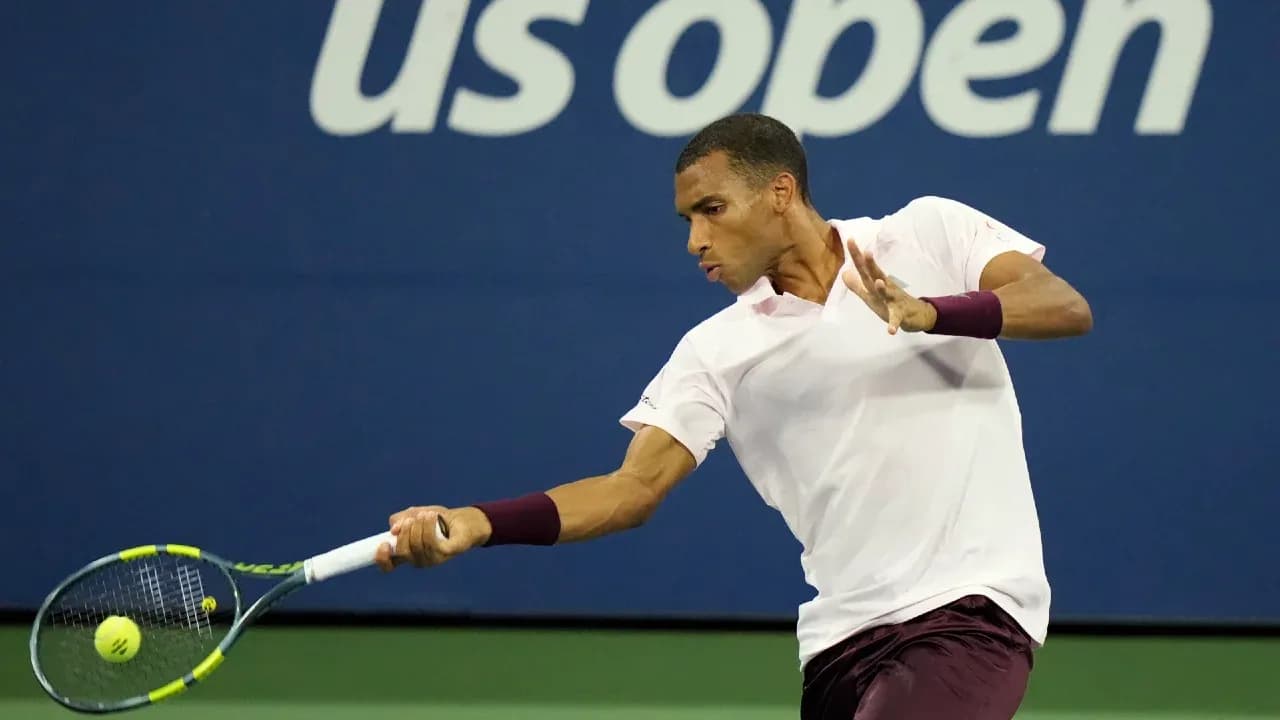
Felix Auger-Aliassime walked onto Arthur Ashe Stadium on Thursday as the No. 3 seed and a genuine title threat. He walked off dazed, defeated and searching for answers.
The Canadian’s US Open ended abruptly in the second round with a 6-7 (5), 6-3, 6-2, 6-2 loss to Karen Khachanov, a scoreline that only hints at how strange the afternoon became.
A Match That Slipped Away
For a set and a half, it looked like a heavyweight contest. Auger-Aliassime edged a tight first-set tiebreak, trading blows from the baseline with the powerful Russian and striking the ball with his usual clean aggression.
Then the match flipped.
Auger-Aliassime later said he began to feel dizzy, seeing spots, and never recovered. The numbers underline the collapse. His first-serve percentage sagged to 58 per cent. He faced 20 break points and dropped serve seven times. Eight double faults crept into his game. The forehand that so often dictates play sprayed errors instead, 47 unforced in total to Khachanov’s 30.
Khachanov didn’t need to do anything spectacular. He stayed solid, held his nerve and watched the third seed’s game unravel. Both men finished with 12 aces, but the Russian controlled the rallies once Auger-Aliassime’s movement and timing deserted him.
“Karen’s a great player, but I cannot beat him or anyone in this draw feeling the way I felt today,” Auger-Aliassime admitted afterward.
A Mystery for a Top-4 Player
What troubled him most was the lack of warning. He said he felt fine before the match. No illness, no obvious physical issue. Then, midway through the second set, his body simply stopped cooperating.
“After a set and a half, I just didn’t feel well and was dizzy and seeing spots,” he said. “I thought maybe it would pass but it didn’t. That’s the end of the tournament for me and now back to the drawing board.”
For a player who reached the semifinals in New York last year before losing to eventual runner-up Jannik Sinner, this is a jarring exit. It also carries ranking consequences. His career-high standing of No. 4 is now under threat with a heavy load of points dropping off.
The plan now is to go home, run tests and find out what went wrong. There is no clear diagnosis yet, only frustration and uncertainty.
Change Off the Court Too
The setback comes at a moment of transition in his camp. Auger-Aliassime recently split with longtime coach Frederic Fontang earlier in the summer. He said he hopes to announce a new coach in the coming weeks, a key decision as he tries to stabilize both his form and his health heading into the final stretch of the season.
New voice, new plan, same ambition. But the margin for error at the top of the men’s game is shrinking, and days like Thursday leave scars.
Canadian Bright Spots in Doubles
While Auger-Aliassime’s singles campaign ended in confusion, Canadian doubles players delivered a far more straightforward script.
Second seeds Gabriela Dabrowski and Luisa Stefani opened their women’s doubles run with a commanding 6-1, 6-3 win over Irina Khromacheva and Anastasia Detiuc. The Ottawa native and her Brazilian partner dominated on serve, cracking four aces and piling up 21 winners to just nine from the Russian-Czech pair.
Dabrowski, who lifted her second US Open doubles trophy last year alongside Erin Routliffe, looks comfortable again in New York with Stefani at her side. Their next test will come against the winners of Friday’s clash between Sara Errani and Lilli Tagger and American twins Kristina and Annika Penickova.
Leylah Fernandez added another emphatic scoreline to the Canadian ledger. Teaming up with Indonesia’s Janice Tjen, the Laval native dropped just two games in a 6-1, 6-1 rout of Nika Radisic and Isabelle Haverlag. Fernandez and Tjen will next face Routliffe and her Indonesian partner Aldila Sutjiadi, a matchup loaded with familiarity and intrigue for Canadian fans.
Fernandez’s doubles success comes as she prepares for a marquee singles assignment: a third-round showdown on Friday with American No. 3 seed Jessica Pegula, a test of both her resilience and her shot-making on one of the sport’s biggest stages.
Shapovalov Steps In
Denis Shapovalov, meanwhile, was set to carry the Canadian men’s singles hopes into the third round with a meeting against eighth seed Ben Shelton. The left-hander from Richmond Hill, Ont., knows the stakes in New York and understands how quickly momentum can swing at a major.
For Auger-Aliassime, that lesson came brutally fast. One moment, he was a contender. The next, he was fighting just to see the ball clearly.
The US Open can be unforgiving. The question now is how quickly he can solve the mystery of his health, settle his coaching situation and turn this abrupt ending into the start of a different kind of run—one built not just on talent, but on answers.