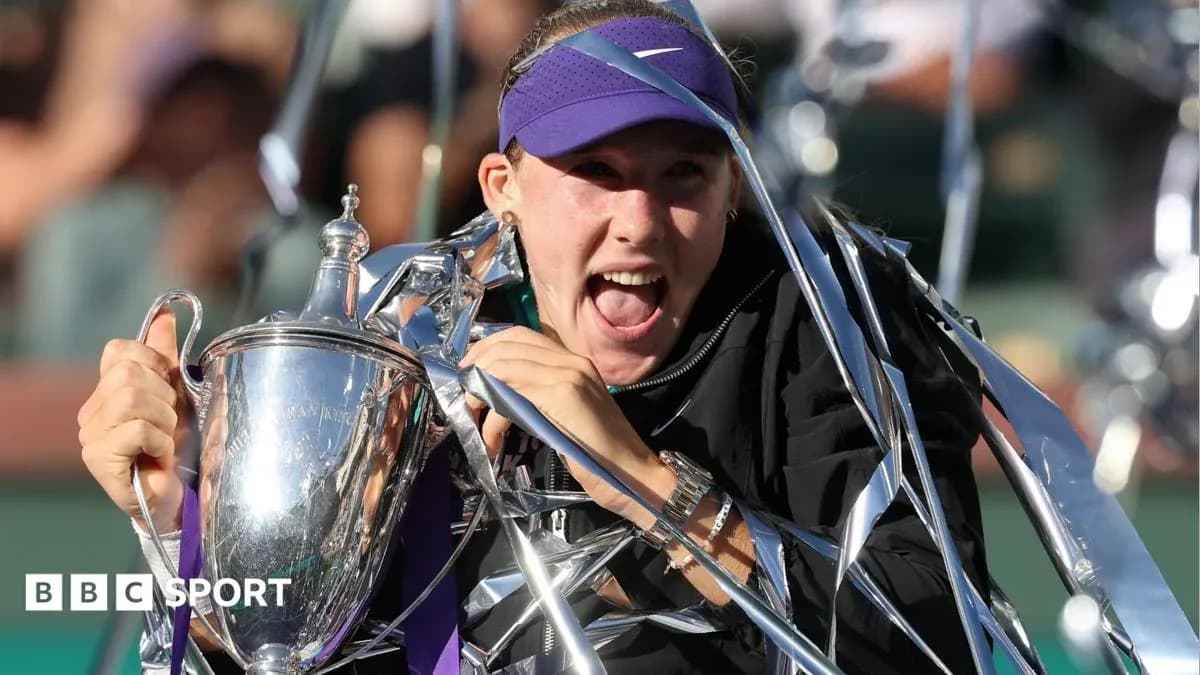
Elina Svitolina's Resilient Journey at WTA Finals
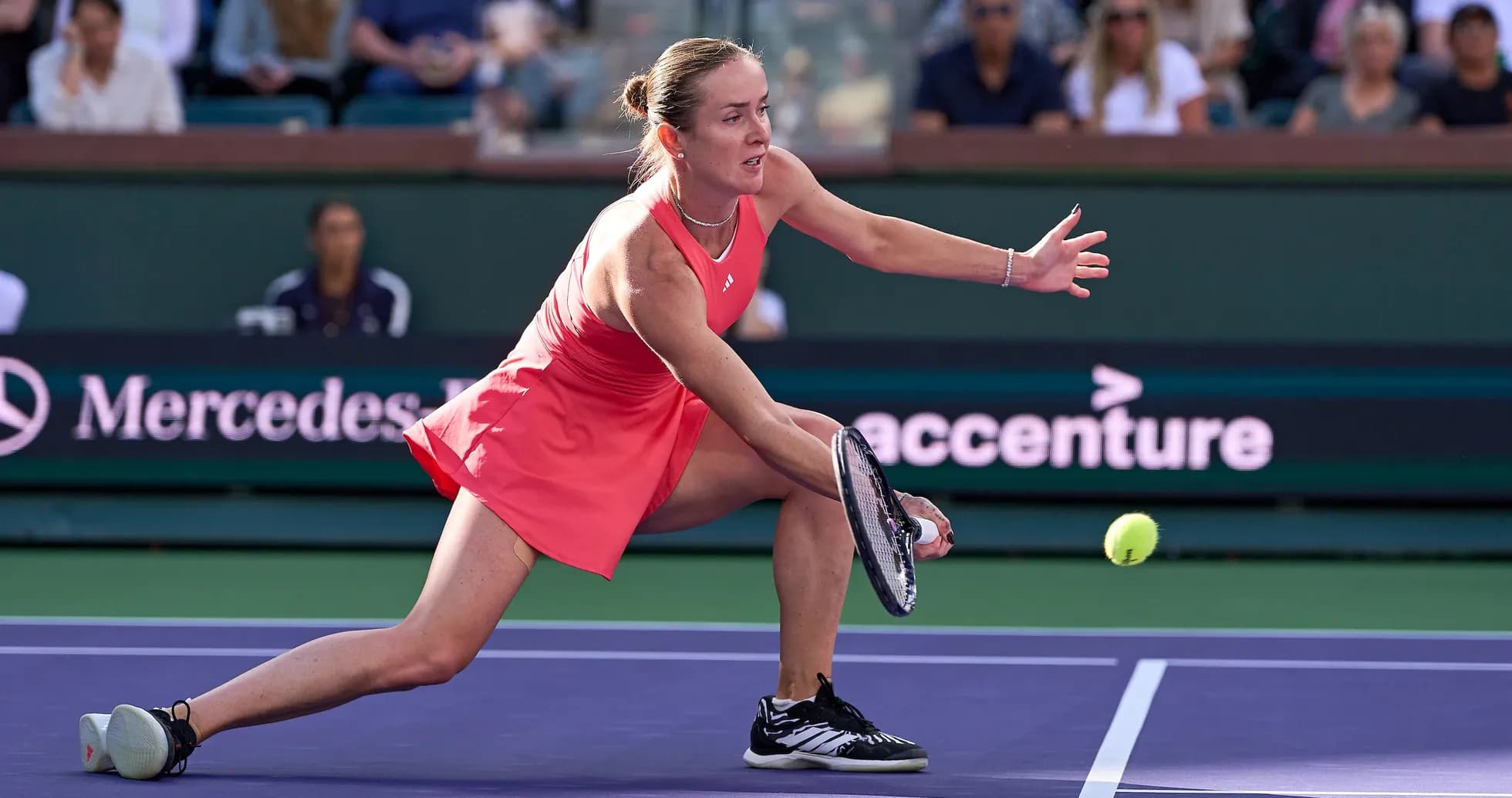
INDIAN WELLS, Calif. — For a few uneasy minutes this week, it looked like Elina Svitolina’s return to the season-ending stage might be brief and forgettable. Beaten by Mirra Andreeva in her opener, then a set down to Karolina Muchova, she stood on the edge of elimination with nothing tangible to cling to but muscle memory and stubbornness.
That’s usually enough for her.
Muchova arrived with a perfect record in 2024 when winning the first set: 32 matches, 32 wins. Svitolina tore that stat sheet in half. Once she settled, the match flipped. She surrendered just four games across the next two sets, dragged the contest into her physical, attritional world and walked off with a 3-6, 6-2, 6-2 victory that kept Friday alive and meaningful.
From there, the stakes rose sharply. Aryna Sabalenka, world-class wrecking ball and the woman who had beaten Svitolina in their last five meetings, waited next. All three of their hard-court encounters had gone Sabalenka’s way. The matchup history read like a warning.
Sabalenka started like one too. She broke in the opening game, imposing the heavy first strike that has bullied so many opponents into submission. Svitolina had to chase again. She did, clawing back the break and then facing down two more break points at 3-3. This time, it was her second serve—so often a pressure point—that held. She wriggled out, stole the momentum and snatched the next two games to take the set 6-3.
Sabalenka hit back with the same scoreline in the second, and the contest tightened into a decider that felt like a test of nerve as much as shot-making. Svitolina blinked first on the scoreboard, but not in the rallies. She grabbed an early break, then another, racing to 5-1 as Sabalenka’s timing frayed and the errors piled up. Serving for the match, Svitolina didn’t flinch. A 6-3, 3-6, 6-1 win, six breaks from eight chances, and a long, lopsided head-to-head suddenly had a new chapter.
Her reward: second place in Group 2 and a semifinal against Group 1 winner Linda Noskova. Her achievement: a first hard-court win over Sabalenka, a first WTA Finals semifinal after losing an opener, and a return to the last four at the year-end event for the first time since 2019. The 2018 champion is back in the closing weekend, and this time she arrived the hard way.
And the teenager who pushed her to the brink of irrelevance on day one? She’s been almost untouchable.
Andreeva storms through Group 2
Mirra Andreeva walked into Indian Wells with the curiosity factor of a prodigy. She walks into the semifinals as the player nobody has laid a glove on.
Her group-stage campaign started by flipping the script on her own season. Svitolina had beaten her at the Australian Open. In California, Andreeva turned that result inside out. She saved all six break points she faced, absorbed Svitolina’s early weight of shot and then ran away with the match. From 5-4 in the first set, she reeled off seven straight games to close out a 6-4, 6-0 debut at the WTA Finals.
Sabalenka felt the same storm two days later.
The Belarusian led 4-1 in the opening set and looked in full control. Andreeva simmered, then channeled it. The anger she spoke about afterwards became fuel for a sharper serve, a more aggressive return, a more ruthless mindset. Once she locked in, the match became a rout. She won the final 11 games, claimed 45 of the last 55 points and walked off with another 6-4, 6-0 scoreline. In doing so, she became the first player to record a 6-0 set in each of her first two WTA Finals matches.
By the time she faced Diana Schnaider—drafted in late after Karolina Muchova’s withdrawal—her place atop Group 2 was already secure. The intensity didn’t dip. Andreeva needed just 55 minutes to post a 6-2, 6-1 win, finishing group play 3-0 without dropping a set. Schnaider, overpowered and rushed, managed seven winners against 32 unforced errors and captured only three of 15 points on her second serve.
Three matches, three straight-sets wins, two bagels, no sign of nerves. The teenager now faces Jessica Pegula for the first time in the semifinals, a clash of styles between a fearless shot-maker on the rise and one of the tour’s most reliable, disciplined baseliners.
Svitolina’s winding road back
Svitolina’s path could not have been more different.
Her first match since 2019 at the year-end event ended with a brutal scoreline: 6-4, 6-0 to Andreeva. Six break points created, none converted. A tight opening set gave way to a runaway, the last seven games all landing on the teenager’s side of the ledger.
That defeat left Svitolina with no margin for error. Against Muchova, she found the controlled aggression that has always underpinned her best runs. After dropping the first set, she hit 17 of her 22 winners across the final two, pressing forward when needed, changing direction, refusing to let the Czech dictate. The 3-6, 6-2, 6-2 win not only ended Muchova’s perfect record when taking the opener, it dragged Svitolina back into the qualification picture.
Sabalenka then turned that picture into a full-blown test of resilience. Svitolina answered it, and more. Her six breaks from eight opportunities underlined a sharp return day; the 6-3, 3-6, 6-1 scoreline underlined her staying power in a physical, high-stakes fight.
When it was over, she stood at 2-1 in group play, second only to Andreeva, and booked a Saturday semifinal against Noskova. She also stood as proof of her own words: that at the WTA Finals, an opening loss is a warning, not a sentence. There are always “a couple of more matches and interesting situations,” as she put it. She has turned those situations into a familiar stage.
And so Indian Wells heads into the weekend with two very different stories converging: a resurgent former champion who refused to go quietly, and a teenager tearing through the field with a ruthlessness that belies her age.
Only one of them can turn this week into a title run.