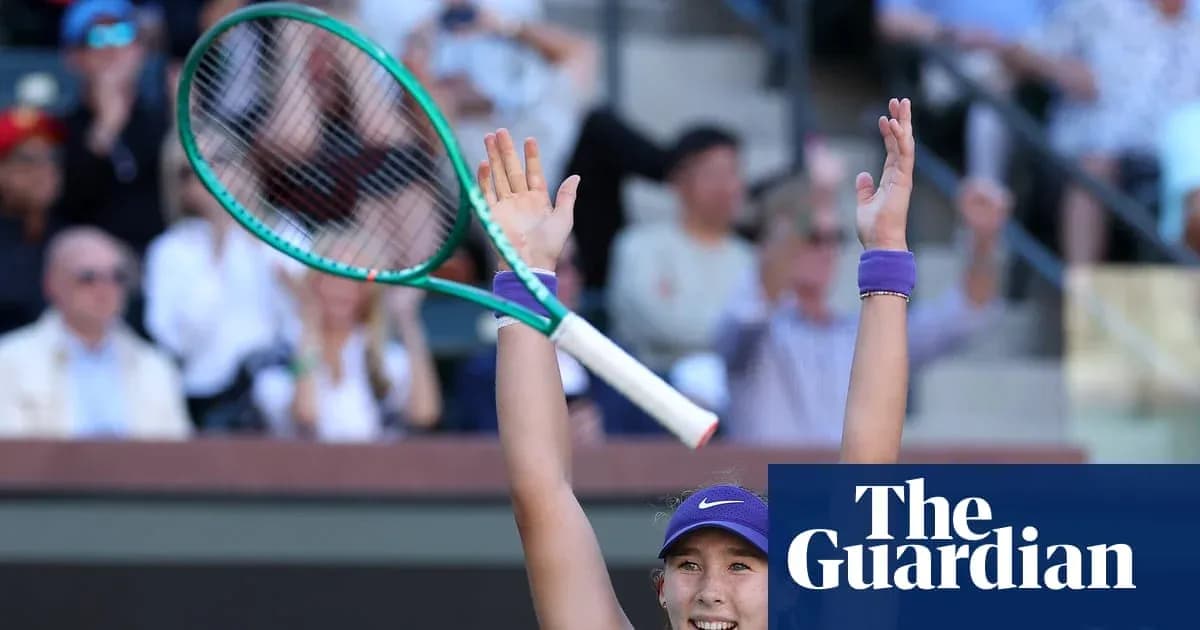
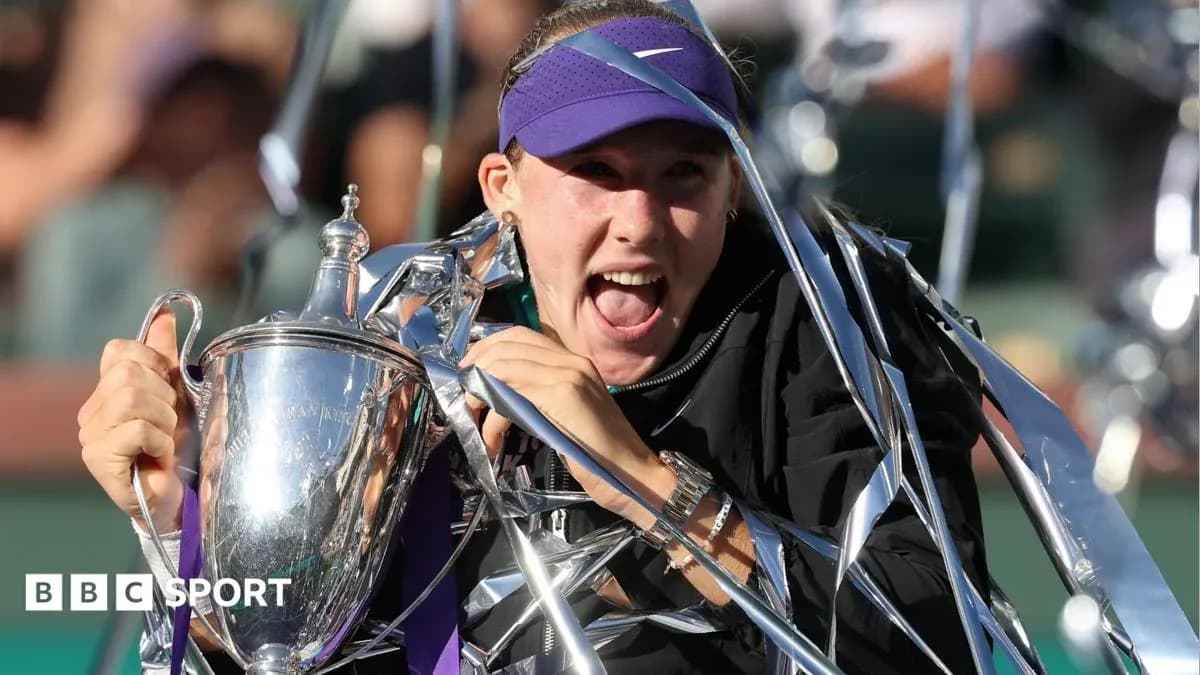
Elina Svitolina's Stunning Victory Over Aryna Sabalenka at WTA Finals
Elina Svitolina dug into the reserves that only a veteran knows exist and dragged Aryna Sabalenka out of the WTA Finals on Friday, turning a bruising three-set scrap into a statement win and a place in the semi-finals.
The Ukrainian, seeded sixth, beat the world number two 6-3, 3-6, 6-1, reeling off six straight games in the deciding set after being broken at the start. It was only her second victory in eight meetings with the Belarusian, but by the end it felt like a psychological shift rather than a statistical correction.
Sabalenka’s season finished on a whimper. Svitolina’s rolls on, with Wimbledon champion Linda Noskova waiting in the last four.
Veteran steel, rising tension
The first set never settled into a rhythm for Sabalenka. Her first serve misfired, the errors mounted, and Svitolina — so often the one dragged into power battles she doesn’t want — instead dictated with clarity and discipline. Sabalenka sprayed 35 unforced errors across the match, many of them in clusters that broke her momentum just as she seemed ready to seize control.
Svitolina took the opener 6-3, absorbing pace, redirecting balls, refusing to blink in the longer exchanges. Sabalenka’s frustration grew with every missed first serve, every forehand that flew just long.
Then the match flipped.
Six games in a row, and a brutal finish
Sabalenka broke to open the third set and roared, chest out, as if the match were now following the script. Instead, the errors crept back in. Double faults, rushed forehands, loose backhands. The door opened, and Svitolina walked straight through it.
The Ukrainian broke back immediately, then again, and suddenly she was the one dictating, stepping inside the baseline and punishing anything short. From 0-1 down, she rattled off six consecutive games to close out the match 6-1, a scoreline that barely reflected how mentally draining the contest had been.
Sabalenka fought to the last. Serving to stay in the tournament, she saved three match points, refusing to go quietly. Each time Svitolina felt the finish line slip away, she answered with authority, twice firing aces under pressure. On the fourth chance, she uncorked a forehand winner that left no doubt.
“It was an extremely tough match, especially mentally,” Svitolina said afterward, still chasing a second WTA Finals crown to go with her 2018 title. She spoke of playing “one point at a time,” of searching for her game and “fighting spirit” while Sabalenka’s errors offered just enough daylight to turn the match around.
For Sabalenka, it capped a strange year. Three titles, including that rare Indian Wells–Miami sweep, but no Grand Slam trophy. She reached the finals of both the Australian Open and US Open, only to fall short, and surrendered the world number one ranking to Elena Rybakina. The WTA Finals exit felt like a continuation of that theme: big stages reached, but not conquered.
Svitolina, though, leaves the group stage with something far more valuable than a single win over a top rival — the sense that, once again, she belongs at the very top end of the sport.
Andreeva ruthless, Pegula next — with a subplot
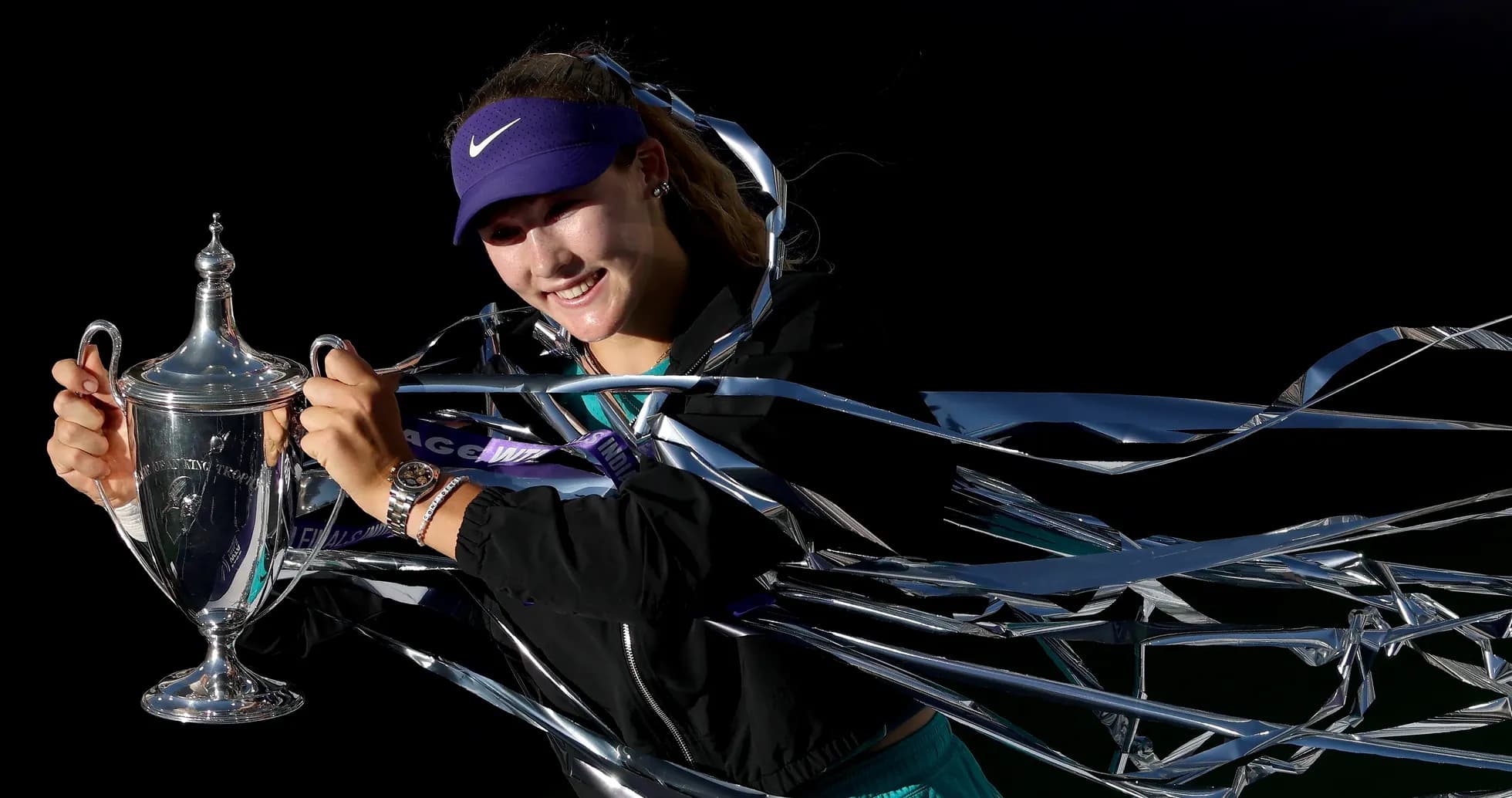
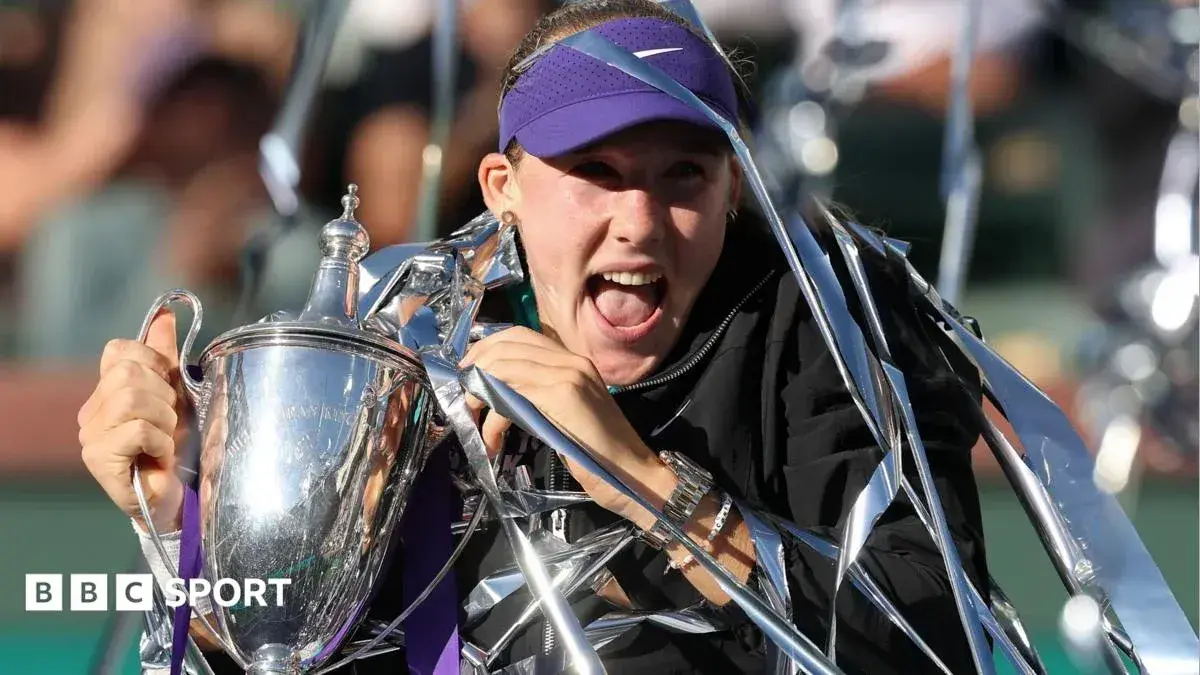
Earlier in the day, Mirra Andreeva completed her own piece of business with chilling efficiency. Already assured of topping the group, the French Open champion needed just 56 minutes to dismantle Diana Shnaider 6-2, 6-1.
Shnaider, a late replacement for the ailing Karolina Muchova, never really settled. Andreeva, ranked third in the world at just 19, barely gave her a chance to breathe. No drama, no let-up, just a professional, ruthless march into the semi-finals.
Her reward is a first career meeting with world number five Jessica Pegula.
That match already has a storyline attached. Only a week ago, a practice court microphone picked up Pegula describing Andreeva as a “diva,” a throwaway remark that suddenly became a talking point when the WTA livestream audio surfaced.
Pegula, unaware at the time that the microphones could capture the exchange with her coach, moved quickly to apologize. She said Andreeva took it lightly, even joking about the label.
“She was totally fine, and she was like ‘I’m a diva,’” Pegula explained. “Like she embraces it, and so it was kind of funny.”
The WTA later apologized for the incident, acknowledging that the microphones — installed to capture general court sounds — had instead broadcast a private conversation. The governing body found itself in the spotlight; the players, inevitably, found themselves with an unwanted subplot.
Pegula admitted that, despite both women trying to downplay it, the episode will linger over their clash.
“The storyline writes itself,” she said. “I think it maybe gets fans interested … whatever works. We’re all good, but if it gets people to watch I think it’s fine.”
So the semi-finals arrive with very different energies. On one side of the draw, Svitolina, battle-hardened and resurgent, takes on Noskova with a second season-ending crown in sight. On the other, a 19-year-old major champion faces a seasoned American, with a stray word and a hot mic adding just enough spice to a match that already promised plenty.