Elena Rybakina One Win Away from No.1 Ranking
Elena Rybakina is one win from the summit, and she’s not pretending otherwise.
On a brisk night at Flushing Meadows, the world No.2 tore through Naomi Osaka 6-1, 6-4 in just 66 minutes, a statement win that leaves her a single step away from overtaking Aryna Sabalenka and claiming the No.1 ranking. No coy answers. No deflection.
“Of course I want it,” she said afterward. “I don’t know anyone that wouldn’t wish this. That is definitely one of my goals. If I start well as I did today, I think I have all the chances to (become world No.1). I’ll try my best and hopefully, it will go my way.”
On this evidence, it just might.
Rybakina ruthless, Osaka out
Osaka’s 2026 US Open run is over, and it ended without the late-night drama that has so often defined her in New York.
Rybakina came out firing, bullying the four-time major champion with a heavy first serve and flat, penetrating groundstrokes that pinned Osaka behind the baseline. The first set raced by 6-1, the Japanese star struggling to land a meaningful blow.
The scoreline suggested a mismatch. The atmosphere didn’t. Osaka still drew roars from the crowd and flickers of resistance, but every time she threatened to build momentum, Rybakina’s serve slammed the door. The second seed controlled her service games so completely that any hint of a turnaround felt fleeting.
Osaka did raise her level in the second set, stretching rallies, finding more depth, and trying to drag the contest into a decider. It wasn’t enough. Rybakina’s delivery remained the anchor, the one shot Osaka never truly solved.
That dominance has convinced Australian great Jelena Dokic that Rybakina should be considered the favourite to lift the trophy in New York. On current form, it’s hard to argue.
Next up for the Kazakh: Qinwen Zheng in the quarter-finals, a matchup loaded with recent history and real danger.
Zheng stuns Świątek with a towering comeback
If Rybakina’s win was ruthless, Zheng’s earlier victory over Iga Świątek was pure defiance.
The six-time grand slam champion led 5-0 in the opening set. The match looked like a routine march into the latter stages for the Pole. Then Zheng flipped the script.
Point by point, game by game, she dragged herself back into the contest, finding her range on the forehand and settling into the rhythm of the big arena. Świątek, usually so composed, suddenly found herself under siege. The crowd sensed the shift. By 5-5, the momentum was gone. By 7-5, the set was Zheng’s.
“I guess to come back from 0-5 is not lucky, that’s all I can say,” the 23-year-old said. “I didn’t start the match so well, but little by little I found my rhythm on this centre court because it’s been a long, long time since I’ve played here.”
The second set confirmed it wasn’t a fluke. Zheng kept pressing, kept attacking, and Świątek never fully recovered from the collapse of that opening set. Zheng closed it out 7-5, 6-3, adding another chapter to a rivalry that already includes her win over Świątek for Olympic gold in 2024.
“I haven’t beaten a top-10 player in a while. The more matches I play, the more rhythm I get. I just feel really pumped and ready for my next match,” she said.
That next match is Rybakina, with a place in the semi-finals and, potentially, the No.1 ranking on the line. One woman arrives off a demolition of Osaka. The other, fresh from breaking the resolve of a six-time major winner. It has the feel of a collision, not a contest.
A men’s battle brewing
On the men’s side, Learner Tien and Karen Khachanov are locked into their own fight in the singles draw. The stakes are simple and sharp: the winner earns a quarter-final showdown with Alexander Blockx.
Khachanov brings the experience, Tien the youthful fearlessness. Blockx waits, rested and watching, knowing he’ll face someone who has already had to scrap to get through.
Flushing Meadows under the spotlight
While the tennis has delivered, the US Open has been wrestling with a different kind of noise.
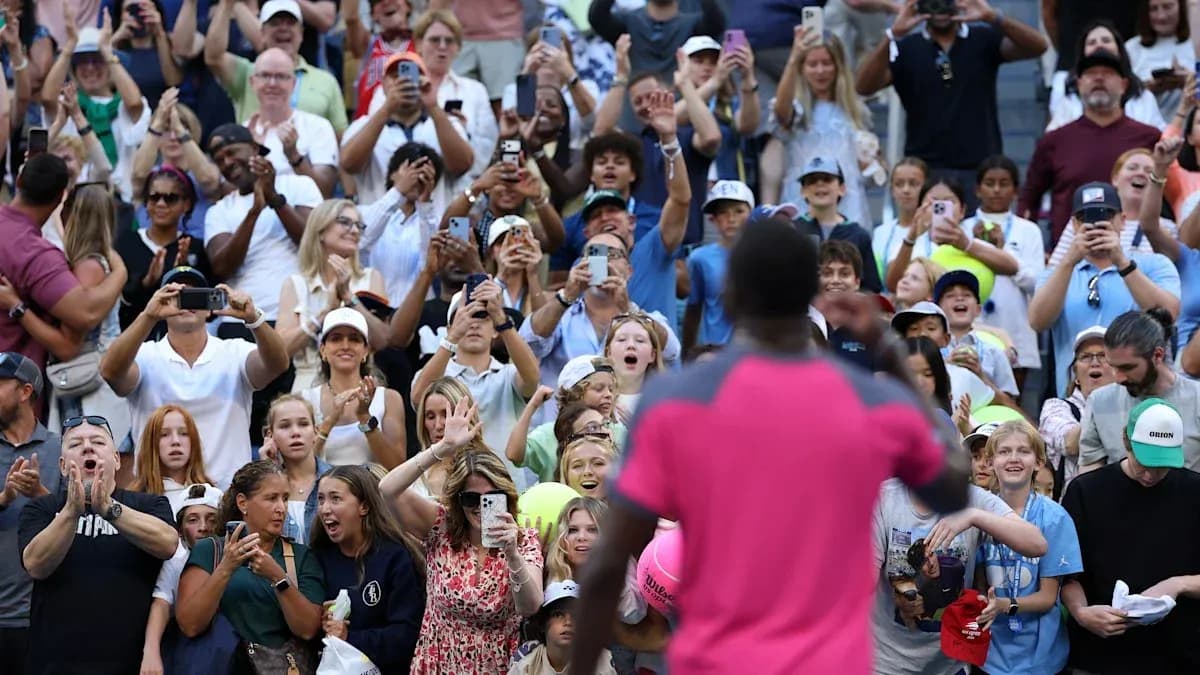
Across several matches, influencers and content creators have disrupted play with bright phone lights and constant filming in the stands. Players and chair umpires have started to push back, calling out the lack of basic respect for the sport’s etiquette.
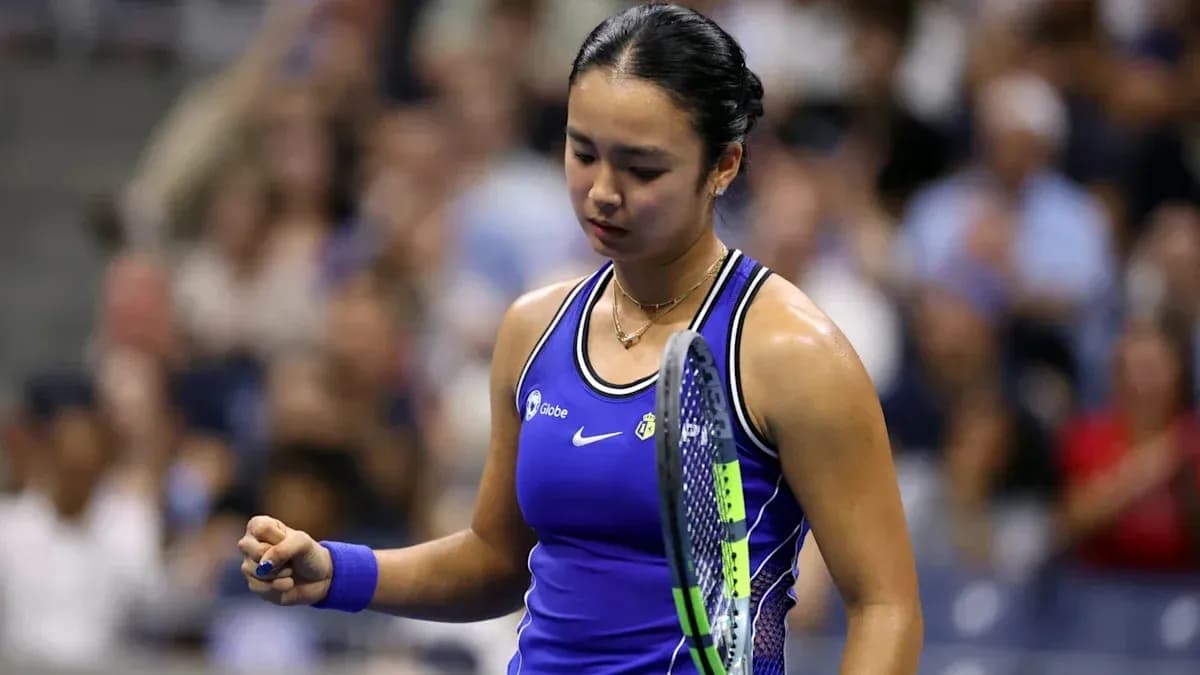
Coco Gauff and Naomi Osaka have both addressed the issue, making it clear they welcome new fans and new demographics in the seats, but not at the expense of the players’ concentration or the integrity of the match. Big screens around the grounds now carry messages urging spectators to respect the rules and put the tennis first.
French veteran Adrian Mannarino didn’t sugarcoat his view of the atmosphere.
He described the tournament as having turned “into a bit of a zoo,” pointing to the movement in the crowd during points and the smell of marijuana drifting through the stands. “People are allowed to move around in the crowd during points,” he said after a doubles loss. “The tournament puts up with it ... I don’t know if it’s the best thing for tennis in general.”
The scenes in New York have already prompted a firm response from Wimbledon. The All England Club has confirmed it will not open its doors to an influx of influencers next year and will refuse entry to ring lights that could be used to disturb play. Content creators are not expected to receive accreditation, a clear line in the grass from a tournament fiercely protective of its traditions.
Flushing Meadows, meanwhile, remains the sport’s loudest stage — chaotic, combustible, and unfiltered.
In the middle of that chaos, Elena Rybakina and Qinwen Zheng are carving their own path, one result at a time. One of them could soon be holding the trophy. One of them might also be walking into the tournament as the new world No.1 next year.